


Finding and purchasing your perfect mattress can take weeks of research and trying different brands. However, many people don’t give the same amount of thought to the support beneath your mattress.
But it does make a difference. For example, some memory foam mattresses require solid or slatted foundations – but this isn’t ideal for all mattress types.
The foundation you choose can change how comfortable your mattress feels and how long it lasts. In this article, we will provide tips on how to choose a mattress foundation that matches your specific mattress type, what construction details matter the most, and how to avoid mistakes that can shorten the lifespan of you mattress.
What Is a Mattress Foundation? (Key Terms Explained)
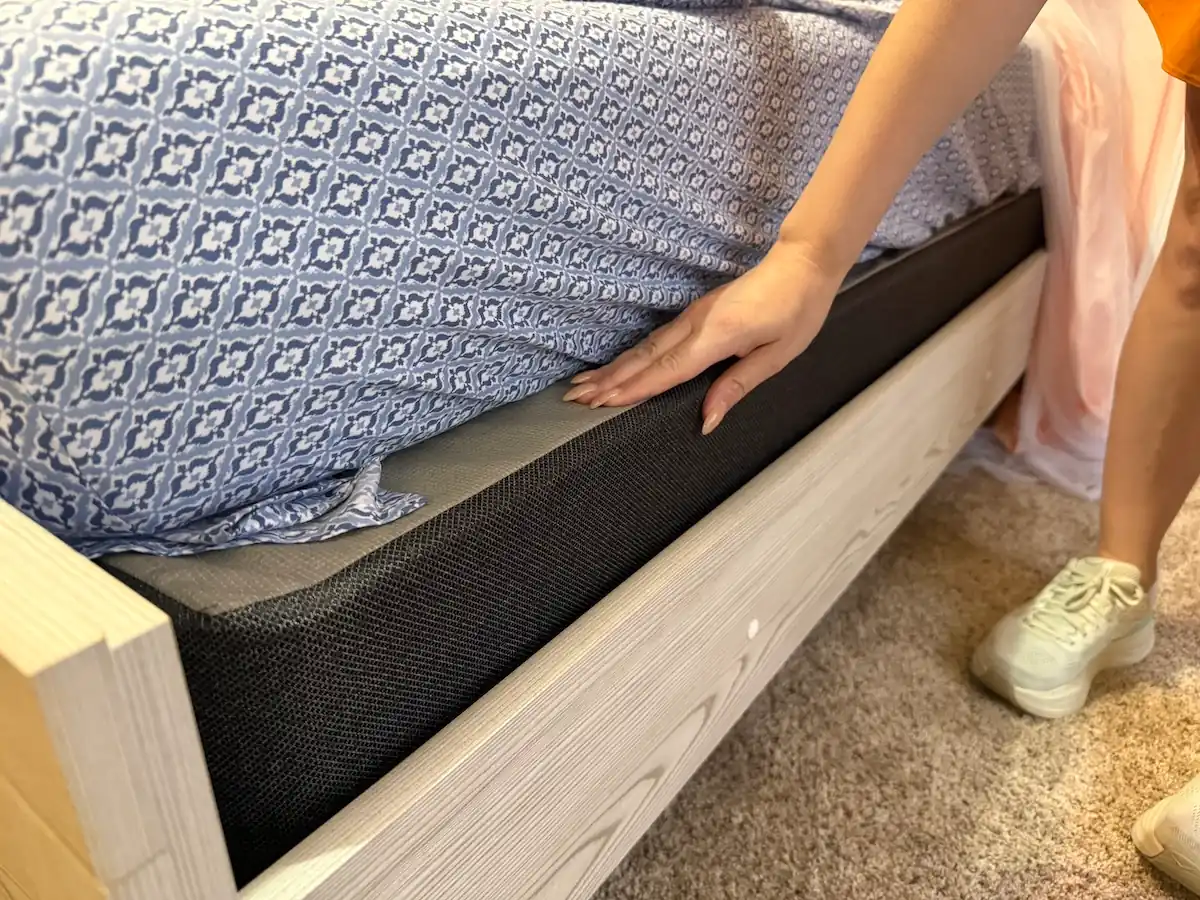
A mattress foundation lies beneath the mattress and is designed to support your mattress by keeping it stable, elevated and evenly supported. There are a variety of mattress foundation types and designs that can serve specific mattress and bed frame types.
Mattress foundation design has evolved over the past decade. Previously the majority of foundations were spring-based box springs. More modern designs are thinner, like wood or metal slats, that offer rigid support and are intended to make uniform support specifically for foam and hybrid mattresses, which have become more popular that inner-spring mattresses.
However, sleep quality depends on many factors including mattress materials, sleep posture, and bedding hygiene. You can explore more mattress and sleep resources in our Sleep Guides hub.
Foundation vs. Box Spring
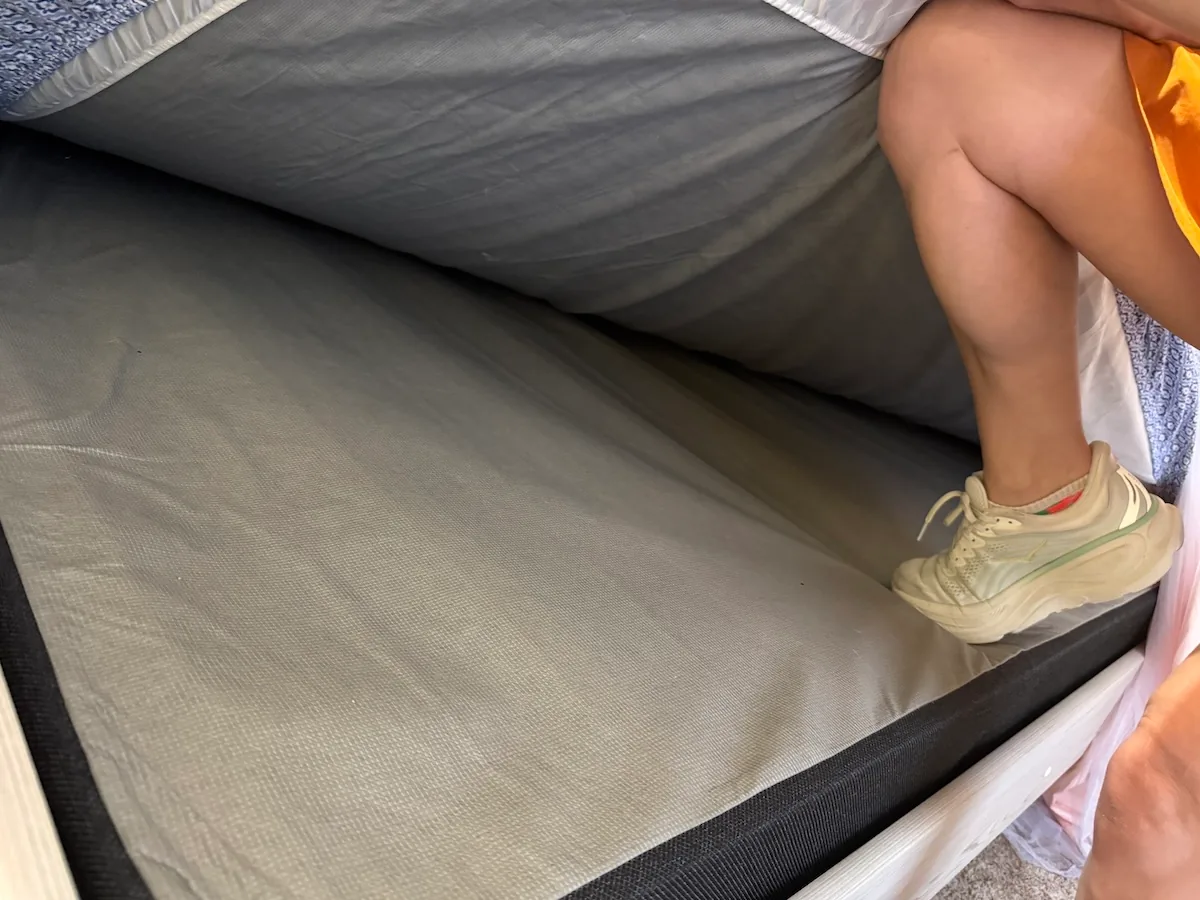
A traditional box spring was designed to be paired with innerspring mattresses. They are constructed of internal coils that add bounce and absorb shock. Today many bed frames are designed to have slats where a box spring is not needed. These modern foundations are meant to give even stable support to foam and hybrid mattresses and keep the mattress flat without the flex and bounce of coils
Platform Bed
A platform bed offers strong support by integrating the mattress foundation and bed frame into one piece. Instead of having a removable foundation or box spring, the mattress is nestled into the bed panel. Platform beds are an ideal choice for hybrid and foam mattresses, and can save you money since you don’t need to purchase an additional foundation.
Slatted Bed Frame
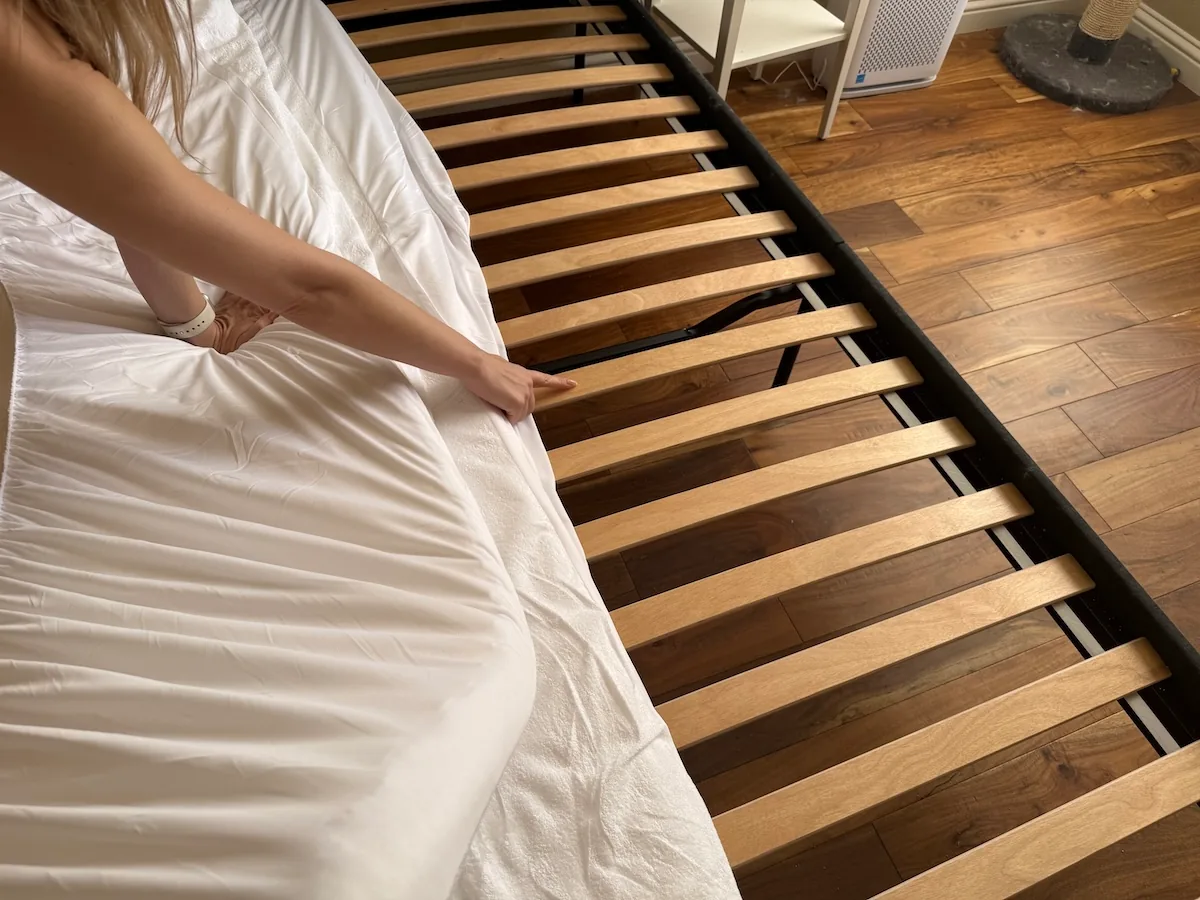
Slatted bed frames are one of the most common mattress foundation designs nowadays. Simply, the wood or metals slates are attached the the square bed frame. It’s crucial to gave proper thickness and spacing of the slats so that the weight of the mattress is distributed evenly and there are no gaps large enough that the mattress sags in between. The slat design also allows improves airflow, which helps with temperature control and reduces moisture accumulation.
If you are purchasing a slatted bed frame, look for frames that include a center support beam with a middle leg. This ensures your mattresses gets the best firm support and won’t wobble or sag.
Adjustable Base
An adjustable base has a motor that allows you to raise and lower different sections of the bed. Think of hospital beds that raise you upright. These foundations have become more popular to have at home for elderly people, people with specific medical needs or anyone who desires the benefits from ergonomic sleep positions. You can adjust the bed to reduce pressure on your lower back, elevate you head to prevent snoring, or create a custom sleep position that feels most comfortable to you.
An adjustable base foundation will need to be paired with a mattress that is very flexible, so look for hybrid or memory foam mattresses.
Bunkie Board
A bunkie board is just a thin panel without slats or coils that can be places between a mattress and frame to give support. It can be used when you want a low profile design but want to feel more firm support that just the slats.
Mattress Foundation Comparison Guide: How to Match a Foundation to Your Mattress Type
| Foundation Type | Best Mattress Types | Ideal Sleep Needs / Scenarios | Main Advantages | Potential Drawbacks |
|---|---|---|---|---|
| Platform Bed (Solid or Slatted) | Memory foam, latex, hybrids | Couples, heavy sleepers, modern low-profile setups, noise-sensitive sleepers | Strong uniform support, minimal motion transfer, clean aesthetic | Solid panels may reduce airflow; wide slats can cause sagging if poorly designed |
| Slatted Foundation | Hybrid, foam, latex (with proper spacing) | Hot sleepers needing airflow, budget-conscious buyers, lightweight setups | Breathable design, lighter weight, widely compatible | Slats spaced too far apart can damage foam layers over time |
| Traditional Box Spring | Classic innerspring mattresses | People who prefer bounce or already own compatible innerspring beds | Adds height and shock absorption | Often not recommended for modern foam or hybrid mattresses; may void warranties |
| Adjustable Base | Memory foam, latex, many hybrids | Back pain relief, snoring reduction, TV reading positions, lifestyle upgrades | Custom positioning, pressure relief, premium sleep experience | Higher cost, heavy weight, requires compatible mattress construction |
| Bunkie Board | Foam or hybrid mattresses on weak frames | Low-profile beds, dorm rooms, temporary support fixes | Improves support without raising bed height much | Not a full long-term foundation; airflow may be limited |
| Metal Grid Foundation | Some hybrids and lighter mattresses | Minimalist or industrial bed setups | Durable and easy assembly | Can create pressure points or noise if grid spacing is wide |
| Solid Wood Foundation | Latex, heavy hybrids, high-weight sleepers | Maximum durability, long-term mattress protection | Excellent structural support and stability | Heavier and less breathable than slatted designs |
What to Look for Before You Buy a Mattress Foundation
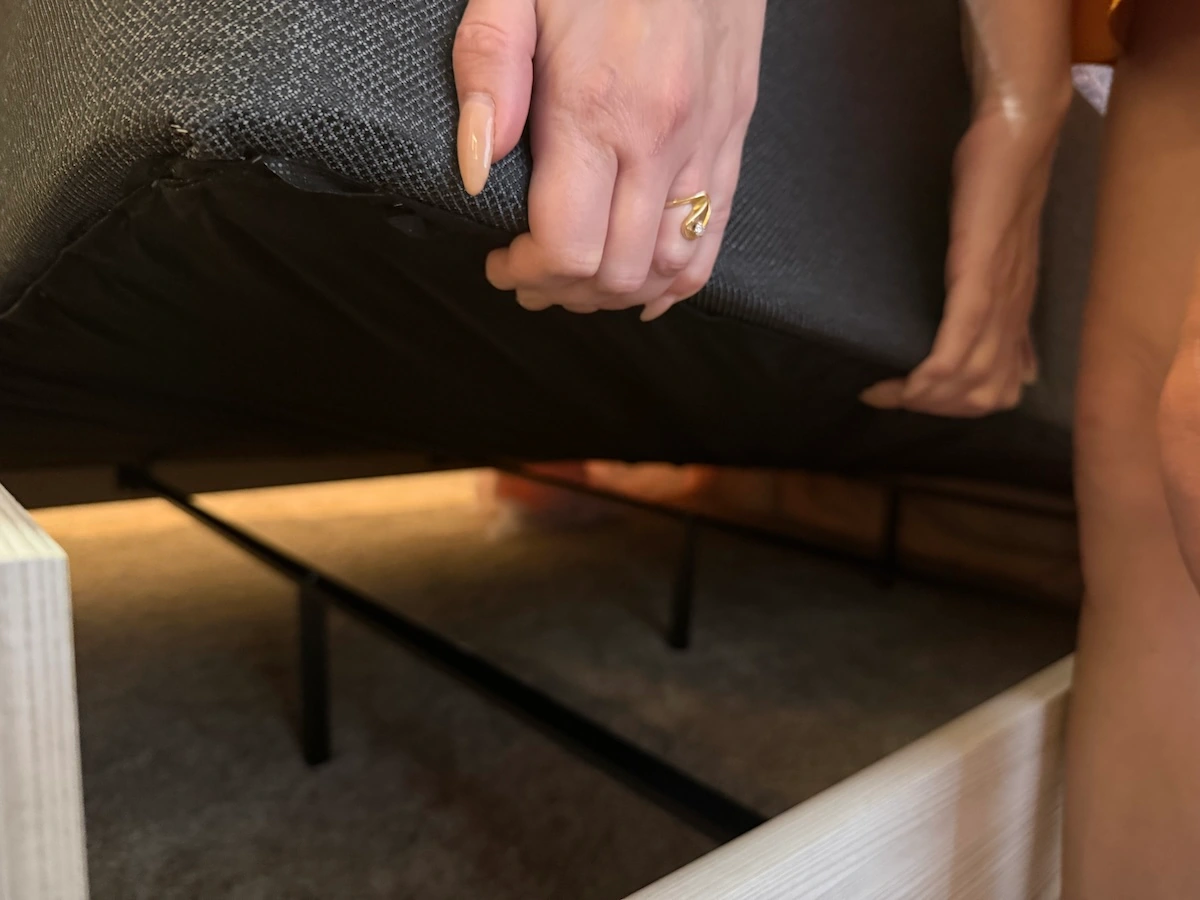
A mattress foundation should be chosen based on your mattress material and sleep needs, not just how the design look. Foam mattresses need uniform support, while hybrid and innerspring mattresses can have some flexibility.
Before buying a foundation, consider the structural elements below that will impact compatibility, comfort, and durability. Additionally, make sure you understand how to solve problems, like how to get pee out of a mattress.
Slat Spacing and Surface Support
Foam and hybrid mattresses pair well with slat foundations if the slats are less than 3 inches apart. Check the specs if the foundation or measure the space between each slat. If the space is more than 3 inches, there is potential for the mattress to sink into the gaps, which will be very uncomfortable and can even hurt your spine and back.
Center Support Beam
After testing some budget foundations and bed frames, it is key to only use a frame that has a center support beam with a leg touching down in the center of the frame. This helps tremendously to reinforce the bed and is essential if you are a couple sleeping on a queen or king size bed.
Weight Capacity Ratings
Make sure to check the maximum weight capacity for a foundation to make sure it meets your needs. If you sleep as a couple, consider your combined weight. The foundations with the highest weight capacity will use reinforced metal frames, thicker wood slats, nd the center support beam and leg. A foundation with these features should last a very long time and offers the best support.
Frame Stability and Noise Control
You want your bed frame to feel solid at all times, even when you change positions and roll around on the bed. If it feels shaking and makes creaking noises, this is a a red flag. Gently shake the frame in different spots to test the durability.
Material Quality
Metal is stronger than wood, but can make more noise. The higher quality material in both metal and wood is when it is designed well with thick material that is reinforced to be long-lasting.
Airflow and breathability
It is best for foam and latex mattress to have airflow beneath, so a slatted design is better than a solid panel foundation.
Height and Bedroom Fit
Another factor to consider is how it will feel getting in and out of bed. A lower foundation is a modern look, but might not be as comfortable as a bed that is high up.
Consider how you like it to feel as you sit on the edge of the bed. Make sure to measure the combined height of your mattress and foundation to make sure it will look great and feel great. For example, a bed frame that requires a box spring of specific height otherwise there will be an unsightly gap of space between the head board and the top of you mattress.
Common Foundation Mistakes The Can Damage Your Mattress
Sometimes problems that you think are coming from your mattress actually stem from improper foundation. Here are some common mistakes that can cause discomfort, mattress sagging and damage.
- Using an old box springs with a modern mattress – modern memory foam and hybrid mattress need a uniform, ridge surface for support. If you use an old box spring with uneven, weakened coils, it can cause mattress sagging and put pressure points on your mattress causing it to wear down quickly.
- Choosing slats too far apart – if your slats are more than 3 inches apart, the foam of a mattress can wedge down between then and ultimately sage. You need uniform, strong support.
- Not having center support – a mattress can start to dip and sag in the center without a center beam or leg.
- Placing a mattress on the floor – don’t try to cut corners and think you don’t need a proper frame and foundation. Placing a mattress on the floor can make it feel too firm. The mattress needs to be elevated to have airflow and some flexibility. Otherwise moisture and odor can get trapped underneath.
- Mixing incompatible foundation types – your mattress material, bed frame type and foundation type all need to work together to give you the best comfort and work the way they were intended.
Ultimately and improper foundation can create uneven pressure spots that lead to your physical discomfort and causes the material material to breakdown faster. Choosing the correct foundation will ensure your comfort and protect your mattress.
How to Choose a Mattress Foundation By Sleep Style
Use the below table to quickly determine the best mattress foundation based on your sleep position, sleep issues and body type.
| Sleep Style / Situation | Body Type or Preference | Room or Lifestyle Setup | Recommended Foundation Type | Why It Works |
|---|---|---|---|---|
| Side Sleepers | Average to heavier weight, pressure-sensitive shoulders/hips | Standard bedroom setup | Platform Bed or Adjustable Base | Even support prevents foam compression dips and helps maintain spinal alignment while allowing softer mattress feels to perform correctly |
| Back Pain or Snoring Issues | Any body type needing elevation support | Tech-friendly bedroom or primary suite | Adjustable Base | Head and leg elevation reduce pressure on the lumbar spine and improve breathing posture |
| Hot Sleepers | Any weight class, prefers airflow | Warm climates or foam mattresses | Slatted Foundation | Open slat design promotes ventilation and reduces heat buildup under dense foam layers |
| Heavy Sleepers / Couples | 200+ lbs per sleeper or high combined weight | Permanent bedroom setup | Solid Platform Bed or Solid Wood Foundation | Strong load distribution and center support prevent sagging and coil fatigue over time |
| Minimalist or Small Apartment Living | Lightweight sleepers or renters | Limited space, frequent moves | Metal Slatted Foundation | Lightweight, easy to assemble, and compatible with most modern mattresses |
| Traditional Mattress Owners | Classic innerspring users who like bounce | Older bed frames already using box springs | Traditional Box Spring | Adds flexibility that older innerspring designs were built around |
| Low Bed Height Preference | Any sleeper wanting a modern aesthetic | Low-profile bedroom design | Platform Bed or Bunkie Board | Keeps mattress closer to the floor without sacrificing support |
| Kids or Teen Rooms | Growing sleepers, changing setups | Bunk beds or shared rooms | Bunkie Board or Sturdy Slatted Frame | Adds stability while keeping overall bed height manageable |
| Temporary or Budget Setup | Guest rooms, dorms, short-term housing | Quick assembly required | Basic Slatted Foundation | Affordable, breathable, and compatible with most mattress types |
FAQs on How to Choose a Mattress Foundation
Do I need a box spring with a memory foam mattress?
No, memory foam mattress will perform best with they rest on a flat, even surface. Usually a slatted foundation or a bunkie board are best to used when they are paired with a memory foam mattress.
How far apart should slats be?
Ideally slats should have 2 inches between them for the most sturdy support and to prevent foam sinking down into the gaps. If you have slats more than 3 inches apart, consider adding a bunkie board or upgrading to a new frame.
Can a bad foundation cause back pain?
Yes, a mattress without a solid foundation of the right type can cause back aches and pains. A stable, uniform foundation can help with spine alignment. A poor foundation can create uneven pressure points in your mattress and make you uncomfortable.
Are metal foundations better than wood?
Metal is not necessarily better than wood. What is more important is the quality and construction. The key factors to llok for are supportive legs, center support, thickness of material and weight capacity.
Final Thoughts
Choosing the right mattress foundation is key for making sure your mattress performs well and gives you the stability and support you need at night for the best sleep health. Don’t choose a foundation based only on price and style.
Consider your mattress type, sleep position, sleep issues or habits. A good foundation that matches your mattress type will help make sure your mattress lasts a long time and that you have a healthy sleep.
Remember, sleep quality depends on many factors including mattress materials, sleep posture, and bedding hygiene. You can explore more mattress and sleep resources in our Sleep Guides hub.
Ready To Sleep Better?
Take our quiz to find the mattress that fits your sleep style and budget.
"I found my perfect mattress in 60 seconds." - Sarah H., side sleeper
✅ Super fun! 🥳
⭐ Trusted by 10,000+ sleepers 😴
🛏 Personalized mattress match 💤