


Weighted blankets have gained popularity in the last several years. They can help improve sleep quality and even reduce anxiety. You must care for your weighted blanket differently than a standard comforter. In this guide, we will explain how to wash a weighted blanket without ruining it.
Why Weighted Blankets Need Special Care
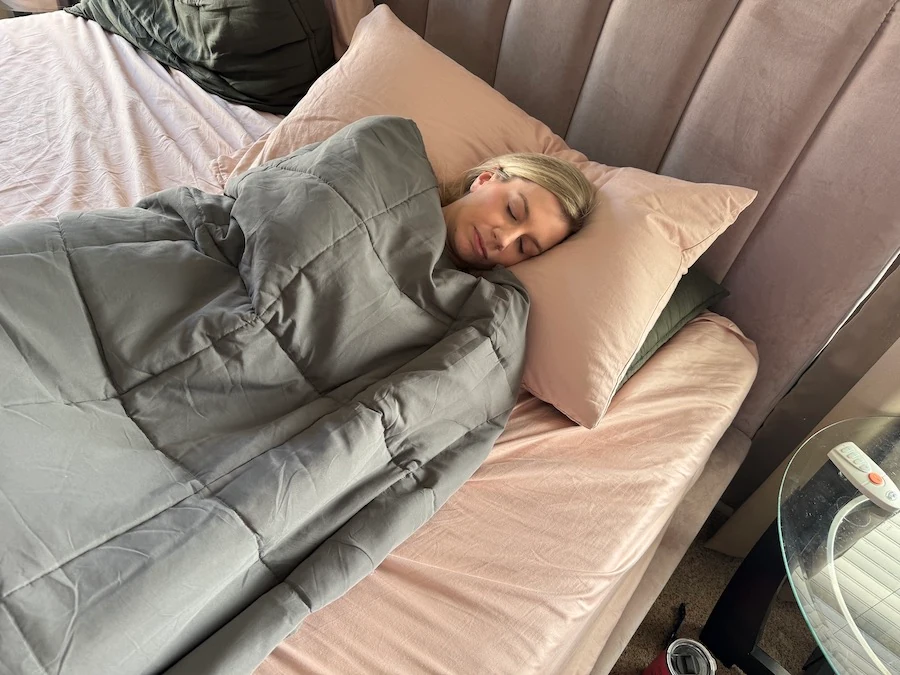
Weighted blankets have fillings that make them very heavy. Glass beads, sand-like micro beads, steel pellets and dense natural fiber are some possible materials used in weight blankets and they react very differently when they are submerged in water that standard cotton or polyester bedding.
Machine washing with hot water or drying on high can ruin a weight blanket through uneven weight distribution and torn stitching. If you don’t dry it all the way, mold can grow inside. You can even damage your washer if the motor strains from the increased weight.
Also remember – sleep quality depends on many factors including mattress materials, sleep posture, and bedding hygiene. You can explore more mattress and sleep resources in our Sleep Guides hub.
How to Wash a Weighted Blanket
Follow these steps to care for and clean your weighted blank and ensure it lasts many years. Additionally, you may also want to know how often you should wash bedding.
Check the Care Label First
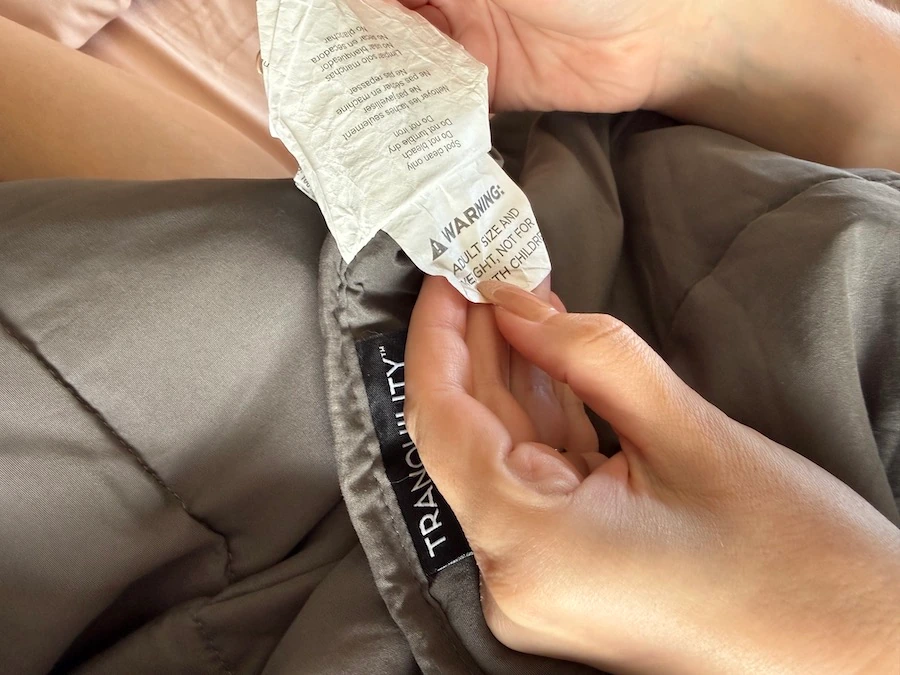
The manufacturer label on the blanket will tell you exactly what it is made of, what water temperature to use when washing, whether machine washing is ok, and dryer settings. Depending on the material, some weighted blanked might be desinged for spot cleaning only or dry clean only. These instructions should not be ignored, because water or high heat can destroy the blanket.
Know Your Blanket’s Filing Material
Knowing what your weighted blanket is filled with will help you understand the best way to clean it. Here are some common fillings and the safest cleaning methods and washer/dryer settings.
| Filling Material | Machine Wash at Home? | Dryer Safe? | Safer Alternative if Unsure |
|---|---|---|---|
| Glass Microbeads | YES – if under your washer’s weight limit | YES – low heat only | Air dry flat to extend lifespan |
| Plastic Poly Pellets | YES – gentle cycle, cold water | YES – lowest heat setting | Air dry to prevent pellet warping |
| Steel Shot / Metal Beads | SOMETIMES – only in large-capacity machines | RARELY – risk of damage from heat | Commercial washer or professional cleaning |
| Organic Fill (Rice, Beans, Sand) | NO | NO | Spot clean only; keep filling dry |
| Fiber Fill + Beads Hybrid | YES – delicate cycle recommended | YES – low heat or air dry | Flat dry to prevent clumping |
| Removable Blanket Cover | YES – treat like regular bedding | YES | Wash weekly to reduce full blanket washes |
Decide Whether Your Washing Machine Can Handle It
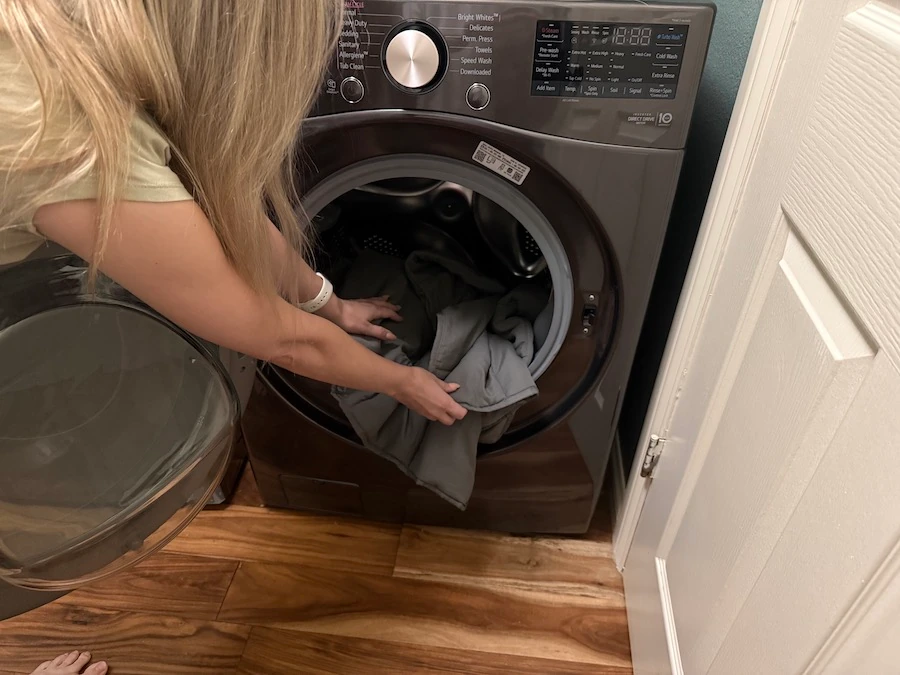
Besides using our chart above to help guide you by material, take a look at the total weight of your blanket. Most washing machines can handle loads up to 20 pounds, but you don’t want to stuff a heavy blanket into small top-loading machine.
Warning signs that a washer can’t handle a heavy load:
- Load banging during a spin cycle
- Slow draining
- Noise and vibration
- Machine error messages or signals
If you have a small washer, considering using an oversized or high capacity washing at a laundromat instead. These machines are designed to handle bulky bedding.
| Factor | Recommendation | Why It Matters |
|---|---|---|
| Maximum Washer Capacity | Ideally under 15–20 lbs | Exceeding capacity can damage the motor and stitching |
| Washer Type | Front-loading preferred | Handles bulky, heavy loads more evenly |
| Load Banging During Spin | Stop cycle immediately | Indicates imbalance that can damage washer |
| Slow Draining | Reduce load weight | Heavy blankets retain excess water |
| Noise / Vibration / Errors | Use laundromat oversized washer | Prevents long-term machine damage |
How to Machine Wash a Weighted Blanket Without Ruining It
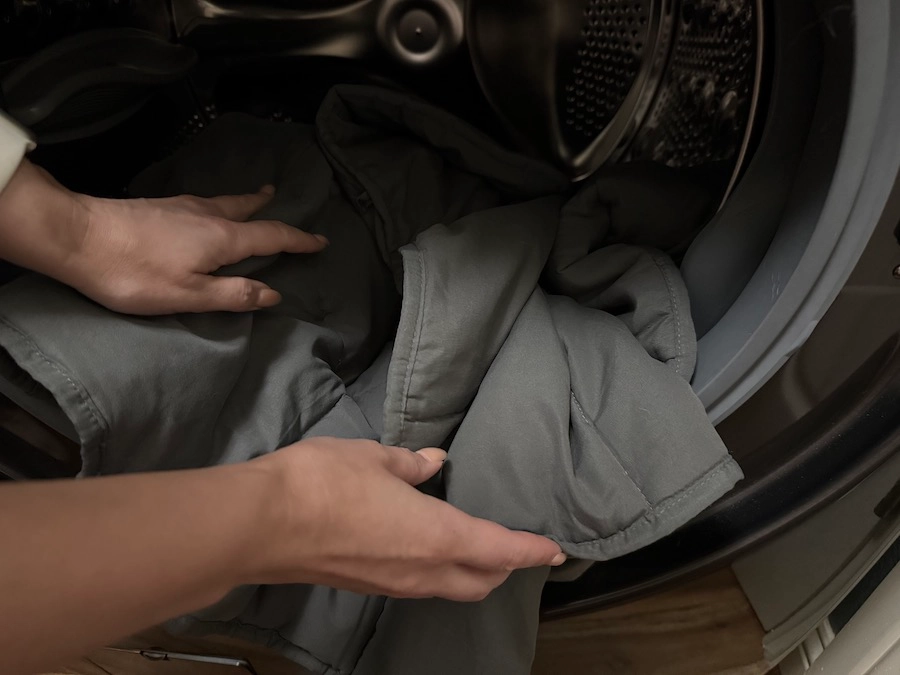
It you confirm from the label that you can machine wash the blanket and your wash machine meets the specs to handle the job, then follow these guidelines to get started:
- Use cold water – heat can damage most fillers
- Choose the delicate cycle – fast spinning can tear the stitching
- Use only mild liquid laundry detergent – don’t overload with heavy soap, fabric softener or bleach. Excess soap can get trapped within the layers and is hard to remove.
- Wash Alone – don’t add other items to the load with the blanket.
Drying Your Weighted Blanket
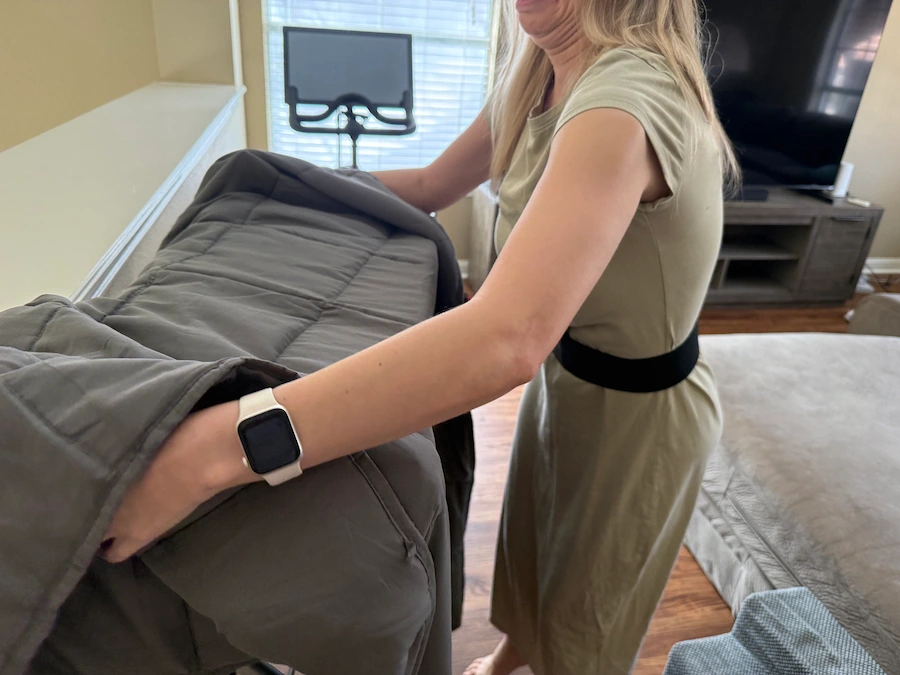
Drying is where the most damage to the weighted blanket can occur. Use heat that is too high and materials can melt. If you don’t dry throughly, mold or mildew can form from the wetness inside.
Air drying is the safest, most gentle and most consistent method. Take a couple drying racks or chairs and drape the blanket over it. Ensure airflow reaches all sections.
If you can’t wait to air dry or don’t have the space, the use the dryer on the lowest heat setting. Add dryer balls to help distribute the heat evenly and check on the load every 20 minutes, shake out the blanket to ensure all sections are dry and not over dried.
Washing a Weighted Blanket Cover Instead
If you are going to purchase a new weighted blanked, I highly recommend finding one with a removable, washable cover. This will make it easy to clean like other bed covers and will protect and preserve the weighted blanket. This is similar to putting a duvet cover over a down filled comforter that is dry clean only.
You may also want to brush up on other cleaning techniques, like how to remove urine from a mattress.
Spot Cleaning For Quick Maintenance
Spot cleaning is the best approach if you have a small spill or notice a small stain on your blanket. You don’t have to go through the process of a full, deep wash, but your blanket can be cleaned sufficiently. Here are some easy steps:
- Mix mild detergent with cold water.
- Dab gently with a microfiber cloth.
- Avoid soaking the filling.
- Air dry completely before reuse
| Cleaning Method | Best For | Risk Level | Recommended Frequency |
|---|---|---|---|
| Machine Wash (Cold, Delicate) | Approved bead-filled blankets | Medium – if washer is overloaded | Every 2–3 months |
| Air Drying | All weighted blankets | Low – safest drying method | After every wash |
| Low-Heat Dryer | Synthetic bead fillings | Medium – risk of heat damage | Only if air drying unavailable |
| Spot Cleaning | Small stains or spills | Very Low | As needed |
| Washing Removable Cover | Routine hygiene maintenance | Low | Every 1–2 weeks |
Common Mistakes That Can Ruin a Weighted Blanket
The care instructions on a weighted blanket might only address how to properly wash and dry, but there are other common mistakes that can shorten the lifespan of your blanket.
- Overwashing: washing every week can weaken the materials and fibers of the blanket and the filling can start to shift to other sections if it is not firmly box stitched in.
- High heat drying: always use a low heat setting to avoid shrinking the blanket and melting materials.
- Hanging to dry when soaking wet: if the blanket is soaked, the wet weight can strech and distort the fabric and its overall shape.
- Overloading the Washer: a wash machine can be damaged if the load is too heavy and the motor is stressed.
Tips For Keeping Your Weighted Blanket Clean Longer
You don’t need to frequently machine wash a weighted blanket to keep it clean. Implement these preventative methods to protect your blanket instead:
- Use a removable cover that is breathable (usually cotton) and is machine washable.
- Rotate your blanket. This will prevent one end from become more soiled and stained if it is by your face every night.
- Shower before bed and make sure you don’t have lotion and body oil on it.
- Air it out weekly in a well ventilated room to keep it smelling fresh.
Practicing these steps will help reduces stains, odors, bacteria and allergens so that you don’t have to deep clean your weighted blanket as often.
When It’s Better to Replace Instead of Wash
In some situations, washing is not the best solution to clean your weight blanket and it is just time to get a new one. Signs to look for that indicate it’s time to toss it include, torn stitching, filling migrating to one side making it lumpy and uneven, and strong odor even after cleaning.
Once the pockets are broken or too weak, the blanket cannot be restored to a good condition. Similarly, if you don’t dry sufficiently after washing, then mold and mildew can grow from the trapped moisture and pose a health concern.
Who Benefits From a Weighted Blanket
If you have trouble sleeping and frequently toss and turn at night, there are benefits to using a weighted blanket that can help improve your sleep. Deep pressure stimulation (DPS) simulates the feeling of a hug that calms the nervous system.
Weighted Blanket can be beneficial to people who have:
- Anxiety & stress – gentle pressure when you sleep can make you feel grounded and safe. It also increases serotonin and reducing cortisol.
- Insomnia & sleep issues – the pressure can help reduce restlessness and make it easier to stay asleep through the night
- Autism, ADHD or sensory issues – pressure while you sleep can calm people who are overstimulated easily and have trouble focusing and staying calm.
FAQs on How to Wash a Weighted Blanket
Can you put a weighted blanket in a regular washing machine?
It depends on the type of washing machine, the capacity and weight limit. Most home washing machines can safely handle loads up to 15 pounds. If you exceed the limit, can can damage the machine and the blanket. Front-loading washing machines are better for bulky, heavy loads than top-loading machines. You can always go to a laundromat to use a oversized washer if you don’t want to risk damaging your own washer.
How often should you wash a weighted blanket?
To maintain good hygiene, a weight blanket should be washed every two or three months if you are using it daily. If your weighted blanket has a removable cover, then you can wash it every two weeks so it is clean and fresh and the inner blanket avoids potential damage from washing or over-washing. You can also spot clean and air out once and while to keep your blanket smelling great.
Can weight blankets go in the dryer?
It depends. Check the manufacturer instructions for the best method for drying. You should always dry on a low setting as high heat can melt the filling and weaken the stitching. Also frequently check the load during the drying cycle to ensure it dries evenly and throughly. Air drying is the gentlest and safest method for drying a weighted blanket.
Can washing a weighted blanket ruin it?
Yes, if done incorrectly, washing a weighted blanket can ruin it. The most common ways to damage during washing is using hot water, drying on high heat, and using a washing machine that can’t handle the size and weight. If you are unsure about how to wash it, just avoid machine washing altogether and spot clean or take to a professional cleaning service.
What detergent should you use on a weighted blanket?
To wash a weighted blanket, we recommend using a mild liquid detergent that is fragrance-free. Be mindful not to use too much detergent because it can get trapped in the blanket if not rinsed out thoroughly. Powder detergents and ones with strong fragrances are more likely to leave residue that can attract dirt and oil. All Free and Clear or Arm & Hammer Sensitive Free & Clean detergents are my go to choices that are widely available and affordable.
Final Thoughts
Weighted blankets are great for comfort and relaxation, just be aware of the special cleaning instructions. There are a variety of fillings that add the extra weight, but they need special care to be cleaned properly.
Weighted blankets are not the best choice if you sweat a lot and sleep hot, have pets in bed or are prone to spills. If you take care to protect your weighted blanket and clean using cold water, mild detergent and air drying, then you will be able to enjoy it for many years.
And remember, sleep quality depends on many factors including mattress materials, sleep posture, and bedding hygiene. You can explore more mattress and sleep resources in our Sleep Guides hub.
Ready To Sleep Better?
Take our quiz to find the mattress that fits your sleep style and budget.
"I found my perfect mattress in 60 seconds." - Sarah H., side sleeper
✅ Super fun! 🥳
⭐ Trusted by 10,000+ sleepers 😴
🛏 Personalized mattress match 💤