


You have probably heard of memory foam as it is a common material used in pillows, mattresses and mattress toppers, but what is memory foam and how does it work?
In this article, we will take a deep dive into the engineering science behind memory foam, beyond the marketing hype. This will give you a better understanding if memory foam is right for your based on your sleep style and preferences.
For example, did you know that many memory foam mattresses require specific mattress foundations for proper support?
What is Memory Foam?
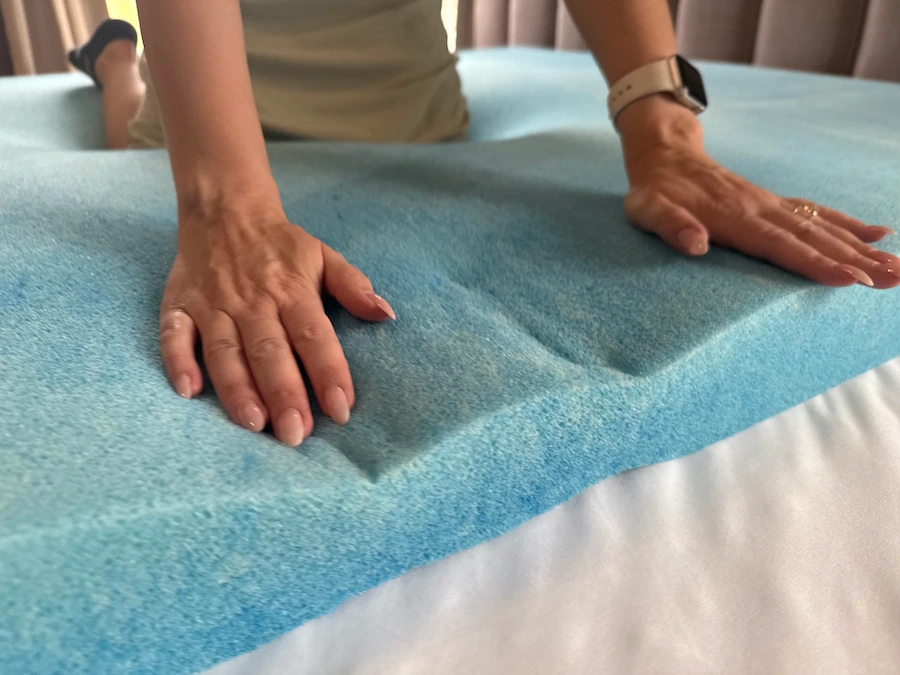
Memory foam is a specific type of viscoelastic polyurethane foam that was designed to help distribute weight over a surface more evenly. It was invented by NASA-funded researchers who were trying to design a material to help cushion pilots during their test flights. Today, memory foam is used to cushion beds, pillows shoes, chairs, couches and even football helmets.
The most unique quality of memory foam is its ability to isolate motion and reduce pressure points. It contours to your body while you sleep, elevating muscle and joint pain, and absorbing the motion of your partner moving while sleeping so you have less disturbance while you sleep.
When it comes to taking care of a memory foam mattress, you might also be wondering how often should you wash your bedding and mattress? Surprisingly, it does make a big difference, especially in terms of wear and tear, as well as in regards to the overall smell and cleanliness of the mattress.
What Exactly Is Memory Foam Made Of?
Memory foam is a type of polyurethane foam, but the difference from other types of foam is that it contains chemicals that give it viscoelastic properties. This means it is BOTH elastic and viscous when pressure is applied, having properties of BOTH solid and liquid materials.
Foam reacts slowly when you press down on it and takes time to return to its original shape once you pull back. Think of traditional foam like a trampoline: you jump and it pushes right back. Memory foam is more like cookie dough. Push your finger into it and it gradually molds around you instead of bouncing. This slow response allows the foam of a mattress to spread over body weight evenly and reduces pressure points commonly occurring in hips and shoulders.
One of the most misunderstood perceptions of memory foam is that since it is high-density it is firm. Density actually refers to how much material is packed into a cubic foot of foam, not how it feels. High-density foam is engineered to last a long time and is durable. Low-density foam can break apart easier, which is why cheaper foam mattress start to dip and sag sooner than a high quality mattress.
Another great feature of newer, memory foam designs is open-cell design. This means that it is structured with small interconnected pockets that facilitate airflow and a cooling effect.
Remember, sleep quality depends on many factors including mattress materials, sleep posture, and bedding hygiene. You can explore more mattress and sleep resources in our Sleep Guides hub.
How Memory Foam Actually Works
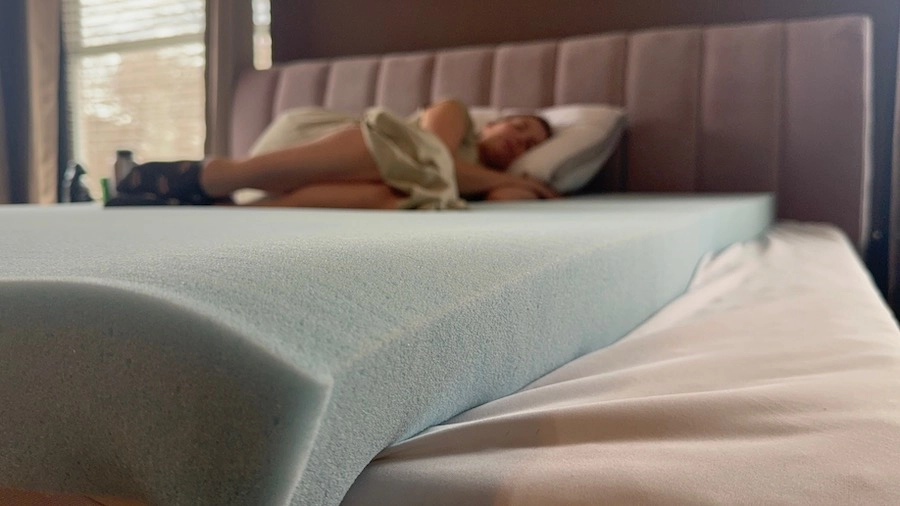
The science behind memory foam’s feel is how it reacts to to heat over time once there is pressure. Unlike other foams, latex or springs that bounce back immediately, memory foam softens slowly under pressure as it warms. Your body heat make the foam more flexible and it contours to your body rather than pushing back against it.
Pressure distribution is another key factor. Memory foam is designed to absorb pressure and distribute it evenly across a wide area. Imagine placing a weighted ball on a wooden board and in the sand. The sand envelopes the ball and distributes the pressure evenly while the ball has sharp points of contact with the wood.
Lastly there is motion isolation to consider. Since memory foam slowly absorbs energy instead of transferring it, there is not a rippling effect. So if you sleep with a partner in bed, the memory foam can block your partner’s movements from reaching you and you won’t be bouncing all over the bed every time your partner turns.
The downside is that you need to be ok with that slow, stuck feeling that contours to your body and absorbs motion. It is a fine balance between responsiveness and pressure relief. Hopefully this understanding of the science behind memory foam will help you determine whether or not you find comfortable enough and perceive it as a benefit, not an unpleasant sensation.
Memory Foam vs. Other Mattress Materials
Material materials are designed for different performance goals and sleep preferences. Let this table help guide you to the right mattress materials for you.
| Material | Feel | Pressure Relief | Cooling | Motion Isolation | Best For |
|---|---|---|---|---|---|
| Memory Foam | Deep contour, slow response | ⭐⭐⭐⭐ | ⭐⭐ | ⭐⭐⭐⭐ | Side sleepers, couples, joint pressure |
| Innerspring | Bouncy, traditional | ⭐⭐ | ⭐⭐⭐⭐ | ⭐ | Hot sleepers, budget buyers |
| Latex Foam | Responsive, buoyant | ⭐⭐⭐⭐ | ⭐⭐⭐ | ⭐⭐⭐ | Combo sleepers, durability seekers |
| Polyfoam | Light contour, fast response | ⭐⭐ | ⭐⭐ | ⭐⭐ | Guest rooms, lower budgets |
| Hybrid | Balanced contour + bounce | ⭐⭐⭐⭐ | ⭐⭐⭐⭐ | ⭐⭐⭐ | Most sleeper types |
Benefits of Memory Foam Mattresses + Who They Help Most
Pressure relief for side sleepers: The primary benefit from memory foam mattresses is that relive pressure points while supporting your whole body in a neutral position while you sleep. Since memory foam responds slowly to weight and heat, it can reduce pressure in key pain spots like lower back, hips and shoulders. Side sleepers benefit from memory foam the most since their total weight is compressed within a more narrow area.
Less Motion Disturbance for Couples: Another significant benefit is motion isolation. Memory foam absorbs motion instead of transferring it, so if you sleep as a couple you will feel a significantly less impact from your partners sleep motions, giving you a more restful full nights sleep.
Pain relief for people with back and joint sensitivity: the even weight distribution offers relief to people who suffer with back and joint pains.
Overall, memory foam benefits side sleepers, those with physical ailments, couple where one partner moves a lot and the other is a light sleeper, and anyone who enjoys the body-contouring sensation while they sleep.
Different Types of Memory Foam Explained
Despite what mattress manufacturers might have you think, not all memory foam is created equal. Here are the most common types and their differences.
Traditional
This is the original memory foam that was first developed and is known for hugging your body. It is excellent for relieving pressure points when you sleep, but can make you hot when you sleep because it has little airflow. Some mattress brands may use traditional memory foam and pair with some cooling layers to help with heat rentention.
Gel-Infused
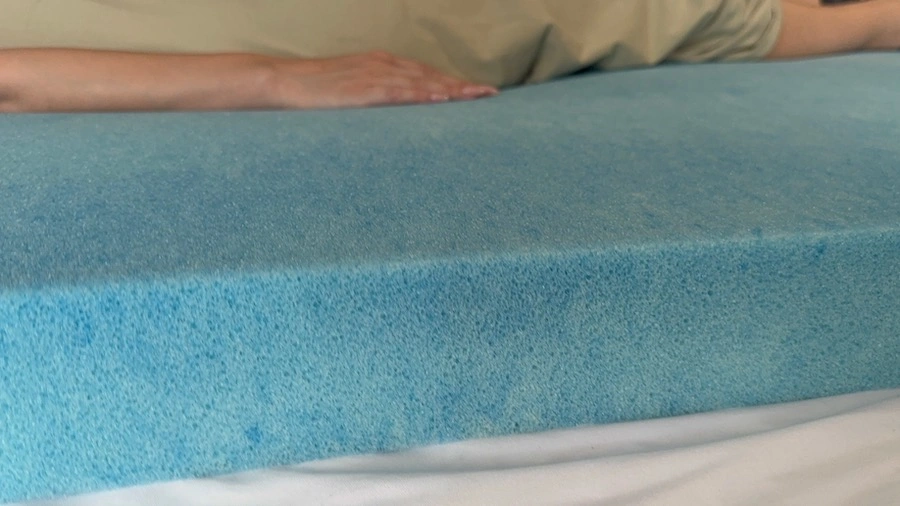
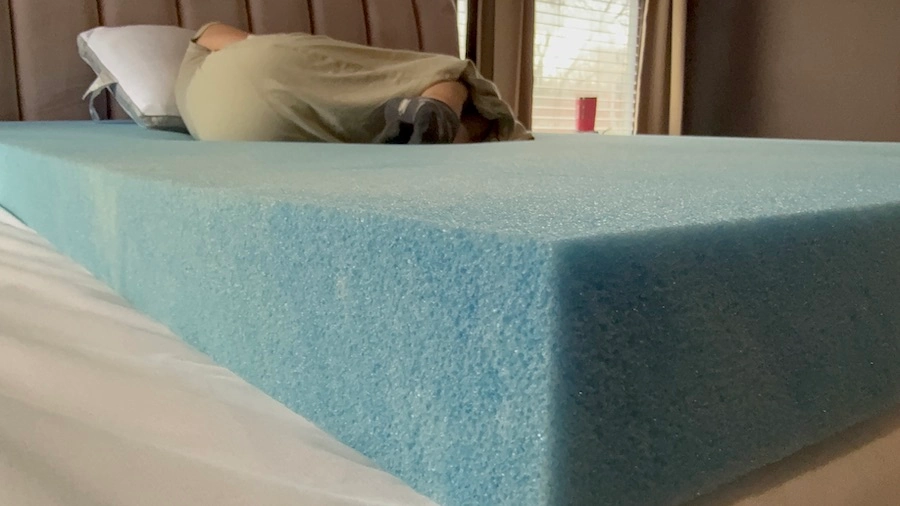
Particles of gel are added to the memory foam to help with heat retention and distribution. Through our testing of traditional memory foam mattress toppers and gel-infused memory foam toppers, we noticed the cooling effect upon initially laying down, but it faded and was only a slight improvement overall.
Copper-Infused
Copper added to memory foam has been advertised to help with cooling and reduce odors. Through out testing, we noticed a subtle cooling when it touched our skin, but not. major difference in performance from the gel topper.
Plant-Based
This product is marketed to those who want a more organic, eco-friendly product and less smell from chemicals. Some chemical oils and coatings are replaced with plant oils, but we didn’t notice a change in the mattress feel.
Open-Cell
One of the most significant improvements to memory foam, the open-cell design creates small openings through the foam to allow air to circulate. This actually does help with overall cooling feel. If you are a hot sleep, this is the best type of memory foam.
The bottom line is that high-density foam that is well constructed is a better choice that density that is infused with different products and oils.
Is It Safe To Sleep On?
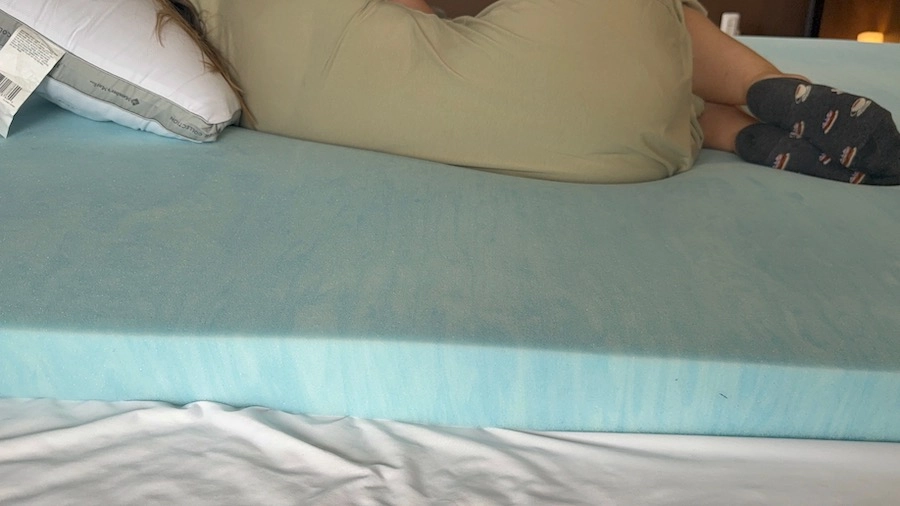
There has been concern around memory foam because of the chemicals used, but most modern mattresses are deemed safe if they pass certification standards, which have been established by CertiPUR-US.
There can be off-gassing and a chemical smell if benzene, formaldehyde and naphthalene are used. CertiPUR standards mean that the mattress has passed rigorous standards. It is not made with those chemicals as well as other heavy metals and has low VOC (volatile organic compound) emissions for indoor air quality. They also undergo testing for durability.
If you are going to purchase this type of mattress, make sure it is certified and safe. Also it is a good idea to allow time to air out the memory foam for a few days after you unwrap it to reduce odors.
FAQs on Memory Foam Mattresses
How Long Does It Last?
Similar to standard mattresses, memory foam mattresses and toppers can last 7 to 10 years. To ensure the lifespan of your mattress, choose a high-density memory foam that is certified. Cheap mattresses tend to use lower-density foam that loses shape and breaks down quickly.
Foundation quality, total body weight and sleep position can also impact how long a mattress lasts. Signs to look for to know when it is time to replace your memory foam include sagging more than one inch, discomfort sleeping, and trouble getting comfortable in your usual sleep position.
Does Memory Foam Sleep Hot?
Yes, standard mattresses of this type sleep hot. This is because the high-density foam that contours to your body and traps heat.
Some mattresses are infused with gel or copper to help with cooling, but the coolest types have an open-cel structure that facilities airflow through tiny holes.
Ultimately, mattress temperature also depends on the mattress build and foundation, not just the foam layer. However, generally speaking, this type of mattress may not be the best choice, for hot sleepers.
Is It Good for Back Pain?
Yes, memory foam can help some types of back and joint pain as it relieves pressure points while sleeping. It molds to your natural form, giving you better support along the spine.
Consult your physician or health specialist to find the mattress that is best for your pain symptoms. It is important to have the proper firmness and support to maintain sleep health.
Can Memory Foam Sag?
Yes, it can sag after years of use or if you do not have a rigid, firm, uniform foundation. Sagging looks like s dent or dip and usually appears in the center of the mattress or where you sleep most often.
Early sagging after a couple years can be sign that you are using cheap, low-density foam. Once sagging starts to make you feel uncomfortable while you sleep, it is a sign that it is time to replace your mattress or topper.
Does It Smell?
Yes, newly unwrapped memory foam typically has a chemical smell that comes from off-gassing. Also VOCs are released as the new foam expands and settles. Let your memory foam product air out outside or in a room with a fan to reduce the initial odor.
Final Thoughts
When it comes down to it, choosing a mattress material involves sleep style, as well as your own personal preference. It is important to understand how memory foam works – as it allows you to make a more informed decision.
This type of mattress is different than other types of bedding material, it has viscoelastic chemistry and a pressure-distributing structure. While some people may want different materials, memory foam remains a very popular choice.
For most people, the pressure relief and deep contouring is exactly what they want. That’s exactly what this mattress type provides.
But for others, they may want responsiveness and bounce. If that’s the case, you should try innerspring, latex, or hybrid mattresses.
No matter what your body responds to best – you know have some more knowledge, to help you decide.
And don’t forget, sleep quality depends on many factors including mattress materials, sleep posture, and bedding hygiene. You can explore more mattress and sleep resources in our Sleep Guides hub.
Ready To Sleep Better?
Take our quiz to find the mattress that fits your sleep style and budget.
"I found my perfect mattress in 60 seconds." - Sarah H., side sleeper
✅ Super fun! 🥳
⭐ Trusted by 10,000+ sleepers 😴
🛏 Personalized mattress match 💤