

Sleep is one of the most important pillars of overall health, yet many people overlook how body positioning during sleep can significantly affect physical well-being. One sleeping posture that has gained increasing attention among health professionals, athletes, and wellness enthusiasts is sleeping with the legs elevated. This simple adjustment—raising the legs slightly above heart level while lying down—can offer a wide range of physical and therapeutic benefits.
Whether accomplished using pillows, wedge cushions, adjustable beds, or specially designed leg elevation devices, this sleeping position may improve circulation, reduce swelling, relieve back pain, support recovery after exercise, and enhance overall sleep quality.
This article explores the science, health benefits, risks, best practices, and practical methods associated with sleeping with elevated legs.
What Does “Sleeping With Legs Elevated” Mean?
Sleeping with legs elevated refers to resting or sleeping in a position where the legs are raised above the level of the heart or torso. This is commonly achieved by:
- Placing pillows under the calves or knees
- Using a wedge pillow
- Sleeping on an adjustable bed
- Elevating the foot of the mattress
- Using orthopedic support cushions
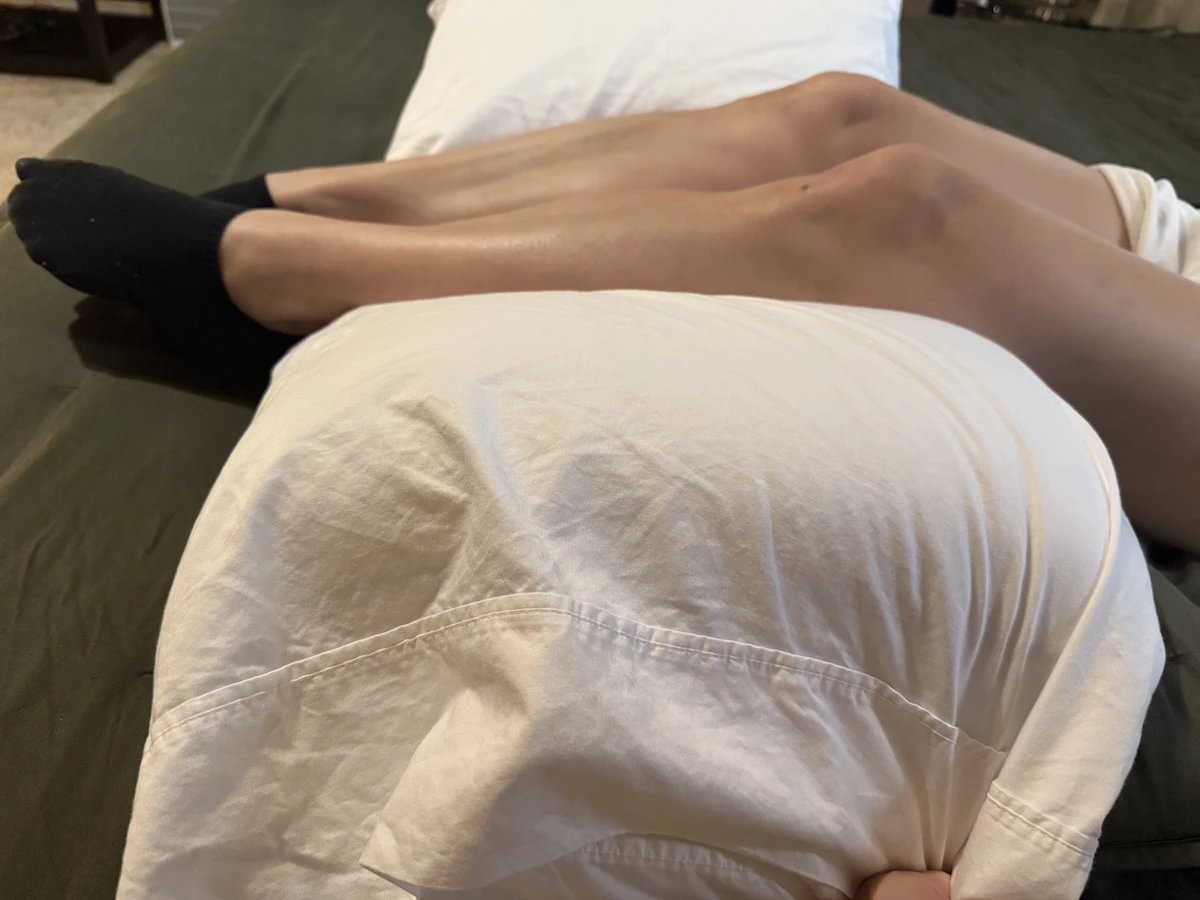
Typically, the legs are elevated between 6 and 12 inches. The degree of elevation depends on the purpose, such as reducing swelling, relieving pain, or improving circulation.
Read More: How to Sleep On Your Side | Is Nectar Premier Good for Back Pain? | Is Helix Midnight Good for Side Sleepers?
The Science Behind Leg Elevation
To understand why elevating the legs can be beneficial, it helps to examine circulation and gravity.
Throughout the day, gravity pulls blood and fluids downward into the legs and feet. This can lead to:
- Swelling
- Fluid retention
- Leg fatigue
- Varicose veins
- Poor circulation
- Pressure on veins
When the legs are elevated above the heart, gravity assists the return of blood and lymphatic fluid toward the upper body. This reduces pressure in the veins and can improve overall vascular efficiency.
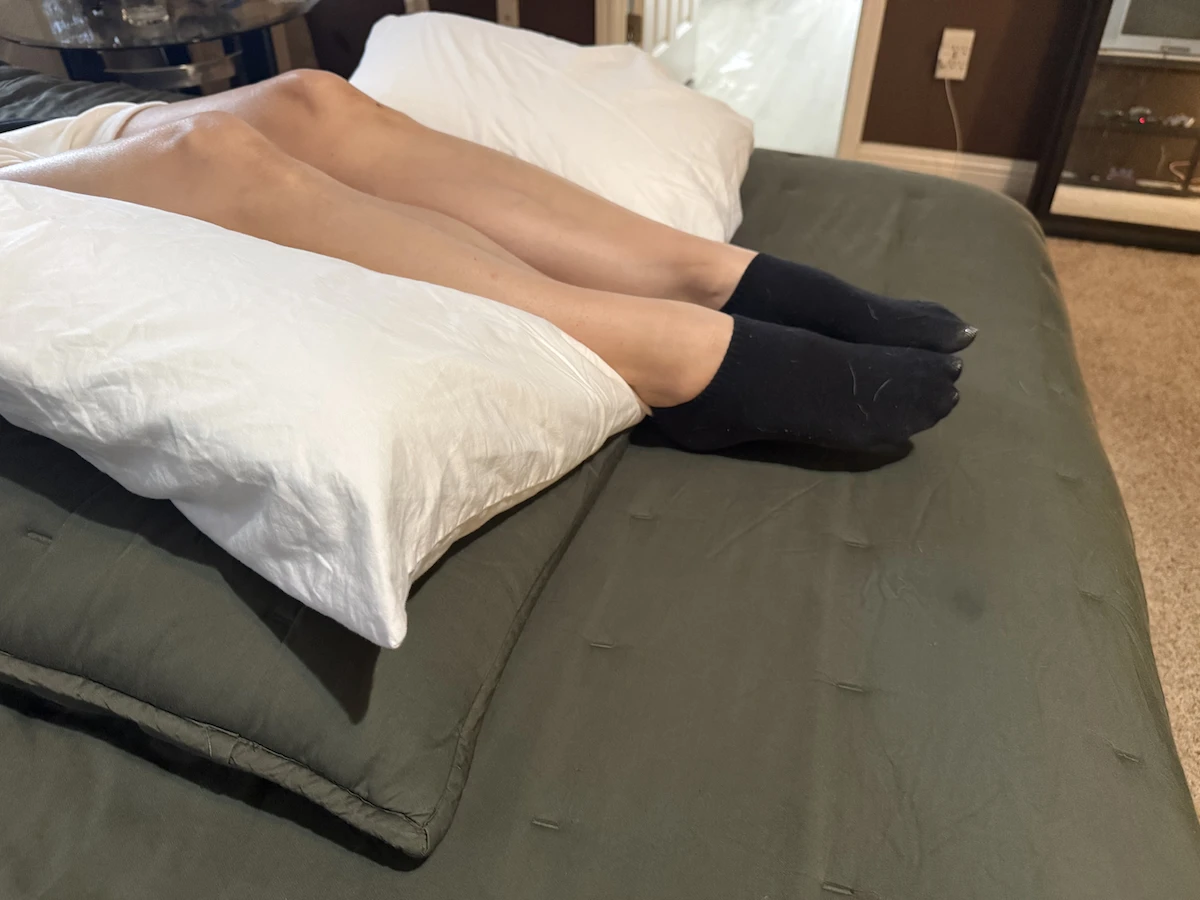
Elevating the legs may also alter spinal alignment and reduce pressure on joints and muscles, contributing to pain relief and muscular recovery.
Major Benefits of Sleeping With Legs Elevated
Improves Blood Circulation
One of the most significant benefits of sleeping with elevated legs is improved circulation.
The veins in the legs must work against gravity to return blood to the heart. Poor circulation can lead to symptoms such as:
- Tingling
- Numbness
- Swelling
- Fatigue
- Cold feet
- Leg cramps
Elevating the legs reduces the effort required for venous return. This may help blood flow more efficiently throughout the body.
Improved circulation can be especially beneficial for:
- Older adults
- Pregnant women
- People who stand all day
- Office workers who sit for long periods
- Individuals with circulation disorders
Better circulation may also improve oxygen delivery and nutrient transport throughout the body during sleep.
Reduces Swelling in the Legs and Feet
Swelling, also known as edema, commonly affects the feet, ankles, and lower legs.
Fluid accumulation can occur because of:
- Long periods of standing
- Pregnancy
- Injury
- Surgery
- Hot weather
- Poor circulation
- Chronic venous insufficiency
Elevating the legs encourages excess fluid to move away from the lower extremities and back into circulation.
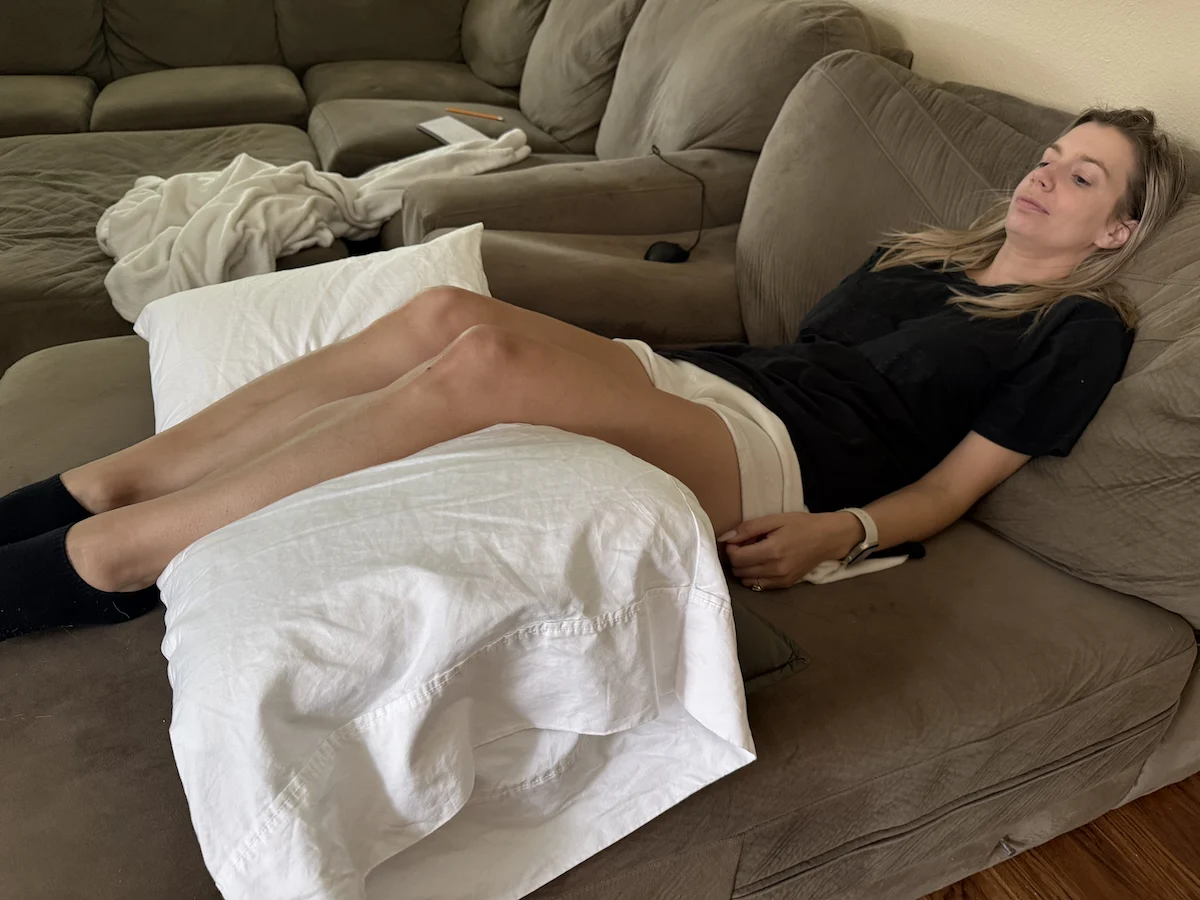
Many people notice reduced puffiness and discomfort after sleeping with their legs elevated for just a few nights.
This is particularly useful for:
- Travelers after long flights
- Nurses and retail workers
- Athletes
- Pregnant women
- Elderly individuals
Helps Relieve Lower Back Pain
Leg elevation can help align the pelvis and spine in a more neutral position.
For people with lower back pain, placing a pillow under the knees while lying on the back may reduce strain on the lumbar spine.
This position can:
- Reduce spinal compression
- Relax lower back muscles
- Decrease pressure on discs
- Improve posture during sleep
Many physical therapists recommend slight leg elevation for individuals suffering from:
- Sciatica
- Herniated discs
- Lumbar strain
- Chronic lower back tension
By supporting the natural curve of the spine, elevated legs can help minimize nighttime discomfort and morning stiffness.
Eases Pressure on Varicose Veins
Varicose veins develop when veins become enlarged and weakened, often due to poor circulation and increased venous pressure.
Symptoms include:
- Aching
- Throbbing
- Heaviness
- Burning sensations
- Visible twisted veins
Sleeping with the legs elevated reduces pressure within the veins and may help decrease discomfort associated with varicose veins.
Although leg elevation cannot cure varicose veins, it may:
- Reduce swelling
- Improve comfort
- Slow progression
- Decrease nighttime leg pain
Doctors frequently recommend leg elevation as part of conservative treatment for vein disorders.
May Prevent Blood Pooling
Blood pooling occurs when blood accumulates in the lower extremities rather than circulating efficiently back to the heart.
This can contribute to:
- Dizziness
- Fatigue
- Swollen ankles
- Heavy legs
- Poor circulation
People with sedentary lifestyles or venous insufficiency are especially susceptible.
Elevating the legs during sleep encourages healthy blood return and may help minimize overnight fluid accumulation.
Supports Recovery After Exercise
Athletes and physically active individuals often use leg elevation as part of recovery routines.
Exercise can create:
- Muscle inflammation
- Fluid buildup
- Soreness
- Microtears in muscle tissue
Elevating the legs after intense activity may:
- Improve circulation
- Reduce inflammation
- Minimize soreness
- Accelerate recovery
Many runners, cyclists, and fitness enthusiasts combine leg elevation with stretching and compression therapy.
Sleeping with elevated legs may support overnight recovery processes, allowing muscles to repair more effectively.
May Help Reduce Leg Cramps
Nighttime leg cramps can be painful and disruptive.
Common causes include:
- Muscle fatigue
- Dehydration
- Circulation problems
- Pregnancy
- Nerve compression
For some individuals, elevating the legs reduces muscle tension and improves circulation, potentially lowering the frequency of cramps.
Although not a guaranteed cure, many people report better nighttime comfort after adopting this sleeping posture.
Beneficial During Pregnancy
Pregnancy often causes increased pressure on the veins and fluid retention in the legs and feet.
Hormonal changes and the growing uterus can impair circulation, leading to:
- Swollen ankles
- Leg fatigue
- Varicose veins
- Discomfort
Sleeping with the legs elevated may help relieve these symptoms.
Pregnant women often benefit from:
- A pillow under the legs
- Sleeping on the left side
- Mild elevation of the feet
However, pregnant individuals should always consult their healthcare provider regarding sleep positioning, especially during late pregnancy.
Can Improve Lymphatic Drainage
The lymphatic system helps remove waste products and excess fluid from tissues.
Poor lymphatic drainage can contribute to:
- Swelling
- Heaviness
- Inflammation
Elevating the legs may encourage more effective lymphatic flow, reducing fluid retention and supporting detoxification processes.
People with lymphedema or chronic swelling sometimes use leg elevation alongside compression garments and physical therapy.
Reduces Pressure on Feet and Ankles
People who spend hours standing often experience aching feet and ankle pain.
Elevating the legs overnight can:
- Relieve pressure
- Reduce inflammation
- Relax foot muscles
- Improve comfort
This can be especially beneficial for:
- Healthcare workers
- Teachers
- Retail employees
- Restaurant staff
- Warehouse workers
May Help Individuals With Chronic Venous Insufficiency
Chronic venous insufficiency (CVI) occurs when leg veins struggle to return blood to the heart efficiently.
Symptoms include:
- Swelling
- Skin discoloration
- Pain
- Leg ulcers
- Heaviness
Leg elevation is one of the most commonly recommended lifestyle treatments for CVI.
Sleeping with elevated legs may:
- Reduce venous pressure
- Improve comfort
- Prevent worsening symptoms
Encourages Relaxation and Stress Relief
Many people find leg elevation physically calming.
The posture may:
- Reduce muscular tension
- Ease physical fatigue
- Promote relaxation
- Encourage restful sleep
When paired with deep breathing or meditation, elevated leg positioning can become part of a calming nighttime routine.
Helps During Injury Recovery
After injuries involving the legs, ankles, or feet, doctors often recommend the RICE method:
- Rest
- Ice
- Compression
- Elevation
Elevation helps minimize swelling and inflammation.
Sleeping with the injured leg elevated may:
- Reduce throbbing
- Improve comfort
- Speed recovery
This is commonly advised following:
- Sprains
- Fractures
- Knee surgery
- Ankle injuries
May Improve Sleep Comfort
Some people simply feel more comfortable with slight leg elevation.
This position may:
- Relieve tension
- Improve body alignment
- Reduce tossing and turning
Better physical comfort can contribute to:
- Faster sleep onset
- Fewer awakenings
- Deeper sleep
Best Positions for Sleeping With Legs Elevated
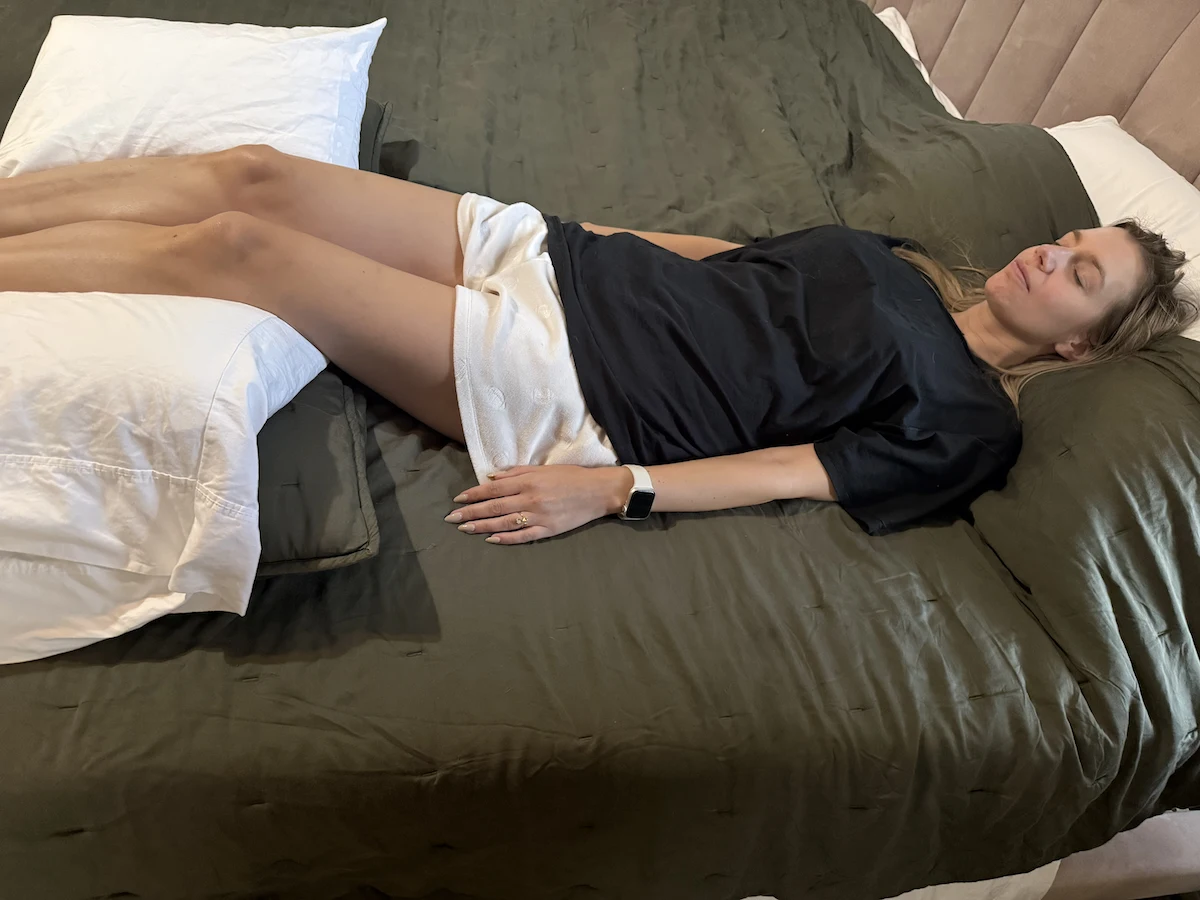
Sleeping on Your Back
This is generally considered the ideal position for leg elevation.
Place:
- A pillow beneath the knees
- Or a wedge under the calves
This helps maintain spinal alignment while supporting circulation.
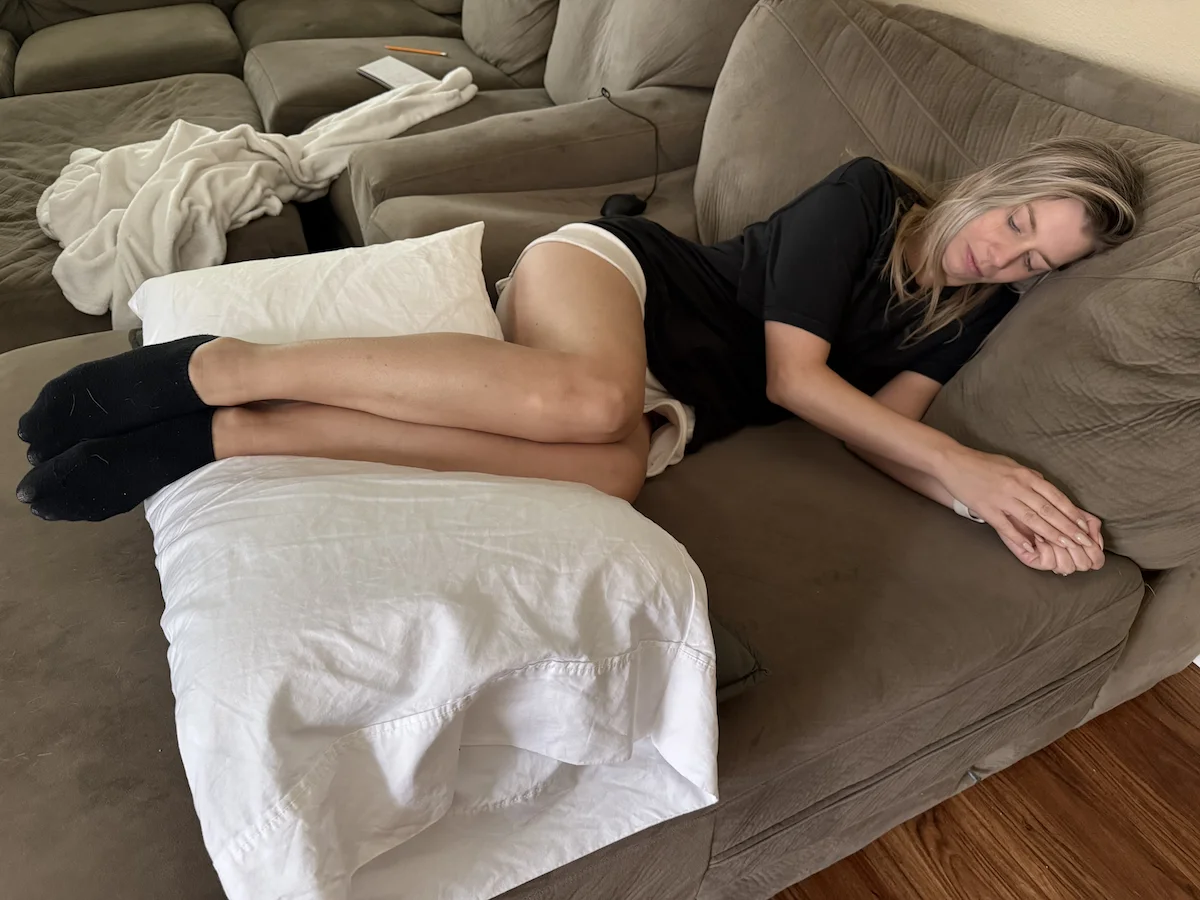
Side Sleeping With Elevated Legs
Side sleepers can also elevate their legs using:
- A pillow between the knees
- A wedge beneath the lower legs
This may help reduce hip and lower back strain.
Adjustable Bed Position
Adjustable beds allow precise positioning of:
- Legs
- Back
- Head
Many people use the “zero gravity” position, where the legs are elevated slightly above the heart.
This position may:
- Reduce pressure points
- Improve circulation
- Increase comfort
How High Should Legs Be Elevated?
For most people:
- 6–12 inches is sufficient
- Legs should ideally be above heart level
Too much elevation may:
- Cause discomfort
- Strain the knees
- Reduce sleep quality
Comfort and support are essential.
Tools for Leg Elevation
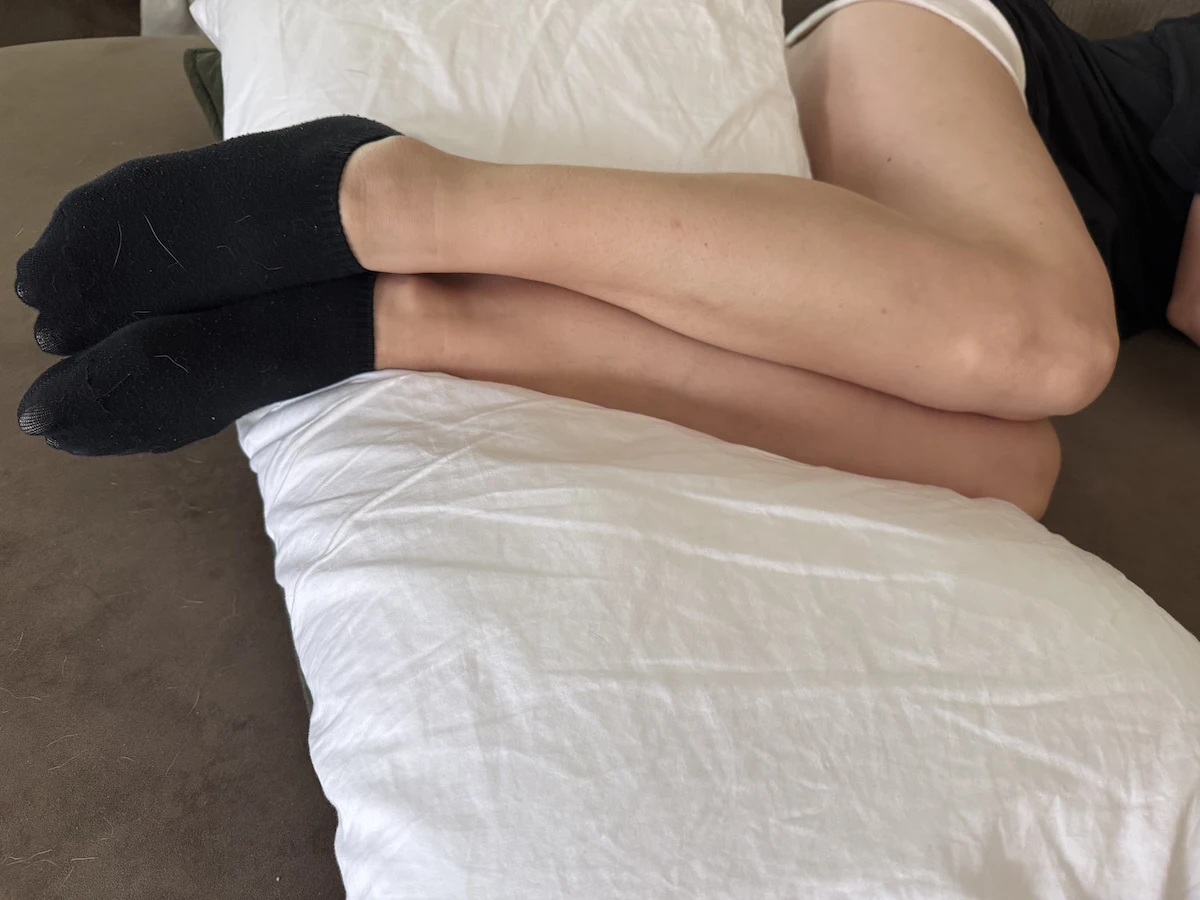
Pillows
The simplest and most affordable option.
Best choices:
- Firm pillows
- Memory foam pillows
- Orthopedic leg pillows
Wedge Pillows
Wedge pillows provide stable incline support and are often more comfortable than stacked pillows.
Benefits include:
- Better alignment
- Less shifting during sleep
- Improved support
Adjustable Beds
These allow customizable elevation and are especially helpful for:
- Chronic pain
- Circulation issues
- Older adults
Leg Elevation Cushions
Specially designed cushions contour to the legs and improve comfort.
Potential Risks and Drawbacks
Although generally safe, sleeping with elevated legs may not be ideal for everyone.
Possible drawbacks include:
- Knee discomfort
- Hip strain
- Lower back stiffness
- Reduced comfort
- Numbness from improper positioning
People with certain medical conditions should consult a healthcare provider before changing sleeping posture.
Who Should Be Careful?
Individuals with the following conditions should seek medical advice:
- Congestive heart failure
- Severe arterial disease
- Certain spinal disorders
- Respiratory conditions
- Hip injuries
Improper elevation may worsen some symptoms.
Tips for Sleeping Comfortably With Legs Elevated
- Use supportive pillows
- Avoid excessive elevation
- Maintain spinal alignment
- Experiment with positioning
- Use breathable bedding
- Stretch before bed
- Stay hydrated
- Replace flattened pillows regularly
Leg Elevation and Sleep Quality
Physical discomfort is one of the major causes of poor sleep.
By reducing:
- Swelling
- Muscle tension
- Back pain
- Leg fatigue
Leg elevation may improve overall sleep quality.
People who sleep more comfortably are more likely to:
- Stay asleep longer
- Experience deeper sleep stages
- Wake up feeling refreshed
Is Sleeping With Legs Elevated Good for Everyone?
Not necessarily.
Some people benefit greatly, while others may notice little difference.
People most likely to benefit include:
- Pregnant women
- Athletes
- Individuals with swelling
- People with circulation issues
- Those with lower back pain
- Workers who stand all day
Others may prefer traditional sleeping positions.
Medical Conditions That May Benefit
Conditions sometimes helped by leg elevation include:
- Edema
- Varicose veins
- Chronic venous insufficiency
- Pregnancy swelling
- Sciatica
- Lower back pain
- Post-surgical swelling
- Muscle soreness
However, leg elevation should not replace professional medical treatment.
Combining Leg Elevation With Other Healthy Habits
For best results, combine leg elevation with:
- Regular exercise
- Stretching
- Healthy sleep hygiene
- Compression socks
- Proper hydration
- Balanced nutrition
Frequently Asked Questions
Is it okay to sleep with legs elevated every night?
For many people, yes. As long as the position is comfortable and does not create pain or numbness, nightly elevation is generally safe.
Can elevated legs improve circulation permanently?
Leg elevation may improve circulation temporarily and reduce symptoms, but it does not permanently cure underlying vascular conditions.
Should legs be above the heart?
For circulation and swelling reduction, elevating the legs slightly above heart level is often most effective.
Is sleeping with legs elevated good for back pain?
Many people with lower back pain experience relief when placing a pillow beneath the knees.
Can leg elevation help sciatica?
It may reduce pressure on the lower spine and improve comfort, though effectiveness varies by individual.
How long does it take to notice benefits?
Some people notice reduced swelling and improved comfort immediately, while others may require several nights or weeks.
Can sleeping with legs elevated reduce ankle swelling?
Yes, elevating the legs can help reduce ankle swelling by encouraging excess fluid to move away from the lower extremities and back toward the heart.
Is it better to elevate legs with pillows or a wedge?
Both can work effectively, but wedge pillows often provide more stable and consistent support throughout the night.
Can elevated legs help with tired feet?
Yes, sleeping with elevated legs may relieve pressure and fatigue in the feet after long periods of standing or walking.
Does sleeping with legs elevated improve posture?
It can help support spinal alignment and reduce strain on the lower back, which may contribute to better posture over time.
Can leg elevation help reduce inflammation?
Yes, elevation may reduce inflammation by improving circulation and decreasing fluid buildup in the legs and feet.
Should both legs be elevated equally?
In most cases, both legs should be elevated evenly to maintain balanced body alignment and avoid strain.
Can elevated sleeping positions help after surgery?
Many doctors recommend leg elevation after surgery to minimize swelling and support recovery, especially after lower-body procedures.
Does elevating the legs help with restless legs syndrome?
Some individuals report temporary relief, though results vary and it may not address the underlying causes of restless legs syndrome.
Can sleeping with legs elevated improve mobility?
Reducing swelling and discomfort may help improve movement and flexibility during the day.
Is leg elevation useful for people with desk jobs?
Yes, prolonged sitting can contribute to poor circulation, and elevating the legs at night may help counteract these effects.
Can elevated legs reduce pressure on the knees?
Proper positioning can reduce tension in the knees by supporting the legs and improving alignment during sleep.
How firm should the support pillow be?
The pillow should be firm enough to maintain elevation without collapsing during the night.
Can sleeping with elevated legs help reduce water retention?
Yes, improved circulation and lymphatic drainage may help reduce temporary water retention in the lower body.
Should athletes sleep with legs elevated daily?
Many athletes use leg elevation regularly as part of a recovery routine, especially after intense training sessions.
Can elevated legs improve circulation in older adults?
Yes, older adults often experience circulation issues, and leg elevation may help promote healthier blood flow.
Does sleeping with elevated legs help after long flights?
It can help relieve swelling and heaviness in the legs caused by prolonged sitting during travel.
Can elevated legs reduce leg heaviness?
Yes, reducing fluid accumulation and venous pressure may help the legs feel lighter and more comfortable.
Is there an ideal sleeping angle for leg elevation?
A gentle incline of about 6 to 12 inches is commonly recommended for comfort and circulation support.
Can leg elevation help reduce foot pain?
It may relieve pressure and inflammation that contribute to foot pain, particularly after standing for extended periods.
Does elevating the legs help circulation immediately?
Some people notice improved comfort and reduced swelling shortly after elevating their legs.
Can children sleep with legs elevated?
Generally yes, but excessive elevation should be avoided and parents should consult a healthcare provider if concerns exist.
Can elevated legs help with recovery after running?
Yes, runners often elevate their legs to reduce soreness and support muscle recovery.
Is it normal to feel pressure behind the knees?
Mild pressure can occur if the support is placed incorrectly. The cushion should support the calves rather than pressing directly behind the knees.
Can elevated legs improve relaxation before sleep?
Many people find the position calming because it reduces physical tension and promotes comfort.
Does leg elevation help with circulation during pregnancy?
Yes, it may reduce swelling and discomfort caused by increased pressure on the veins during pregnancy.
Can sleeping with elevated legs reduce calf tightness?
Improved circulation and reduced muscle tension may help decrease calf tightness overnight.
Should compression socks be used with leg elevation?
Some people combine both methods for better circulation support, though medical advice is recommended for chronic conditions.
Can elevated legs affect sleep quality?
Improved comfort and reduced pain may help some people sleep more deeply and wake less frequently.
Can sleeping with elevated legs help after standing all day?
Yes, elevating the legs can relieve pressure, swelling, and fatigue caused by long hours of standing.
What is the best time to elevate the legs?
Elevating the legs during sleep or for short periods in the evening can provide noticeable comfort and circulation benefits.
Can sleeping with legs elevated help reduce muscle soreness?
Yes, elevating the legs may improve circulation and reduce inflammation, which can help muscles recover more efficiently overnight.
Is it safe to elevate the legs every night?
For most healthy individuals, sleeping with elevated legs nightly is generally considered safe if it remains comfortable and does not cause pain.
Can elevated legs help with numbness in the feet?
Improved circulation may help reduce temporary numbness caused by poor blood flow or swelling.
Do adjustable beds work well for leg elevation?
Yes, adjustable beds are one of the most convenient and effective ways to maintain consistent leg elevation during sleep.
Can sleeping with elevated legs help reduce morning stiffness?
Some people experience less stiffness in the lower back, knees, and legs after sleeping with proper support and elevation.
Should the knees be bent while elevating the legs?
A slight bend in the knees is often more comfortable and may reduce pressure on the lower back.
Can elevated legs help improve recovery after hiking?
Yes, hikers often use leg elevation to relieve swelling, soreness, and fatigue after long treks.
Can leg elevation reduce throbbing sensations in the legs?
By reducing pressure in the veins and improving circulation, elevation may decrease throbbing discomfort.
Is sleeping with elevated legs helpful for people with flat feet?
It may reduce pressure and swelling in the feet, which can temporarily improve comfort for people with flat feet.
Can elevated legs support better circulation during hot weather?
Yes, heat can contribute to swelling and fluid retention, and elevating the legs may help reduce these effects.
Can sleeping with legs elevated reduce nighttime swelling in the toes?
Improved fluid movement may help minimize swelling that accumulates in the toes and feet throughout the day.
How long should someone keep their legs elevated before sleeping?
Even 15 to 30 minutes of elevation before bed may help reduce swelling and improve comfort.
Can elevated legs help relieve tension in the hips?
Proper positioning may reduce strain on the hips by improving body alignment during sleep.
Does leg elevation help with post-workout fatigue?
Many athletes use elevation to promote relaxation and recovery after strenuous physical activity.
Can sleeping with elevated legs reduce pressure on the spine?
Yes, supporting the legs can help reduce spinal compression and encourage a more neutral posture.
Can elevated legs help people who walk long distances daily?
Yes, elevation may relieve soreness, swelling, and fatigue caused by repetitive walking.
Can sleeping with elevated legs improve comfort during illness?
Some people find the position more relaxing and supportive when dealing with fatigue or body aches.
Can elevated legs help reduce tightness in the hamstrings?
A supported elevated position may allow the leg muscles to relax more fully during sleep.
Should people with circulation disorders consult a doctor before elevating their legs?
Yes, individuals with chronic circulation or cardiovascular conditions should seek medical guidance before making major sleep-position changes.
Can sleeping with elevated legs become more comfortable over time?
Yes, many people need a short adjustment period before the position begins to feel natural and supportive.
The Psychological Benefits of Physical Comfort
Physical comfort strongly influences mental well-being.
Reduced pain and improved circulation may contribute to:
- Lower stress
- Better mood
- Reduced fatigue
- Improved daytime energy
Restful sleep supports:
- Cognitive performance
- Emotional balance
- Immune health
Sleep Ergonomics and Body Alignment
Proper sleep ergonomics involve maintaining natural body alignment during sleep.
Elevating the legs can:
- Reduce strain on joints
- Support spinal neutrality
- Improve posture
Combined with a supportive mattress, this position may significantly improve nighttime comfort.
Leg Elevation in Traditional Wellness Practices
Various cultures and wellness systems have long emphasized body positioning for recovery and relaxation.
Practices such as:
- Yoga
- Restorative stretching
- Therapeutic inversion
- Recovery therapy
often incorporate elevated leg positions to support circulation and relaxation.
One well-known yoga pose, “Legs Up the Wall” (Viparita Karani), is widely praised for its calming and restorative effects.
Athletes and Recovery Science
Sports medicine increasingly recognizes the importance of recovery.
Leg elevation is commonly used after:
- Running
- Weightlifting
- Competitive sports
- Endurance training
Athletes use elevation to:
- Reduce inflammation
- Improve recovery
- Minimize soreness
- Enhance circulation
This simple recovery strategy may contribute to better athletic performance over time.
Aging and Circulation Support
As people age, circulation may become less efficient.
Older adults commonly experience:
- Swollen feet
- Aching legs
- Venous insufficiency
- Reduced mobility
Leg elevation may help alleviate these issues while promoting comfort and mobility.
How to Start Sleeping With Legs Elevated
If you are new to leg elevation:
- Start with a single pillow
- Test different heights
- Focus on comfort
- Gradually increase support if needed
- Monitor how your body responds
Consistency often produces the best results.
Common Mistakes to Avoid
Using Too Many Pillows
Excessive elevation may strain joints or create awkward spinal positioning.
Placing Support Under the Feet Only
It is usually better to support the calves and knees rather than only the heels.
Ignoring Pain or Numbness
Discomfort indicates improper positioning.
Using Unsupportive Pillows
Flattened or overly soft pillows may not provide adequate support.
Conclusion
Sleeping with legs elevated is a simple yet potentially powerful adjustment that may improve circulation, reduce swelling, relieve lower back pain, support recovery, and enhance sleep comfort.
For many individuals—including athletes, pregnant women, older adults, and people with circulation issues—this sleeping position offers practical and noticeable benefits.
While it is not a cure-all solution, proper leg elevation can become an effective part of a broader wellness and recovery routine.
As with any health-related practice, comfort, moderation, and individual needs matter most. If symptoms persist or worsen, consulting a healthcare professional is recommended.
By understanding the benefits and using proper techniques, many people can enjoy more comfortable, restorative, and health-supportive sleep through the simple act of elevating their legs.
Ready To Sleep Better?
Take our quiz to find the mattress that fits your sleep style and budget.
"I found my perfect mattress in 60 seconds." - Sarah H., side sleeper
✅ Super fun! 🥳
⭐ Trusted by 10,000+ sleepers 😴
🛏 Personalized mattress match 💤