

The most common sleep position is sleeping on your side. There are many benefits to sleeping your side, including eliminating back pain, less snoring, improved circulation and healthier spinal alignment. In this article, we will take a deep dive into the biomechanics of side sleeping and how to sleep on your side the proper way that will get you the most benefits.
Simply Lying on Your Side Isn’t Enough
There are a lot of variables that can impact you sleep health besides sleep position. If your mattress is old, sagging and lacks support, or if you pillow height is too low or too high, side sleeping can actually result in physical ailments like neck stiffness, shoulder back and lower back pain.
Why Side Sleeping Is Often Recommended
Side sleeping is the best sleep position for optimal spinal alignment and if you are prone to have pain in your muscles and joints.
Potential benefits of side sleeping:
- Promotes neutral spinal alignment
- Minimizes snoring and other mild sleep apnea symptoms
- Reduces acid reflux
- Improves circulation
- Avoids lower back compressions that occurs with stomach sleeping
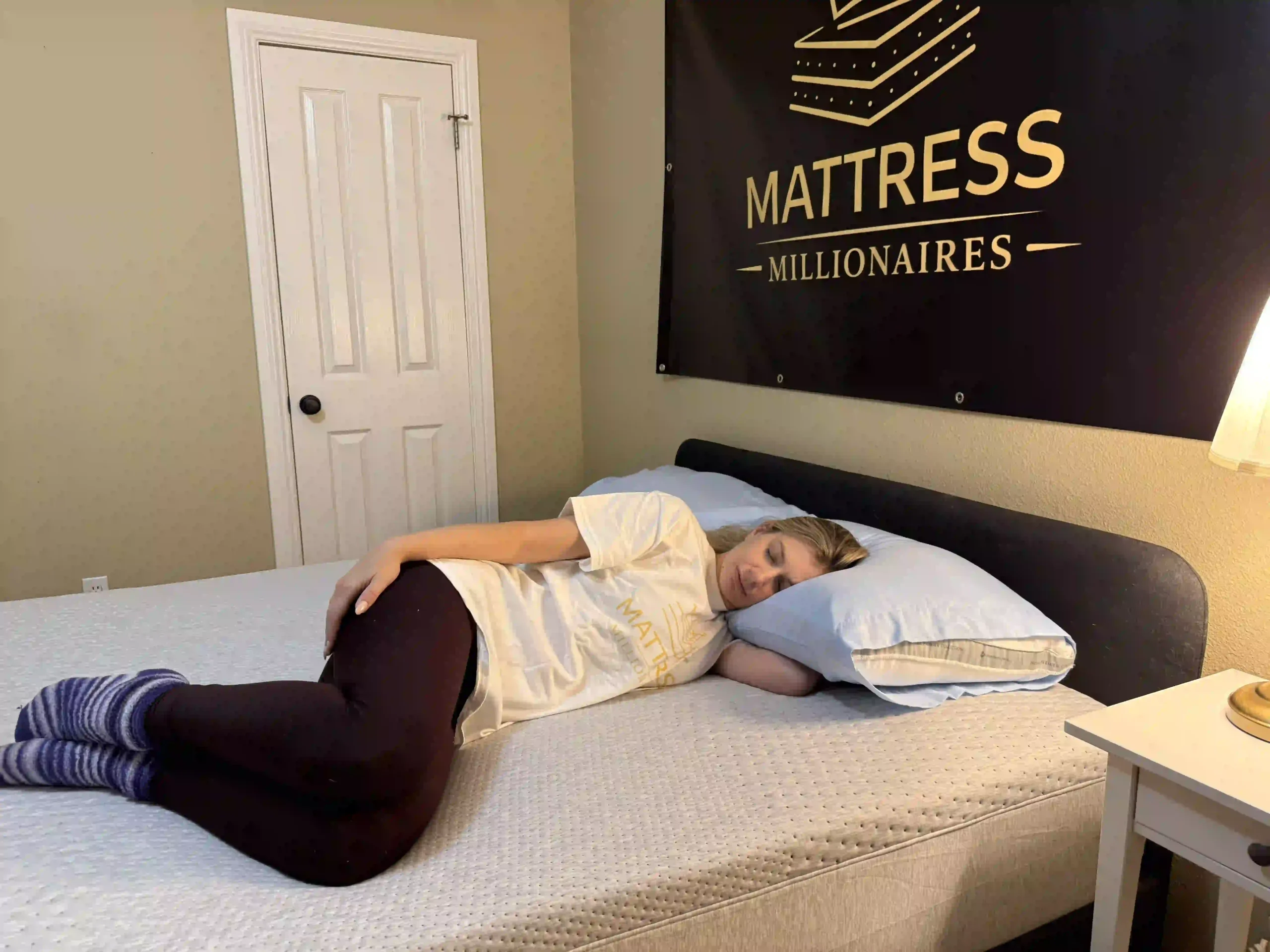
Expert Tip: Without twisting, keep your body stacked in a straight line from your ears down through shoulders, hips and knees.
The Biomechanics of Proper Side Sleeping
Gravity constantly pulls on our bodies and it’s no different when we are sleeping. When you lie on your side, gravity pulls your head down, top shoulder forward, waist inwards and top leg down. If you don’t have good support from your pillow and mattress, then your spine can curve. If this happens night after night, than you are at risk for increased neck strain, hip pressure, lower back pain and should compression.

It’s important to find a neutral spine position. This means ensuring that your neck aligns with your thoracic spine, your lumbar curves naturally (not too flat and not overly arched), hips are stacked and your pelvis doesn’t rotate forward.
It’s not about keeping your body straight. A spine has natural curves that help you move and carry weight. Your sleep setup should support this alignment.
Step-By-Step: How to Sleep on Your Side Correctly
Step 1: Choose the Correct Mattress Firmness
Side Sleepers need a mattress that supports at the waist and is soft enough to alleviate pressure at the hips and shoulders.
What to look for in the ideal mattress for Side Sleepers:
- Firmness: Medium to medium-plush
- Material: foam or hybrid
- Zoned support that is firmer in the lumbar and softer at the shoulders
- Foam should have good contouring but not deep sinkage where hips sinks deeply and spine curves too much
Step 2: Use the Right Pillow Height
Sleeping with your pillow at the proper height is critical for supporting your neck when sleeping on the side. Make sure the pillow fills the space between the top of you shoulder and the side of your head.
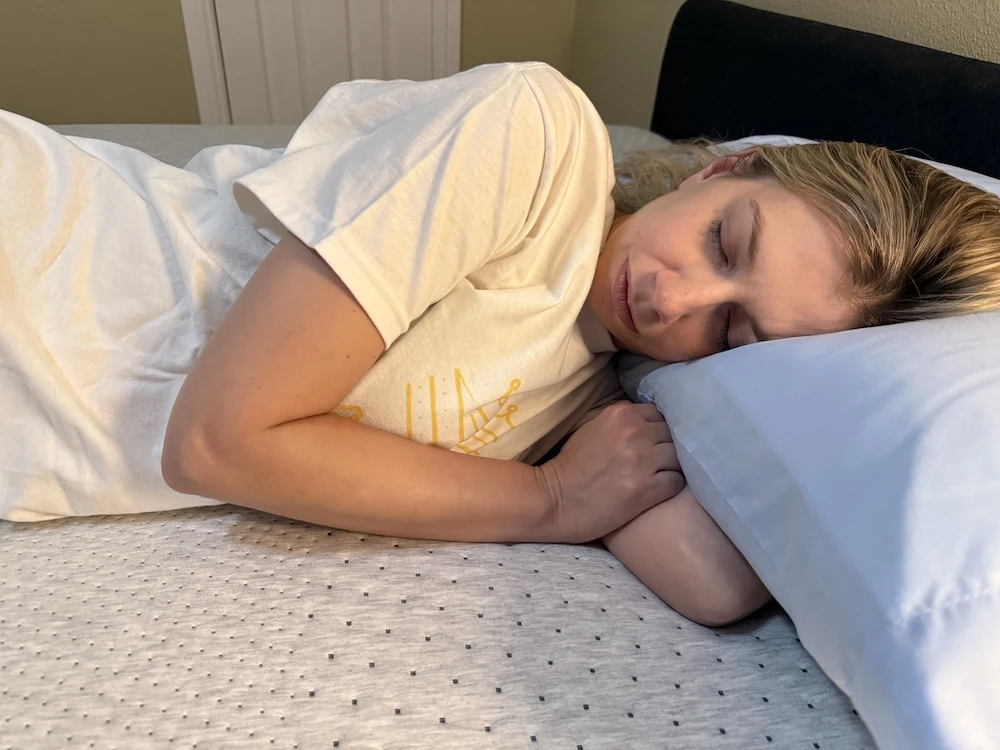
Your pillow is too low if you neck bends downward. Your pillow is too high if you neck tilts upward. The ideal pillow height for side sleepers will be 4 to 6 inches, so you may need two pillows instead of just one to get the desired thickness.
Expert Tip: Test your pillow height by having someone stand behind you to check that your neck is in a straight line with you spine and is not leaning up or down.
Step 3: Place a Pillow Between Your Knees
Without knee support, sleeping on your side can cause several issues. The top leg pulls the pelvis too far forward while the lower back rotates.
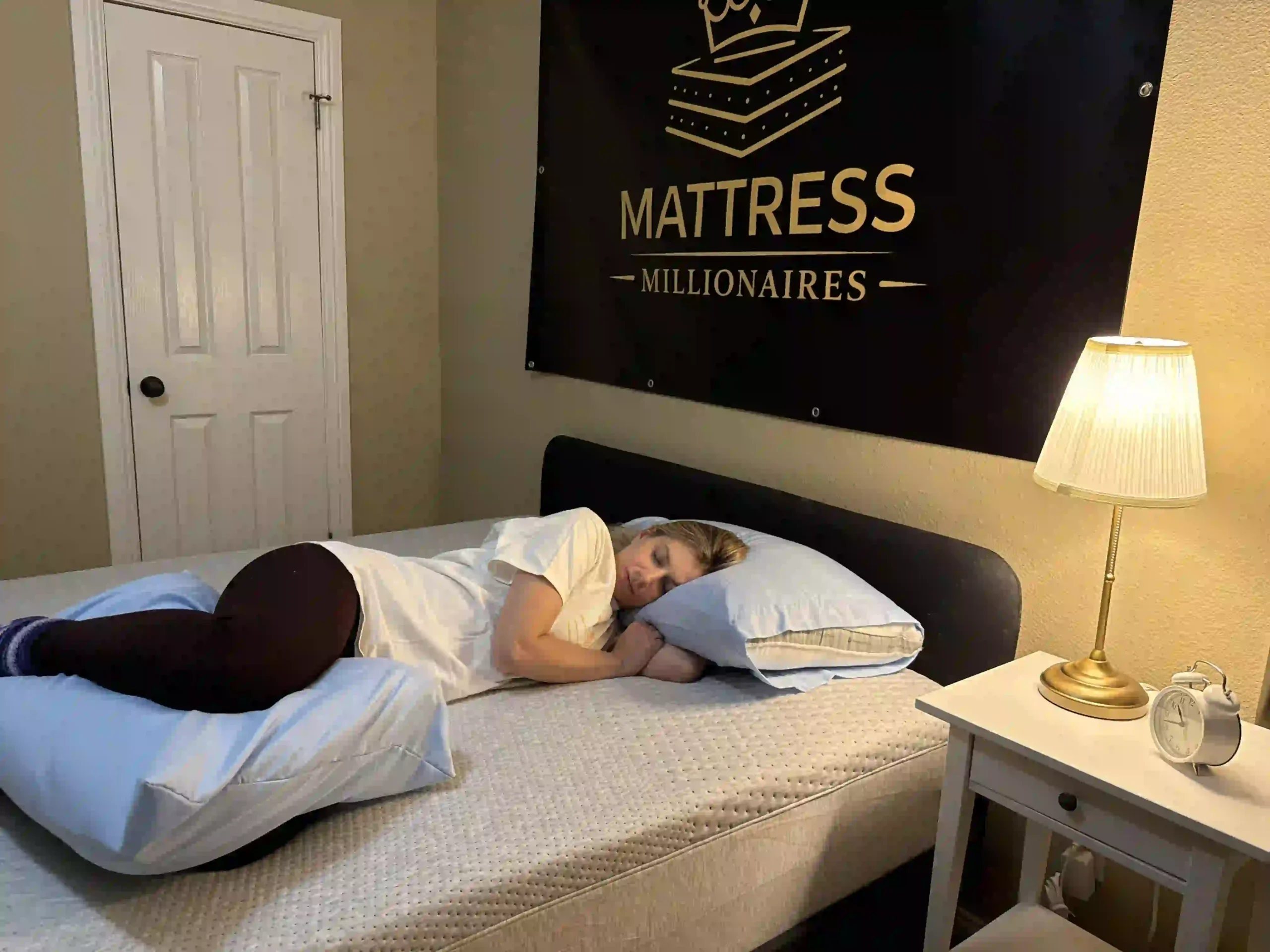
Placing a firm pillow between your knees is critical to maintain a neutral alignment. It will help reduces that lower rotation while keeping hips stacked. If you want even more support, you can use a full-length body pillow.
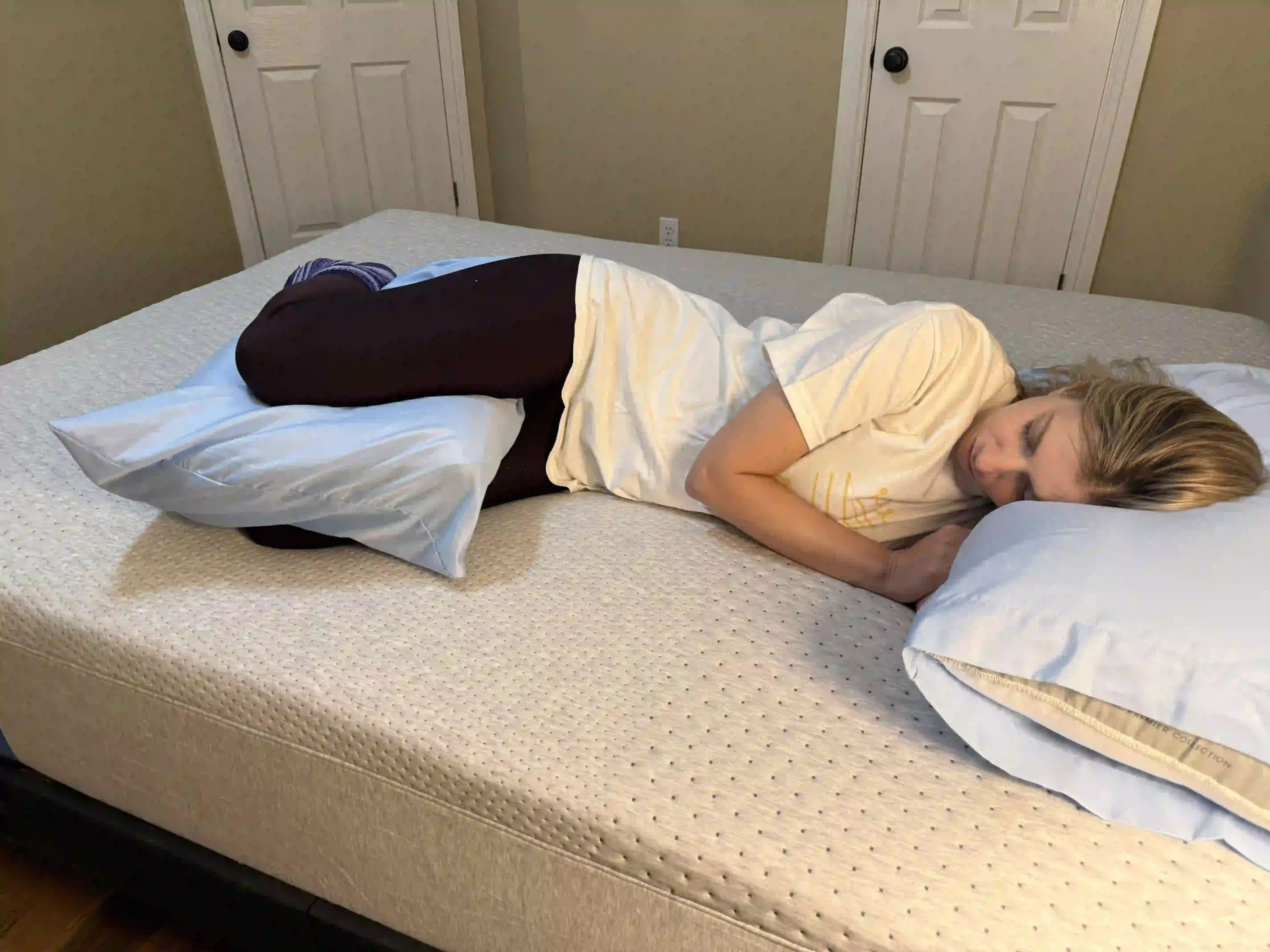
Step 4: Support the Waist Gap (If Needed)
Depending on your body type and weight, there might be a gap between your waist and the mattress when laying on your side. This creates the potential for spinal sag.
Using a zoned mattress with extra lumbar support can help, or an adjustable foundation that you can elevate slightly. Alternatively a quick fix is placing a rolled up towel under your waist, out his might not be the most comfortable solution.
Step 5: Keep Shoulders in Proper Position
Pay attention to how your shoulders rest. The bottom shoulder should be slightly forward to reduce joint compression. If you wake up with numbness in your arm, your should is not in the proper position.
It is important not to curl forward too much or tuck your shoulder underneath your torso.
Is It Better to Sleep On Your Left Side Or Right Side?
As a side sleeper, you may be prone to choose sleeping on one side more than the other. Here we will break down the benefits of each.
| Factor | Sleeping on the Left Side | Sleeping on the Right Side |
|---|---|---|
| Acid Reflux & Heartburn | ✅ Often reduces reflux symptoms because stomach acid stays below the esophagus | ❌ May worsen reflux for some people |
| Digestion | ✅ May support smoother digestion due to stomach positioning | ➖ Neutral effect for most people |
| Pregnancy Circulation | ✅ Commonly recommended to improve blood flow to placenta and kidneys | ❌ May reduce optimal circulation in later pregnancy |
| Heart Function & Circulation | ➖ Some evidence suggests improved circulation and lymphatic drainage | ➖ Generally safe, though may slightly increase cardiac workload in certain conditions |
| Lymphatic Drainage | ✅ Left side aligns with dominant lymph drainage pathway (thoracic duct) | ➖ Neutral |
| Snoring & Sleep Apnea | ✅ Can reduce airway collapse and snoring | ✅ Also helps compared to back sleeping |
| Shoulder Comfort | ❌ Can aggravate left shoulde |
Common Side Sleeping Mistakes
These are some common issues that can develop for side sleeps, so make sure to avoid these.
- Sleeping in a tight fetal position: sleeping in a full tuck will compress your lungs, strain the spine and round the upper back. Make sure you have a gentle bend, not a tight curl.
- Using a Flat Pillow: you can stain your neck by not having enough pillow support. Get a thick pillow that is at least 4 inches.
- Letting the top leg lean forward: this twists your pelvis and strains your lower back. Keeping your hips stacked and even placing a support pillow between your legs can help.
- Having an old, saggy mattress: if you mattress is older than 7 years old and shows visible dents more than an inch deep, then you are not getting the proper support. Time to replace your mattress.
Is Side Sleeping the Healthiest Position?
Experts, like Harvard Health, consider side sleeping to be the best sleep position to maintain open airways, which ensures good breathing and prevents snoring and even heartburn. It is also the best position from a musculoskeletal perspective, as it is easiest to have neutral spine alignment if you follow all the right steps.
Sleeping on your stomach is the least recommended position as it can strain your lower back and cause acid reflux. Your spine can be twisted very unnaturally.
How to Train Yourself to Sleep on Your Side
It is possible to train yourself to adopt a side sleep position. By reinforcing your body with support when you sleep, you will adapt to naturally take this position over time.
- Place a pillow behind your back
- Use a body pillow between you legs
- Start off falling asleep on your side with supports in place
- Elevate your head with slightly thicker pillows or an extra pillow
What Are the Best Mattress Materials for Side Sleepers?
After testing many times of mattresses, we recommend a a medium-firm hybrid mattress for side sleepers. I am a side sleeper and have slept very well for the past few years on a hybrid mattress.
| Material | Pressure Relief | Support & Alignment | Best For | Potential Drawbacks |
|---|---|---|---|---|
| Memory Foam | ★★★★★ Excellent contouring around shoulders & hips | ★★★★ Good when density is high | Pain relief, pressure points, lightweight sleepers | Can trap heat; very soft versions may sag |
| Gel Memory Foam | ★★★★★ Same contouring with improved cooling | ★★★★ Support depends on base foam | Hot sleepers needing pressure relief | Cooling effect varies by quality |
| Latex (Natural or Talalay) | ★★★★ Cushions without deep sinking | ★★★★★ Excellent spinal support | Eco-conscious buyers, durability seekers | Firmer feel may not suit very light sleepers |
| Hybrid (Coils + Foam) | ★★★★ Pressure relief with foam comfort layers | ★★★★★ Strong support & alignment | Most side sleepers; combination sleepers | Quality varies; budget models lack contouring |
| Polyfoam (High Density) | ★★★ Moderate contouring | ★★★ Support depends on density | Budget-friendly options | Lower durability; may compress over time |
| Innerspring (Traditional) | ★★ Minimal pressure relief | ★★★ Supportive but rigid | Those preferring firm feel | Often too firm for shoulder & hip comfort |
FAQs on How to Sleep on Your Side
Is sleeping on your side bed for your shoulder?
It can be if you don’t have the proper support from your mattress or pillow. If your pillow is not thick enough, then the gap between your neck and shoulder can cause discomfort. Also a mattress that is too soft and allows the shoulder to sink down too much can ruin your spinal alignment and cause nerve compression and joint pain. If you wake up with numbness in your arm, you need to fix your sleep position.
Why does my arm go numb when I sleep on my side?
If you place too much weight on your shoulder when you sleep, then you can have nerve compression and wake with numbness in your arm. To fix this, shift your bottom shoulder forward and make sure your mattress has enough firmness and isn’t sagging from age. Also don’t tuck your arm directly under your body when you sleep.
What mattress firmness if best for side sleepers?
The idea firmness for side sleepers depends on body type and weight, but in general a medium to medium-soft mattress is best. If the mattress is too firm, you might have too much compression on your shoulder, but you also need enough support in your hips so you are not sinking too deep. Heavier individuals and couples will do best with a medium-firm mattress, while petite or light individuals will need something a bit softer.
Is it better to sleep on the left or right side?
It’s not as important whether you sleep on your left or right side as it is that you maintain a proper neutral alignment on your side. Left or right is a matter of personal preference and you may be prone to one over the other or shift sides during the night. Experts recommend left side sleeping for reducing acid reflux and better circulation.
Can side sleeping cause wrinkles or asymmetry on your face?
Over time, persistent pressure on one side of the face may contribute to sleep creases on your face. To minimize this risk, alternate left and right sides and use a satin pillowcase to keep your skin smooth. Proper spinal alignment and feeling comfortable while you sleep is more important that cosmetic issues on the face. Wrinkles can be address better with proper hydration and moisturizing.
Final Thoughts
Side sleeping is the best sleep position for your physical health and there are many benefits if you make sure you are in the correct side position. Proper mattress and pillow support, and keeping hips and knees aligned are the three key factors to focus on.
If you sleep on your side and wake up with numbness, stiffness or have trouble sleeping through the night, then there is something wrong with your sleep setup. Have another person check your alignment while you lie down and make sure you are using the right mattress and pillow support.
Ready To Sleep Better?
Take our quiz to find the mattress that fits your sleep style and budget.
"I found my perfect mattress in 60 seconds." - Sarah H., side sleeper
✅ Super fun! 🥳
⭐ Trusted by 10,000+ sleepers 😴
🛏 Personalized mattress match 💤