

Waking up with a sore, stiff, or aching back can make you wonder whether your mattress is part of the problem. That suspicion is reasonable. You spend roughly a third of your life in bed, and your mattress affects how your spine, hips, shoulders, and muscles are supported for hours at a time.
But determining whether a mattress is actually causing your back pain is not always straightforward.
Back pain can come from many different sources, including muscle strain, poor posture, arthritis, disc problems, an old injury, an unsupportive sleep position, or simply spending too much time sitting during the day. A mattress may contribute to your discomfort without being the only cause.
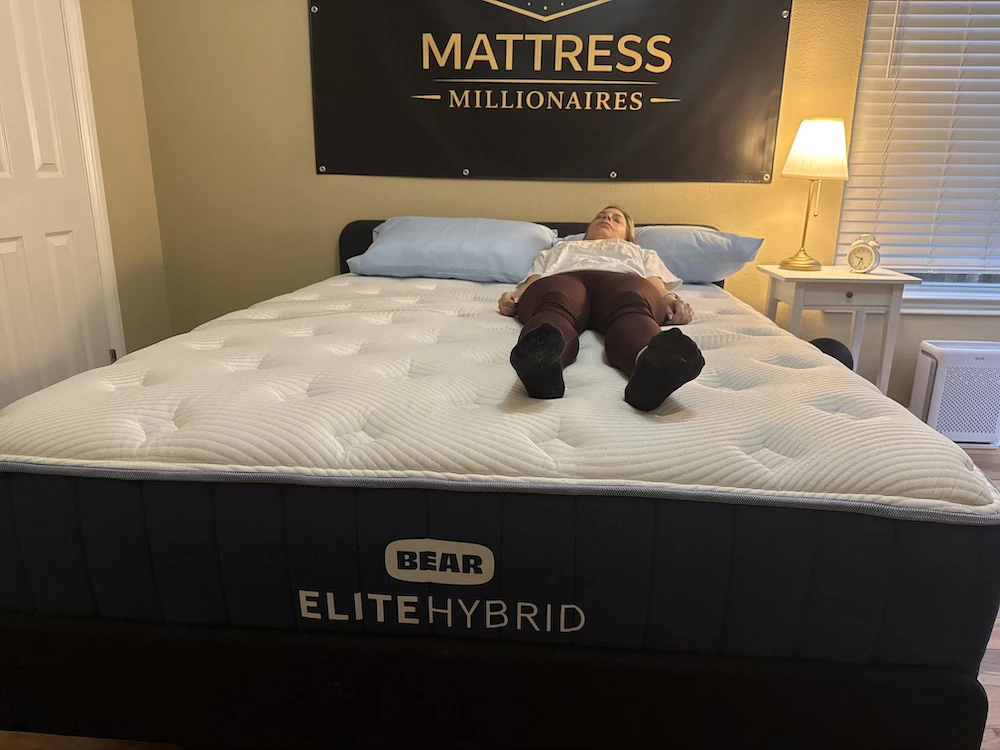
So how do you know if your mattress is causing back pain?
A mattress may be contributing to your back pain if your discomfort is worst when you wake up, improves after you get out of bed and start moving, becomes noticeably better when you sleep somewhere else, or is accompanied by signs that your mattress is sagging, worn out, too soft, or too firm for your body and sleep position.
The key is to look for patterns.
In this guide, we’ll explain the most common signs that your mattress may be hurting your back, why mattress support matters, how firmness affects spinal alignment, what you can test at home, when replacing your mattress may make sense, and when back pain deserves medical attention instead.
Can a Mattress Really Cause Back Pain?
Yes, a mattress can contribute to back pain.
That does not necessarily mean the mattress is directly “injuring” your back. More often, the problem is that the mattress does not keep your body comfortably supported throughout the night.
When you lie down, your mattress has two important jobs.
First, it needs to provide enough support to prevent heavier parts of your body from sinking too deeply. Second, it needs to provide enough cushioning to allow areas such as your hips and shoulders to settle into the surface without creating excessive pressure.
If the balance between support and cushioning is wrong, your spine may spend several hours in an awkward position.
For example, imagine sleeping on your side on a mattress that is much too soft. Your hips may sink deeply while your upper body remains higher on the mattress. That can cause your spine to curve sideways instead of remaining relatively neutral.
Now imagine sleeping on your side on a mattress that is extremely firm. Your hips and shoulders may not sink enough. Instead of allowing your spine to settle naturally, the mattress may push strongly against pressure points and leave muscles working harder to find a comfortable position.
The same basic principle applies to back sleepers and stomach sleepers. Your mattress needs to support your body without creating excessive pressure or allowing exaggerated sinking.
This is why there is no single mattress firmness that is perfect for everyone.
Your ideal sleeping surface depends on factors such as:
- Your body weight
- Your preferred sleep position
- Your body shape
- Your mattress materials
- Your existing aches and pains
- How deeply you naturally sink into the mattress
If you are unsure where to start, our guide to choosing the right mattress firmness explains how firmness can feel different depending on your body type and sleeping position.
7 Signs Your Mattress May Be Causing Your Back Pain
There is no single test that can prove your mattress is responsible for your back pain. However, several clues can make the connection more likely.
The more of these patterns you notice, the more reasonable it becomes to examine your mattress closely.
1. Your Back Pain Is Worst When You First Wake Up
One of the strongest clues is back pain that is noticeably worse first thing in the morning.
You may wake up feeling stiff through your lower back, sore between your shoulder blades, or uncomfortable around your hips and lumbar area.
Then, after getting out of bed, walking around, taking a shower, or moving for 20 to 60 minutes, the discomfort begins to improve.
That pattern does not automatically prove your mattress is the cause. Morning stiffness can occur for many reasons. However, it suggests that something about your sleeping position or sleeping surface may be contributing.
Think about what happens during the night.
You may remain in relatively similar positions for long stretches. If your mattress lets your hips sink too deeply, pushes your lumbar spine into an awkward curve, or fails to cushion your shoulders properly, your muscles and joints may be exposed to that position for hours.
When you finally get up and begin moving, your body changes position, circulation increases, and stiff muscles gradually loosen.
That is why the timing of your pain matters.
If your back feels reasonably good before bed but hurts every morning, your sleep setup deserves a closer look.
2. Your Back Feels Better After You Sleep Somewhere Else
This is one of the most useful real-world tests you can perform.
Pay attention to how your back feels after sleeping in a different bed.
Maybe you spend a weekend at a hotel, sleep at your partner’s house, stay with family, or even use a guest bed in your own home.
If your normal morning back pain becomes dramatically better after one or two nights on another mattress, your primary mattress becomes a stronger suspect.
The opposite can also be informative.
If you sleep somewhere else and your back pain becomes worse, your usual mattress may actually be doing a decent job.
Try not to judge based on a single unusual night if possible. Travel itself can affect sleep, and hotel beds may feel different simply because you are tired or sleeping in a new environment.
But if you repeatedly notice that your back feels better away from your usual bed, take that pattern seriously.
3. Your Mattress Has Visible Sagging or Body Impressions
A mattress does not need to look completely destroyed to lose support.
Over time, foams can soften, coils can become less responsive, and heavily used areas may develop permanent impressions.
If your mattress has a noticeable dip where you sleep, your body may no longer be resting on a level, supportive surface.
This is particularly important if the sagging occurs around your hips or midsection.
The pelvis is one of the heavier areas of the body. When the mattress sinks excessively under your hips, your lower back can fall into an exaggerated curve.
You may not notice this while falling asleep because the mattress still feels comfortable at first. But after several hours, that uneven support can become uncomfortable.
Look at your mattress with the bedding removed.
Check for:
- Visible depressions
- Deep body impressions
- Uneven areas
- Soft spots
- A ridge in the center of the bed
- Edges that have collapsed
- Areas that feel dramatically softer than the rest of the mattress

If the mattress is sagging, you may be able to improve the situation temporarily depending on the cause. Our guide on how to fix a sagging mattress explains what can and cannot realistically be repaired.
4. You Constantly Toss and Turn Trying to Get Comfortable
Frequent position changes can be another sign that your mattress is not working well for your body.
Everyone changes positions during sleep. That is normal.
But if you routinely feel unable to settle into a comfortable position, your mattress may be creating pressure or failing to provide adequate support.
You might notice yourself:
- Rolling from side to side repeatedly
- Moving from your back to your stomach because your lower back hurts
- Pulling one knee upward to reduce pressure
- Placing a pillow under your knees for relief
- Sleeping near the edge because the center feels sunken
- Waking up several times to reposition your hips or shoulders
The issue could be firmness, pressure relief, temperature, or general mattress deterioration.
Your body often tells you that something is wrong before you consciously identify the problem. Repeatedly changing positions may simply be your nervous system trying to escape an uncomfortable sleeping posture.
5. Your Mattress Feels Too Soft and Your Hips Sink Deeply
A mattress that feels plush can be comfortable when you first lie down, but softness and support are not the same thing.
If the mattress allows your midsection to sink substantially deeper than the rest of your body, your spine may move out of a neutral position.
This can be particularly noticeable for:
- Stomach sleepers
- Back sleepers
- Heavier sleepers
- People who carry more weight around the hips or abdomen
Imagine lying on your back while your hips sink several inches below your shoulders and legs. Your pelvis may tilt, increasing the curve in your lower back.
For stomach sleepers, excessive sinking can create an even more pronounced bend because the torso drops into the mattress while the upper body remains elevated by a pillow.
A soft mattress is not automatically bad for your back. Some sleepers need substantial cushioning.
The problem occurs when the comfort layers compress so much that the underlying support system cannot keep your body properly aligned.
6. Your Mattress Feels Too Hard and Creates Pressure Points
The opposite problem can happen on an overly firm mattress.
People sometimes assume a hard mattress is always better for back pain. That is not necessarily true.
Your mattress should support you, but it should also allow your body to settle naturally.
On a mattress that is too firm, areas such as the shoulders and hips may remain pushed upward instead of sinking slightly into the surface.
For side sleepers, this can create pressure around the hip and shoulder while causing the spine to bend away from the mattress.
You may wake with:
- Sore hips
- Shoulder discomfort
- Numbness or tingling from pressure
- Lower-back stiffness
- A general feeling that your body has been lying “on top” of the mattress rather than being cradled by it
If hip discomfort is one of your main symptoms, you may also want to read our guide on whether a mattress can cause hip pain when side sleeping.
7. Your Mattress Is Old and No Longer Feels Like It Used To
A mattress can gradually lose support so slowly that you barely notice it happening.
You may remember the mattress feeling supportive when it was new, but several years later it feels softer, less responsive, or uneven.
Mattress lifespan varies significantly depending on construction, materials, body weight, maintenance, and how often the bed is used.
There is no universal expiration date.
However, age becomes relevant when it appears alongside other warning signs.
For example, an older mattress that also has sagging, deep impressions, poor edge support, and worsening morning back pain is much more suspicious than an older mattress that still feels flat, supportive, and comfortable.
If you are unsure whether your mattress is simply getting too old, see our guide to how long a mattress should last.
Why Mattress Support Matters for Your Spine
When people talk about mattresses and back pain, the word “support” gets used constantly.
But what does mattress support actually mean?
Support refers to the mattress’s ability to hold your body in a stable position without allowing excessive sinking.
A supportive mattress does not necessarily feel hard.
In fact, some very supportive mattresses have plush comfort layers on top. The key is what happens beneath those comfort layers once your body settles into the bed.
Ideally, the mattress should allow your spine to remain relatively close to its natural alignment.
Your spine is not perfectly straight when viewed from the side. It has natural curves.
The goal of a mattress is therefore not to flatten your back. It is to support your body in a way that does not exaggerate those curves or force your spine into an awkward position for hours.
Support for Back Sleepers
Back sleepers generally need enough support beneath the pelvis and lower torso to keep the hips from sinking too deeply.
At the same time, the mattress should usually contour enough to fill some of the natural space beneath the lower back.
If the mattress is too soft, the hips may sink and create excessive curvature.
If it is too firm, the mattress may not contour comfortably around the body, leaving some sleepers feeling pressure or tension.
Support for Side Sleepers
Side sleepers often need more pressure relief around the shoulders and hips.
These areas need to sink somewhat into the surface so that the spine does not bow upward.
However, too much sinking can create the opposite problem.
If the hips drop too deeply, the spine may bend downward toward the mattress.
This balance between cushioning and support is one reason side sleepers frequently prefer medium to medium-soft comfort layers paired with a stronger support core.
For more detail, see our guide on how to sleep on your side comfortably.
Support for Stomach Sleepers
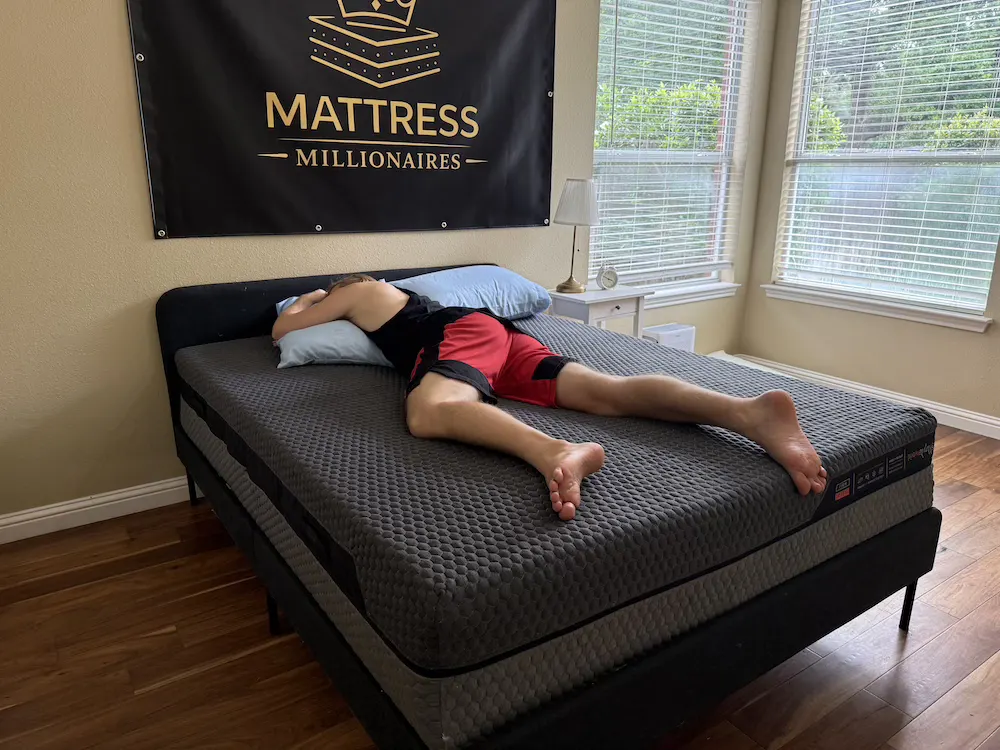
Stomach sleeping can place more stress on the lower back for some people because the pelvis may sink while the chest and head remain elevated.
Stomach sleepers therefore often need a somewhat firmer surface than side sleepers of a similar body weight.
The goal is to prevent the midsection from dropping too deeply into the mattress.
Pillow height also matters.
A very thick pillow can push the neck backward while the torso remains flat, adding another source of tension.
Is Your Mattress Too Soft for Your Back?
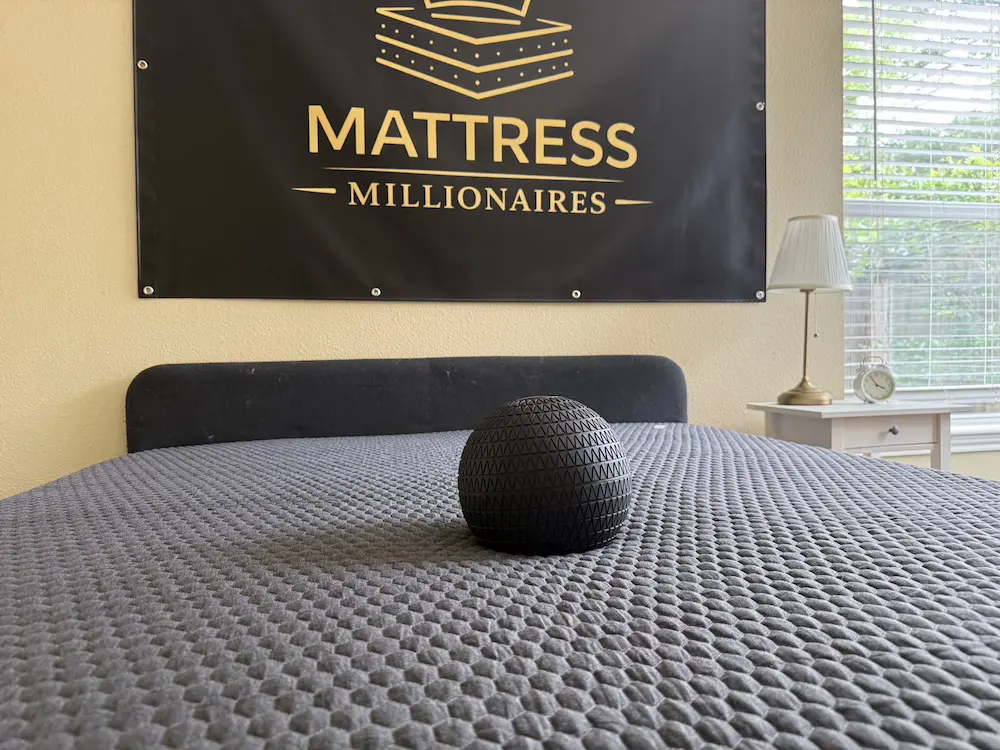
If you suspect your mattress is causing back pain, excessive softness is one of the first possibilities to investigate.
A mattress that is too soft may allow your pelvis and torso to sink farther than the rest of your body.
Some common signs include:
- You feel “stuck” in the mattress
- Your hips sink noticeably lower than your shoulders
- It takes effort to change positions
- You feel like you are sleeping in a hammock
- Your lower back feels tight in the morning
- Your mattress feels much softer than when you bought it
- You feel better when sleeping on a firmer surface
If this sounds familiar, our guide to signs your mattress is too soft explains how to assess excessive sinkage and what to try next.
Heavier sleepers may experience this sooner because they compress mattress materials more deeply. This does not mean heavier sleepers always need very firm mattresses. It simply means support materials usually need to be durable enough to resist excessive compression.
If you are sleeping on an all-foam mattress, worn comfort layers may also create the impression that the entire mattress has become too soft.
The support core may still be intact, but if the upper foams have softened substantially, your body can sink unevenly before reaching that support layer.
Is Your Mattress Too Firm for Your Back?
An excessively firm mattress can also create problems.
This is especially common among side sleepers and lighter individuals who do not compress the mattress very deeply.
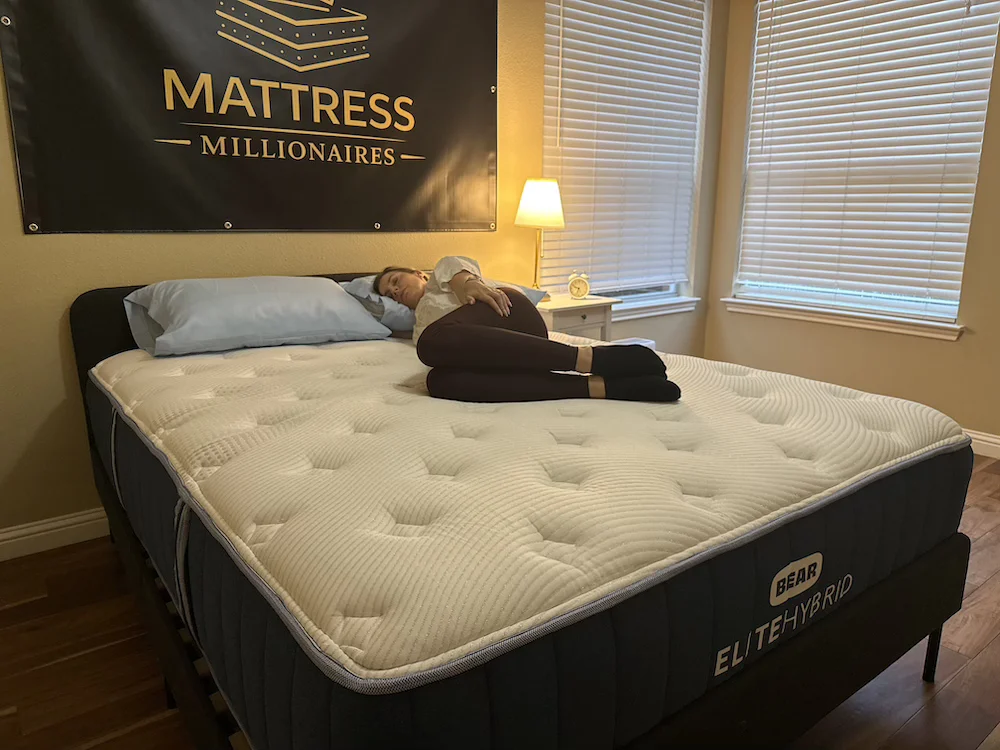
If the mattress barely gives beneath your shoulders and hips, your body may not be able to settle into a comfortable neutral position.
You may notice:
- Pressure on the hips
- Soreness around the shoulders
- Numb arms while side sleeping
- A gap between your lower back and the mattress when lying on your back
- Frequent tossing and turning
- Improved comfort after adding a soft mattress topper
It is important to distinguish firmness from support.
A mattress can feel soft on top but still be supportive underneath. Likewise, a mattress can feel extremely hard while failing to contour appropriately to your body.
The best mattress is not simply the firmest mattress you can tolerate.
It is the mattress that provides enough resistance to support your body while offering enough pressure relief to keep you comfortable.
For practical ways to evaluate a hard sleeping surface, see our guide to signs your mattress is too firm.
Where Does Your Back Hurt?
The location of your discomfort can sometimes provide clues about what may be happening during sleep.
This is not a diagnosis. Back pain is complex, and pain location alone cannot tell you the exact cause.
Still, thinking about where the discomfort occurs can help you evaluate your sleeping setup.
Lower-Back Pain
Lower-back discomfort is one of the most common complaints associated with an unsupportive mattress.
If your hips sink too deeply, your pelvis may tilt and increase stress around the lumbar area.
You may also notice lower-back discomfort if your mattress is so firm that your body cannot settle naturally.
Back and stomach sleepers should pay particular attention to how deeply their hips sink.
Try lying in your normal sleeping position and ask someone to look at your body from the side.
If your midsection appears dramatically lower than the rest of your body, excessive softness could be contributing.
Mid-Back Pain
Mid-back pain may relate to posture, muscle tension, sleeping position, pillow height, or an unsupportive mattress.
For side sleepers, poor alignment through the shoulders and rib cage can create tension through the thoracic area.
For back sleepers, an overly firm or uneven mattress may also leave certain areas unsupported.
Upper-Back and Shoulder-Blade Pain
Upper-back discomfort can sometimes be more closely related to pillow height, shoulder pressure, or sleep posture than to the mattress itself.
However, mattress firmness still matters.
A side sleeper on a very firm bed may experience pressure around the shoulder, causing the body to rotate or twist in an attempt to get comfortable.
That altered position may create tension around the shoulder blades and upper back.
How to Test Whether Your Mattress Is Causing Back Pain
Before buying a new mattress, it makes sense to gather as much evidence as possible.
You can perform several simple tests at home.
Test 1: Track Your Pain for One Week
For seven days, make a brief note when you wake up.
Record:
- Your pain level from 1 to 10
- Where the pain is located
- Your primary sleeping position
- Whether you woke during the night
- How long the pain lasted after getting up
You do not need a complicated spreadsheet.
The goal is to identify patterns.
If your pain consistently peaks immediately after sleeping and fades during the morning, your sleeping environment becomes more relevant.
Test 2: Sleep Somewhere Else
If possible, sleep on another mattress for two or three nights.
This could be:
- A guest bed
- A hotel mattress
- A partner’s mattress
- A family member’s bed
Compare how you feel in the morning.
A significant improvement can be a useful clue.
Test 3: Inspect the Mattress Without Bedding
Remove your sheets, mattress protector, and topper.
Look across the surface from several angles.
Check for obvious valleys or dips.
You can also place a long straight object, such as a yardstick or rigid level, across suspicious areas to see whether the surface has developed a depression.
Do not rely only on what you see.
Press firmly across different areas of the mattress and compare how they feel.
If your normal sleeping area feels dramatically softer than the unused edges or center, the comfort materials may have broken down.
Test 4: Rotate the Mattress
If your mattress manufacturer allows rotation, turn the mattress 180 degrees so that the head becomes the foot.
Do not flip a mattress unless the manufacturer specifically says it is designed to be flipped.
Many modern mattresses have layered constructions with a designated top and bottom.
If your comfort improves after rotation, uneven wear may have contributed to your pain.
For more information, read our guide on whether you should rotate your mattress.
Test 5: Check Your Foundation or Bed Frame
Sometimes the mattress gets blamed when the real problem is underneath it.
A damaged foundation, bowed slats, broken box spring, or insufficient center support can cause an otherwise good mattress to sag.
Inspect the base carefully.
Look for:
- Broken slats
- Bent metal supports
- Large gaps between slats
- A missing center support beam
- Uneven legs
- A foundation that flexes excessively
Your mattress manufacturer may also specify foundation requirements.
Using an improper base can change how the mattress feels and may even affect warranty coverage.
If you are unsure which type of base your mattress needs, see our guide on how to choose a mattress foundation.
Test 6: Try a Temporary Topper
A mattress topper can help you test whether firmness is part of the problem.
If your mattress feels too firm, adding a softer topper may improve pressure relief.
If you wake feeling noticeably better after several nights, that suggests excessive firmness may have been contributing.
A topper is less effective when the mattress is too soft or structurally sagging.
Adding more foam on top of a deeply sagging mattress usually does not restore proper support.
In some cases, it may make sinking worse.
Could Your Pillow Be Causing the Problem Instead?
Before replacing your mattress, do not forget about your pillow.
Your pillow influences the position of your neck, shoulders, and upper spine.
If the pillow is too tall or too flat for your sleeping position, your body may compensate elsewhere.
For example, a side sleeper using a very thin pillow may allow the head to drop toward the mattress.
A back sleeper using an extremely thick pillow may push the head forward.
A stomach sleeper using a thick pillow may rotate and extend the neck more aggressively.
While pillow problems are more likely to cause neck and upper-back discomfort, the body works as a connected system. Poor positioning in one area may contribute to tension elsewhere.
Your ideal pillow height depends on your sleep position, shoulder width, body size, and how deeply you sink into the mattress.
A softer mattress allows the shoulders to sink farther, which may reduce the amount of pillow loft a side sleeper needs.
A firmer mattress keeps the shoulders higher, which may require a thicker pillow.
Could Your Sleeping Position Be Causing the Pain?
Your mattress and sleeping position interact with each other.
The same mattress can feel excellent in one position and uncomfortable in another.
Back Sleeping
Back sleeping can be comfortable for many people because body weight is distributed across a relatively large surface area.
However, if your mattress is too soft, the pelvis may sink excessively.
Some back sleepers find that placing a small pillow beneath the knees reduces tension around the lower back by slightly changing the position of the pelvis.
Side Sleeping
Side sleeping creates concentrated pressure around the shoulders and hips.
The mattress therefore needs enough cushioning to allow those areas to sink while still supporting the waist and midsection.
A pillow between the knees may help some side sleepers keep the hips and pelvis in a more comfortable position.
If you regularly sleep on your side and wake with hip discomfort, your mattress may be too firm, too soft, or simply poorly matched to your body.
Stomach Sleeping
Stomach sleeping can be challenging for people with lower-back discomfort because the midsection may sink into the mattress.
A firmer sleeping surface often limits that sinking.
Some stomach sleepers also prefer a thinner pillow under the head to reduce neck extension.
If you have persistent back pain, changing sleep position may be worth experimenting with, but comfort and medical considerations vary by person.
Can a New Mattress Cause Back Pain at First?
Yes, some people experience temporary discomfort after switching to a new mattress.
This does not necessarily mean the new mattress is bad.
Your body may be accustomed to the feel of your old bed, even if the old mattress was no longer providing ideal support.
A new mattress may position your body differently.
You may also be moving from one mattress type to another, such as:
- Memory foam to hybrid
- Innerspring to foam
- Soft to medium-firm
- Firm to plush
The first few nights can therefore feel unfamiliar.
Foam mattresses may also change slightly during the initial break-in period as materials loosen with use.
However, severe or progressively worsening pain should not simply be dismissed as an adjustment period.
If discomfort continues, evaluate whether the mattress is appropriate for your body and sleeping position.
We cover this in more detail in our guide on how long it takes to adjust to a new mattress.
How Firm Should a Mattress Be for Back Pain?
There is no universal firmness level that guarantees relief from back pain.
Body weight and sleep position make a major difference.
A firmness level that feels supportive to a 130-pound side sleeper may feel extremely soft to a 250-pound sleeper.
Likewise, a mattress that works well for a stomach sleeper may feel too firm for a lighter side sleeper.
As a general principle, many sleepers with back discomfort do well with a mattress that balances contouring and support rather than sitting at either extreme of the firmness scale.
That often means looking somewhere in the medium to medium-firm range, but it should not be treated as a rigid rule.
Lighter Sleepers
Lighter sleepers do not compress mattress materials as deeply.
As a result, a mattress can feel firmer to them than it does to a heavier person.
Lighter side sleepers in particular may need more cushioning around the hips and shoulders.
Average-Weight Sleepers
Average-weight sleepers have the widest range of mattress options because many mattress designs are calibrated around this group.
Sleep position becomes especially important.
Side sleepers may prefer more cushioning, while stomach sleepers may prefer stronger resistance beneath the hips.
Heavier Sleepers
Heavier sleepers compress comfort layers more deeply and may interact more directly with the support core.
A mattress that feels medium-firm to a lighter sleeper can feel considerably softer under greater body weight.
Durability and support become particularly important.
Hybrid mattresses with robust coil systems, high-density foams, latex, and reinforced support layers are often worth considering.
If you want a broader breakdown, visit our guide to mattress materials and which type may be best for you.
Does Memory Foam Help or Hurt Back Pain?
Memory foam is popular because it contours closely to the body.
That contouring can help distribute weight and reduce concentrated pressure.
However, memory foam is not automatically good for back pain.
Its performance depends on:
- Foam density
- Foam thickness
- Mattress firmness
- Support-core quality
- Your body weight
- Your sleep position
A well-designed memory foam mattress may provide excellent pressure relief while keeping the body supported.
A poorly matched or worn-out foam mattress may allow excessive sinking, especially around the hips.
Some sleepers also dislike the slow response of traditional memory foam because changing positions can require more effort.
If you are interested in how the material actually works, see our guide on what memory foam is.
Are Hybrid Mattresses Better for Back Pain?
Hybrid mattresses combine foam or latex comfort layers with a coil support system.
This design can work well for people who want cushioning without the deeply enveloping feel of some all-foam mattresses.
Coils can also provide stronger pushback and easier movement.
However, the word “hybrid” does not guarantee anything about comfort or support.
Two hybrid mattresses can feel completely different depending on coil design, foam thickness, zoning, firmness, and construction quality.
Many mattresses we have reviewed use hybrid designs because they can combine pressure relief with responsive support.
For example, we have specifically evaluated mattresses such as the WinkBed for back pain, Saatva Classic for back pain, and Origin Adapt for back pain.
The important point is to evaluate the individual mattress rather than assuming a particular construction type will automatically solve back pain.
What About Latex Mattresses?
Latex mattresses often feel more responsive than memory foam.
Instead of allowing the body to sink slowly into the surface, latex tends to push back more quickly.
Some sleepers like this buoyant sensation because it provides pressure relief without creating a deeply “stuck” feeling.
Natural latex can also be durable.
However, latex mattresses vary widely in firmness and construction.
A firm latex mattress may still feel too hard for a lighter side sleeper, while a softer latex design may not provide enough support for a heavier stomach sleeper.
Again, material alone does not determine whether a mattress will work for your back.
Can Your Mattress Foundation Cause Back Pain?
Yes, indirectly.
If the foundation beneath your mattress is failing, the mattress may no longer be properly supported.
This can lead to sagging even if the mattress itself is relatively new.
Common foundation problems include:
- Broken wooden slats
- Slats spaced too far apart
- A bowed box spring
- A weak center support
- A platform that flexes under weight
- Missing support legs
If two people share a queen or king mattress, center support becomes especially important because the middle of the bed carries substantial weight.
Before replacing a mattress because of sagging, inspect the foundation carefully.
You may discover that the mattress is conforming to a weak or uneven base.
Can Rotating Your Mattress Help With Back Pain?
If uneven wear is the problem, rotating the mattress may help.
Rotation moves your body to a less-compressed area of the bed and redistributes future wear.
This can be particularly useful if one person sleeps in the same spot every night.
However, rotation cannot permanently repair damaged foam or worn coils.
If a deep depression returns quickly after rotation, the mattress may be nearing the end of its usable life.
Would a Mattress Topper Help?
A topper can be useful in certain situations, but it is not a cure for every mattress problem.
A Topper May Help If:
- Your mattress feels slightly too firm
- You need more pressure relief
- Your mattress is still structurally sound
- You want to test whether a softer surface improves your comfort
A Topper Probably Will Not Fix:
- Deep sagging
- Broken coils
- A weak foundation
- Severe body impressions
- A mattress that is already far too soft
Adding several inches of soft foam to an already sagging mattress may actually allow your hips to sink farther.
Think of a topper primarily as a comfort adjustment, not a structural repair.
How Old Is Too Old for a Mattress?
People often hear that mattresses should automatically be replaced after a certain number of years.
Reality is more complicated.
A high-quality mattress that still feels supportive may remain comfortable for many years, while a lower-quality mattress may begin sagging much sooner.
Rather than focusing on age alone, pay attention to condition and performance.
Consider replacement when several of the following are true:
- You regularly wake with stiffness or pain
- The mattress has obvious sagging
- There are deep permanent body impressions
- The edges have collapsed
- The mattress feels substantially softer than it once did
- You sleep noticeably better on other mattresses
- Rotation no longer improves comfort
- The mattress no longer supports your preferred sleeping position
Age is best viewed as context rather than a verdict.
How to Tell Whether Sagging Is the Problem
Sagging is one of the clearest mattress-related issues that can affect body alignment.
It typically develops in the areas carrying the most weight.
To check for sagging:
- Remove all bedding.
- Place the mattress on its normal foundation.
- Look across the surface at eye level.
- Place a straightedge across the mattress.
- Measure any visible depression.
- Compare the center of the bed with less-used areas near the edges.
If the mattress is covered by a warranty, check the manufacturer’s definition of qualifying sag depth.
Some warranties only cover impressions beyond a specified depth when nobody is lying on the mattress.
Normal foam softening may not qualify.
Why Your Mattress May Hurt Your Back Even Without Visible Sagging
A mattress can lose support without developing dramatic visible dips.
Foam can soften internally.
Coils can lose resilience.
Comfort layers can become less supportive while still returning to a reasonably flat appearance after you get out of bed.
This is one reason visual inspection is only part of the process.
If a mattress feels significantly softer in your sleeping area than near the edges, material fatigue may be present even if the surface looks flat.
What If Only One Person in the Bed Has Back Pain?
This is extremely common.
Two people can sleep on the same mattress and have completely different experiences.
Differences in:
- Body weight
- Height
- Hip width
- Shoulder width
- Sleep position
- Existing pain
- Firmness preference
can change how each person interacts with the mattress.
A mattress may feel perfectly supportive to a 150-pound back sleeper and much too soft to a 230-pound stomach sleeper.
This is one reason couples sometimes struggle to find a compromise firmness.
Some mattresses use zoning or customizable sides to address this issue.
We also have a guide explaining what a split-firmness mattress is if two sleepers have substantially different preferences.
Can Sleeping Hot Make Back Pain Feel Worse?
Temperature does not usually create the same type of mechanical alignment problem as a sagging mattress, but sleeping too hot can still reduce sleep quality.
If you are waking frequently because of heat, you may move more often, spend more time in uncomfortable positions, and feel less rested in the morning.
Poor sleep can also make pain feel more difficult to tolerate.
If your mattress traps heat, you may want to investigate materials, bedding, room temperature, and airflow.
We cover common causes in our guide on why mattresses sleep hot.
What Should You Look for in a Mattress if You Have Back Pain?
If you decide that your current mattress is contributing to your discomfort, avoid choosing your replacement based on marketing language alone.
“Orthopedic,” “back-support,” and similar labels do not guarantee that a mattress will work for your body.
Focus instead on specific performance characteristics.
1. Appropriate Firmness
The mattress should feel firm enough to prevent excessive sinking but soft enough to provide pressure relief.
Your body weight and sleep position should guide the decision.
2. Strong Support
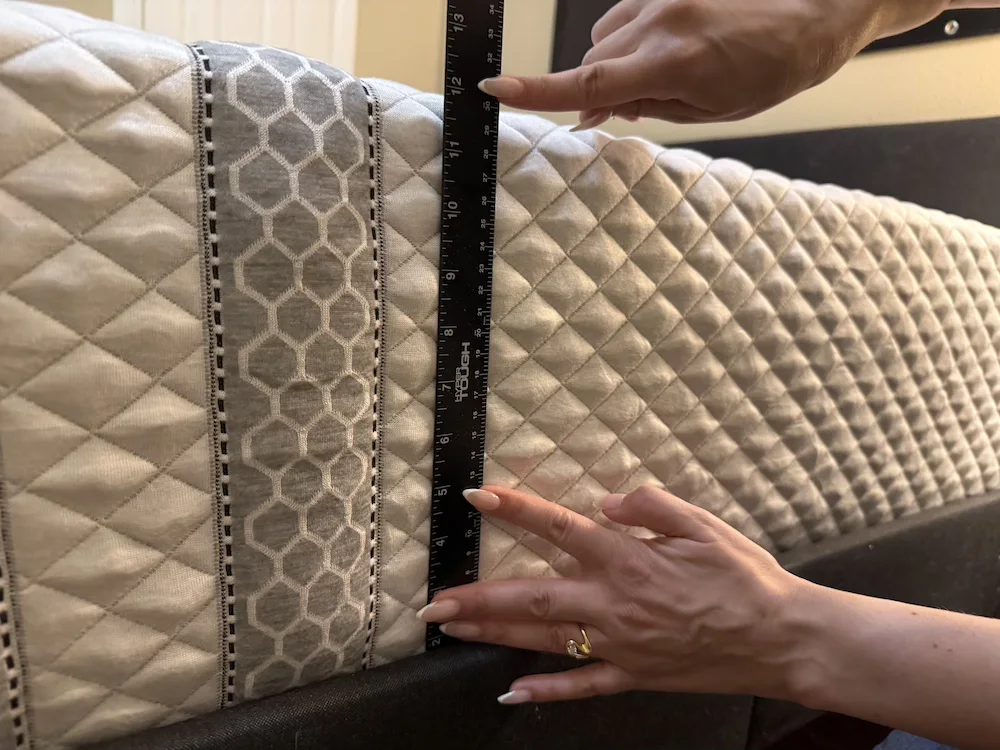
The support core should keep your body stable throughout the night.
For hybrids, this usually comes from coils.
For foam mattresses, it comes from dense base foam.
For latex mattresses, the lower latex layers provide much of the structural support.
3. Enough Pressure Relief
Pressure relief matters particularly for side sleepers. Your hips and shoulders should be able to settle into the mattress without feeling jammed against a hard surface.
For a closer look at this balance, read our guide to mattress pressure relief and why it matters.
4. Good Responsiveness
If you change positions frequently, consider how easy it is to move on the mattress.
Very slow-response foam can feel comfortable to some sleepers but restrictive to others.
5. Durable Materials
A mattress may feel excellent during the first month and still become a poor value if its comfort layers soften quickly.
Material quality matters.
6. A Reasonable Trial Period
Whenever possible, buy from a company that provides enough time to evaluate the mattress at home.
A few minutes in a showroom cannot replicate eight hours of sleep.
Read the trial and return terms carefully because policies vary.
Mattress Types to Consider for Back Pain
No mattress category is universally best, but each type has strengths and weaknesses.
Memory Foam
Memory foam can provide excellent contouring and pressure relief.
It may be a good choice for side sleepers or people who enjoy a close-hugging feel.
Potential downsides include heat retention, slower movement, and excessive sinking in softer models.
Hybrid
Hybrid mattresses combine cushioning layers with coils.
They often provide a balance of pressure relief, support, airflow, and responsiveness.
They can be a strong option for sleepers who dislike the deeply sinking feel of all-foam beds.
Latex
Latex tends to feel buoyant, responsive, and durable.
It contours differently from memory foam and generally allows easier movement.
Some latex beds are quite firm, so side sleepers should pay attention to comfort-layer thickness.
Traditional Innerspring
Traditional innerspring mattresses generally have thinner comfort layers and a prominent coil system.
They can provide strong support and airflow but may offer less pressure relief than thicker hybrids.
Should You Buy a Firm Mattress for Back Pain?
Not automatically.
This is one of the most persistent mattress myths.
A very firm mattress can be uncomfortable if your body cannot sink enough to maintain natural alignment.
This is especially true for side sleepers.
Rather than asking, “Is a firm mattress good for back pain?” a better question is:
Does this mattress keep my body supported while relieving pressure in my normal sleeping position?
That is a much more useful standard.
Should You Buy a Soft Mattress for Back Pain?
Soft mattresses are not automatically bad either.
A lighter side sleeper may need a softer comfort layer to allow the shoulder and hip to sink appropriately.
The problem is excessive softness without adequate underlying support.
If your entire torso collapses into the mattress, spinal alignment can suffer.
Look for a mattress that feels comfortable at the surface while becoming progressively more supportive as you sink deeper.
How Long Should You Test a Mattress?
A new mattress should usually be evaluated over more than one or two nights.
Your sleep habits, muscles, and pressure points may need some time to adapt to a different sleeping surface.
The mattress itself may also soften slightly during early use.
That said, you should not ignore severe discomfort.
Keep notes about:
- Morning pain
- Nighttime awakenings
- Pressure points
- Ease of movement
- Temperature
- Changes over the first few weeks
Use the manufacturer’s required break-in period and sleep trial as your practical decision window.
When Your Mattress Probably Is Not the Main Problem
It is easy to blame the mattress because pain appears in the morning, but many other factors can contribute to back discomfort.
Your mattress may be less likely to be the primary cause if:
- Your pain stays equally severe all day
- You have pain regardless of where you sleep
- The pain began immediately after an injury
- Certain daytime movements consistently trigger it
- Your mattress is relatively new, supportive, and comfortable
- You experience neurological symptoms
Even then, the mattress could still influence comfort. The important point is not to assume that replacing your bed will solve a medical or musculoskeletal problem.
When to Talk to a Healthcare Professional
Persistent or severe back pain deserves medical evaluation, particularly when it is new, unexplained, worsening, or associated with other symptoms.
Seek medical advice promptly if you have back pain accompanied by symptoms such as:
- Numbness or significant weakness
- Pain after a serious fall or accident
- Loss of bladder or bowel control
- Numbness around the groin or saddle area
- Fever or unexplained illness
- Unexplained weight loss
- Severe pain that continues to worsen
- Pain that repeatedly wakes you and does not improve with position changes
A mattress article cannot diagnose the cause of back pain.
If you are concerned about your symptoms, a qualified healthcare professional can evaluate your history, perform an examination, and determine whether further testing or treatment is appropriate.
How to Reduce Back Discomfort Without Immediately Replacing Your Mattress
If a new mattress is not in your budget right now, or you are still trying to determine whether the bed is truly the problem, several smaller adjustments may help.
Rotate the Mattress
If allowed by the manufacturer, rotate the mattress 180 degrees.
This may reduce the effect of uneven wear.
Inspect the Foundation
Replace broken slats, correct large gaps, and make sure the center of the bed is properly supported.
Adjust Your Pillow
Experiment with a different pillow height that better matches your sleep position.
Use a Pillow Between or Under Your Knees
Side sleepers may find a pillow between the knees more comfortable.
Back sleepers may prefer a pillow under the knees.
Try a Topper if the Mattress Is Too Firm
A quality topper can add pressure relief to an otherwise supportive mattress.
Evaluate Your Sleep Position
If one position consistently causes discomfort, try gradually transitioning to another position.
Improve Your General Sleep Environment
Room temperature, bedding, light, noise, and sleep schedule all affect sleep quality.
A more comfortable sleep environment may reduce nighttime awakenings and make it easier to stay in supportive positions.
Questions to Ask Yourself Before Buying a New Mattress
If you are seriously considering replacement, ask yourself the following questions:
- Is my pain consistently worst in the morning?
- Does it improve after I get out of bed?
- Do I sleep better on other mattresses?
- Is my mattress visibly sagging?
- Does my sleeping area feel softer than the rest of the bed?
- Does my foundation provide proper support?
- Is my mattress too firm for my sleep position?
- Is my mattress too soft for my body weight?
- Have I tried rotating it?
- Have I checked whether my pillow is contributing?
- Is the mattress old enough that material wear is plausible?
- Do I have symptoms that should be evaluated medically?
If several answers point toward the mattress, replacement becomes more reasonable.
How to Shop for a Replacement Without Repeating the Same Mistake
If your current mattress appears to be contributing to back pain, use what you learned from it when choosing the next bed.
Do not simply buy the opposite.
For example, if your current mattress is too soft, buying the firmest mattress available may create a completely different problem.
Instead, identify exactly what is wrong.
If Your Hips Sink Too Deeply
Look for stronger support, slightly firmer comfort layers, or a mattress designed to resist excessive sinkage.
If Your Hips and Shoulders Feel Pressured
Look for better contouring, thicker comfort layers, or a slightly softer surface.
If You Feel Stuck in the Mattress
Consider a more responsive material such as latex, responsive polyfoam, or a hybrid with thinner memory foam.
If Your Mattress Sagged Prematurely
Pay more attention to material durability, foam density where available, coil construction, warranty terms, and long-term owner feedback.
If You Sleep With a Partner
Consider whether your firmness preferences differ significantly.
A compromise mattress, zoned design, or split-firmness setup may work better than forcing both people onto the same feel.
Mattress Reviews and Back-Pain Guides on Mattress Millionaires
If you are researching specific mattresses, we have tested and reviewed several popular models that shoppers often consider when back support is a priority.
You may want to start with:
- Is the Saatva Classic Good for Back Pain?
- Is the WinkBed Good for Back Pain?
- Is the Origin Adapt Good for Back Pain?
- Is the Nectar Premier Good for Back Pain?
- Is the Casper Dream Mattress Good for Back Pain?
These guides focus on individual mattresses rather than claiming that one model will work for every person.
Frequently Asked Questions
How do I know if my mattress is causing my lower-back pain?
Your mattress may be contributing if your lower-back pain is worst when you wake up, improves after you move around, becomes better when you sleep somewhere else, or coincides with mattress sagging, excessive softness, or poor support beneath your hips.
However, lower-back pain can have many causes. Persistent or severe pain should be evaluated by a healthcare professional.
Can a mattress that is too soft cause back pain?
Yes. A mattress that is too soft for your body weight and sleeping position may allow your hips or torso to sink excessively. This can place your spine in an uncomfortable position for long periods.
Can a mattress that is too firm cause back pain?
Yes. An overly firm mattress may create pressure around the hips and shoulders and may not allow your body to settle into a natural position, particularly if you are a side sleeper or lighter-weight sleeper.
Why does my back hurt when I wake up but feel better later?
Morning back pain that improves with movement may be related to sleeping posture, mattress support, muscle stiffness, or other musculoskeletal factors. If the pattern happens consistently, compare how you feel on other mattresses and inspect your mattress for wear.
How do I know if my mattress is sagging?
Remove the bedding and inspect the surface from several angles. Look for dips or depressions, particularly around the hips. You can place a straightedge across the mattress to make uneven areas easier to see.
Will putting plywood under my mattress help back pain?
Placing a rigid surface underneath a mattress may temporarily change how supportive the bed feels if the existing foundation is flexing too much. However, it is not a reliable fix for worn-out mattress materials and may conflict with manufacturer recommendations. Check the mattress company’s foundation requirements before modifying the setup.
Will a mattress topper fix back pain?
A topper may help if your mattress is slightly too firm and you need additional cushioning. It generally will not fix a sagging mattress, damaged support system, or mattress that is already too soft.
Is a firm mattress always better for back pain?
No. A mattress needs to balance support and pressure relief. A mattress that is too firm can be uncomfortable and may interfere with alignment, especially for side sleepers.
What firmness is best for back pain?
There is no single firmness level that works for everyone. Many people prefer a balanced medium to medium-firm feel, but body weight, sleep position, body shape, and personal comfort all affect the ideal firmness.
Can an old mattress cause back pain?
An old mattress can contribute to back pain if its comfort or support materials have deteriorated. Sagging, soft spots, deep body impressions, and reduced support are more important than age alone.
Can a new mattress cause back pain?
Some people experience temporary discomfort while adapting to a new mattress. However, severe, worsening, or persistent pain may indicate that the mattress is not a good match for your body or that another issue needs attention.
How long should I give a new mattress before deciding it is wrong for me?
It often takes more than a few nights to evaluate a new mattress. Follow the manufacturer’s break-in requirements and sleep-trial rules, while monitoring whether comfort is improving or getting worse.
Why does my back hurt on my mattress but not in hotels?
If this pattern happens consistently, your mattress may differ in firmness, support, pressure relief, or condition from the beds where you feel better. Repeated improvement away from home is one of the stronger clues that your mattress deserves closer inspection.
Can a bad bed frame cause back pain?
A weak or damaged bed frame can allow the mattress to sag, which may reduce support. Inspect slats, center supports, foundation components, and legs if your mattress feels uneven.
Should side sleepers use a softer mattress for back pain?
Side sleepers generally need enough cushioning for the hips and shoulders to sink comfortably. However, the mattress still needs enough support to prevent the pelvis from sinking excessively. The best firmness depends heavily on body weight.
Should back sleepers use a firmer mattress?
Back sleepers often need enough firmness to keep the pelvis from sinking too deeply, but extremely firm mattresses are not automatically better. Some contouring around the lower back and hips can improve comfort.
The Bottom Line
So, how do you know if your mattress is causing back pain?
Look for patterns rather than relying on one symptom.
Your mattress becomes a more likely contributor if your pain is strongest when you wake up, improves after you start moving, becomes noticeably better when you sleep on another mattress, or occurs alongside obvious signs of sagging, softness, pressure, or poor support.
Your sleeping position, pillow, foundation, body weight, and mattress age also matter.
Before replacing your bed, inspect the mattress carefully, check the support underneath it, try rotating it if allowed, and compare how you feel when sleeping somewhere else.
If the evidence consistently points toward your mattress, replacing it with a model better suited to your body type and sleeping position may improve your comfort.
But remember that back pain can have many causes. A mattress can contribute to discomfort without being the entire explanation.
If your pain is severe, persistent, worsening, associated with numbness or weakness, or otherwise concerning, talk with a qualified healthcare professional rather than assuming your mattress is responsible.
For your next step, you may also want to read our guide to choosing the right mattress firmness or learn how long a mattress should last.
Ready To Sleep Better?
Take our quiz to find the mattress that fits your sleep style and budget.
"I found my perfect mattress in 60 seconds." - Sarah H., side sleeper
✅ Super fun! 🥳
⭐ Trusted by 10,000+ sleepers 😴
🛏 Personalized mattress match 💤