

Motion isolation is a mattress’s ability to absorb movement so less of it travels to the other side of the bed. If your partner rolls over, gets up early, or climbs into bed after you, good motion isolation can make those movements less noticeable.
It sounds like a small detail until you share a bed with someone who changes positions all night. Suddenly, how much the mattress moves matters just as much as how comfortable it feels when you first lie down.
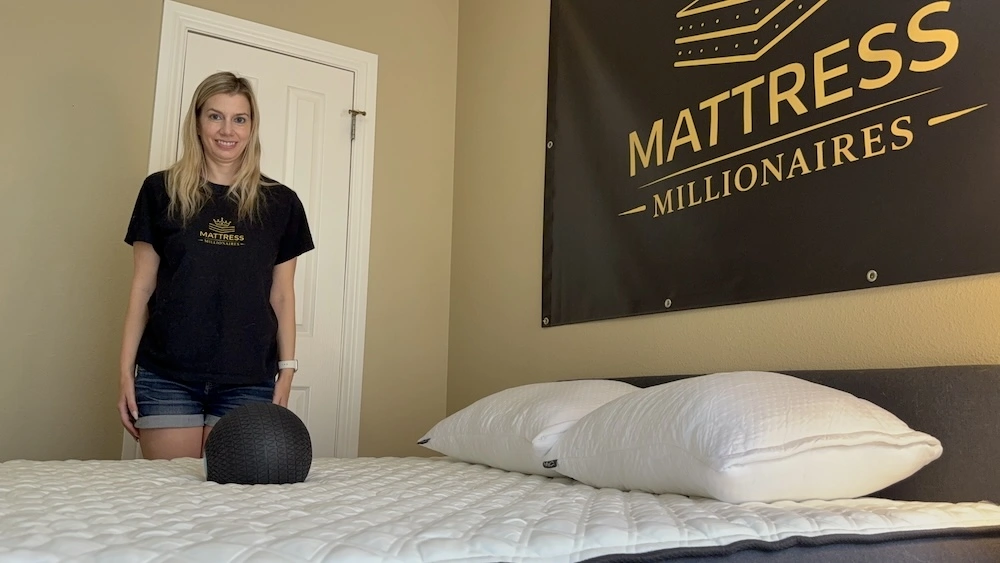
At Mattress Millionaires, we evaluate motion isolation as part of our mattress testing process, alongside support, pressure relief, cooling, and ease of movement. Our testing has shown that a mattress can feel wonderfully bouncy and easy to move on to one person, but may cause sleep disturbances to the person beside them. Finding the right balance depends on the needs and preferences of both sleepers.
Mattress Millionaires Quick Verdict: Motion Isolation in a Mattress
- Prioritize motion isolation if: you are easily disturbed by partner movement, share a bed with a restless sleeper, or have different bedtimes.
- Look beyond the mattress label: foam comfort layers can help hybrids absorb movement, but performance varies between models.
- Expect trade-offs: a mattress that absorbs movement well may feel slower to respond when you change positions.
- Keep expectations realistic: motion isolation cannot prevent blanket pulling, snoring, direct contact, or every disturbance from a moving bed frame.
What Does Motion Isolation Actually Mean?
When someone moves on a mattress, they compress and release its materials. Some of that movement stays near the person, while some may travel across the sleeping surface.
Motion transfer describes the movement reaching another part of the bed. Motion isolation describes how effectively the mattress limits that transfer. Better isolation generally means less movement for the other sleeper to feel.
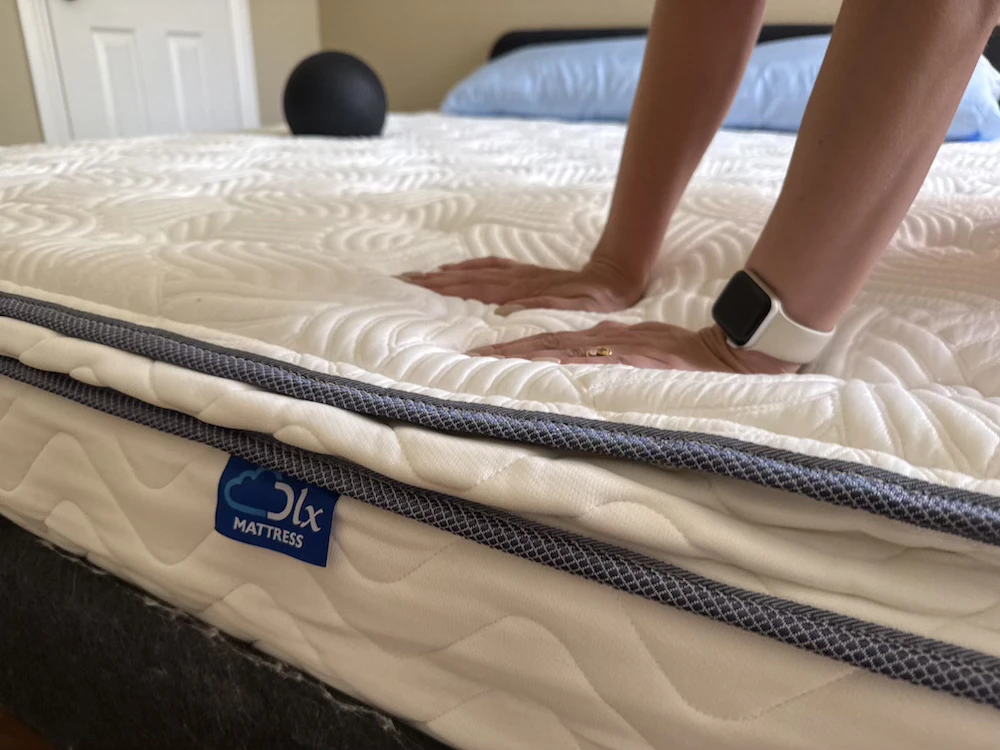
Picture your partner turning from their back onto their side. On one mattress, you might notice a gentle shift. On another, your side of the bed might dip or bounce enough to interrupt your settling-in routine.
Neither mattress necessarily feels uncomfortable on its own. Sharing the bed reveals a different part of its performance.
Why Does Motion Isolation Matter for Couples?
Motion isolation is especially useful when one person is sensitive to movement and the other changes positions frequently. Different schedules also make it relevant: getting into bed at midnight should not have to become a shared event.
Sleep quality matters alongside sleep duration. The National Heart, Lung, and Blood Institute explains that sleep deficiency includes poor-quality sleep, not simply too few hours in bed. That provides context for addressing repeated disturbances, although it does not prove that a particular mattress improves sleep.
Sharing a bed is not automatically bad for rest, either. A 2020 study of 12 young, healthy couples found more REM sleep and less fragmented REM sleep when participants slept together, despite increased limb movements. The study did not test mattress motion isolation, and its small sample limits broader conclusions.
Our practical takeaway: choose a setup that lets you enjoy sharing a bed while reducing the disturbances that actually bother you.
Motion Isolation vs. Firmness, Support, and Bounce
These terms describe different things. Understanding them helps you avoid buying a mattress that solves one problem but creates another.
- Firmness: how soft or firm the mattress feels under your body.
- Support: how well the mattress holds you in a comfortable, balanced position.
- Pressure relief: how the surface cushions and distributes pressure around areas such as shoulders and hips.
- Responsiveness: how quickly the mattress adjusts when you move.
- Motion isolation: how well it limits movement traveling to another sleeper.
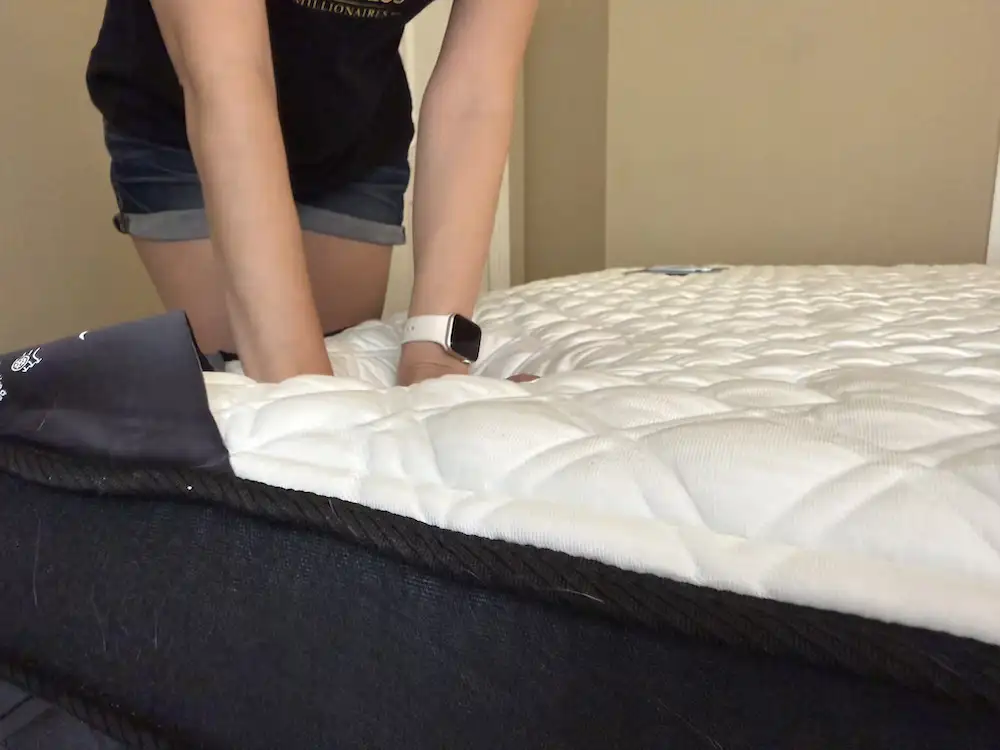
A soft mattress is not automatically better at motion isolation. A firm mattress is not automatically worse. Construction matters, including the comfort layers, support system, and how those components work together.
You also should not sacrifice support just to get a quieter surface. If your hips sink uncomfortably, read our guide to signs your mattress may be too soft. For shoulder and hip cushioning, our pressure-relief guide explains what to assess separately.
Which Mattress Materials Help Reduce Motion Transfer?
Memory Foam
Memory foam often provides a movement-absorbing feel because it compresses and recovers more slowly than springier materials. That can be appealing if you want your side of the bed to feel settled.
The compromise is that repositioning may take more effort, especially with deeper contouring. If you dislike sinking into a mattress, evaluate how easily you can roll over rather than choosing solely for motion isolation.
Hybrid Mattresses
A hybrid combines foam or other comfort materials with a coil support system. Coils add responsiveness, but the layers above them can soften how much movement reaches another sleeper.
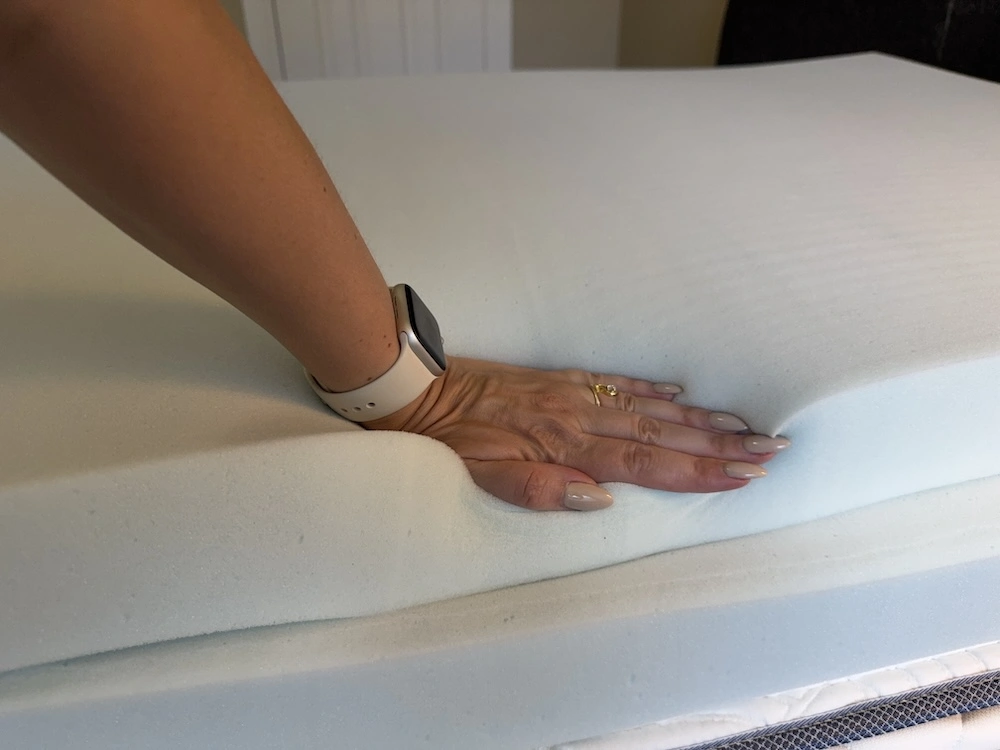
Our reviews show why it is a mistake to treat every hybrid the same. Puffy Lux, DLX Premier, and Origin Adapt all use hybrid construction, yet their published motion-isolation observations differ.
Individually wrapped coils are one construction feature to consider, but they are not a guarantee of undisturbed sleep. Judge the finished mattress, not a single component.
Latex and Responsive Grid Materials
Latex and flexible grid designs typically appeal to people who want a surface that responds readily to movement. That buoyancy can make changing positions easier, but motion control remains model-specific.
Our Purple Plus review is a useful example: its responsive feel was a strength for repositioning, while its motion-isolation scorecard identified more noticeable movement transfer. That finding applies to the model we tested, not every grid mattress.
Partner Movement: What Our Mattress Reviews Found
The table below summarizes observations already published in our individual reviews. It is not a new simultaneous head-to-head test or a measurement of nighttime awakenings. The final column explains how we would use those observations when narrowing options for couples.
| Mattress tested | Published observations | What to consider as a couple |
|---|---|---|
| Puffy Lux Hybrid | Our review describes excellent motion isolation, with minimal bounce or transfer during the weighted-ball test. It also notes slow responsiveness. | A promising option when movement absorption and a plush feel matter more than easy repositioning. |
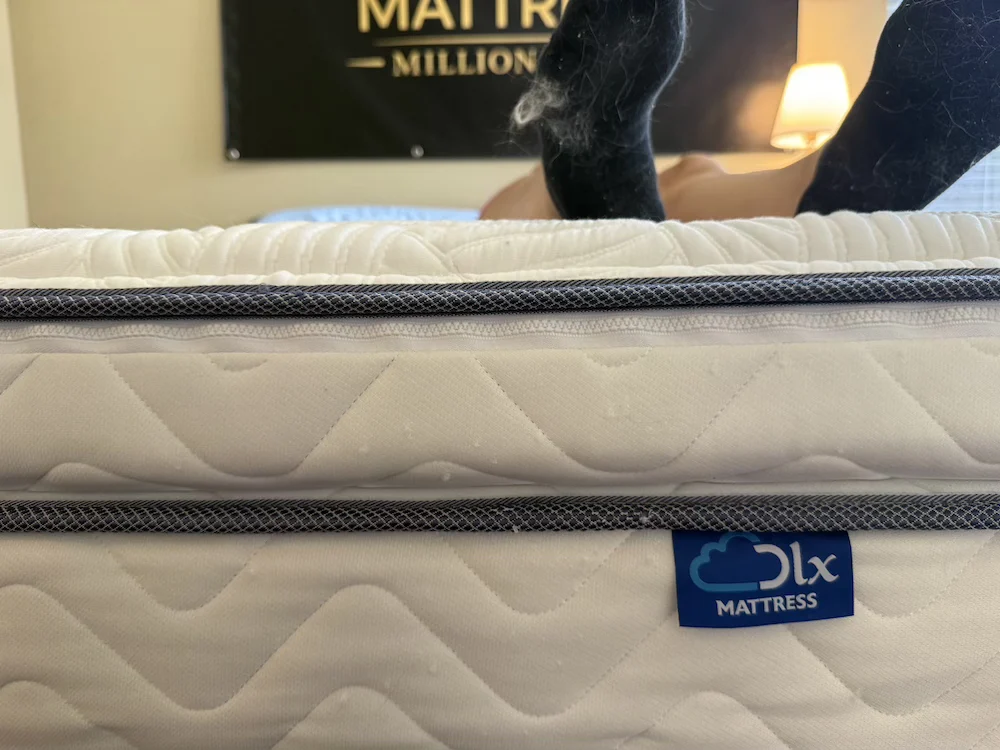
| DLX Premier Hybrid, Soft/Medium split | Our 10-pound-ball test showed minimal bouncing across the surface, while the mattress still felt responsive when changing positions. | Worth considering if you want movement control with a more responsive feel and different firmness options on each side. |
| Origin Adapt Hybrid | Our review describes moderate motion isolation. Foam absorbed some movement, but the ball-drop test revealed noticeable rebound. | Consider the trade-off between easy movement and partner disturbance, especially if one person is a light sleeper. |
| Purple Plus | Our motion-isolation scorecard reports movement traveling across the surface, alongside strong responsiveness. | Less compelling when partner movement is your main complaint; more relevant if you prioritize a buoyant feel. |
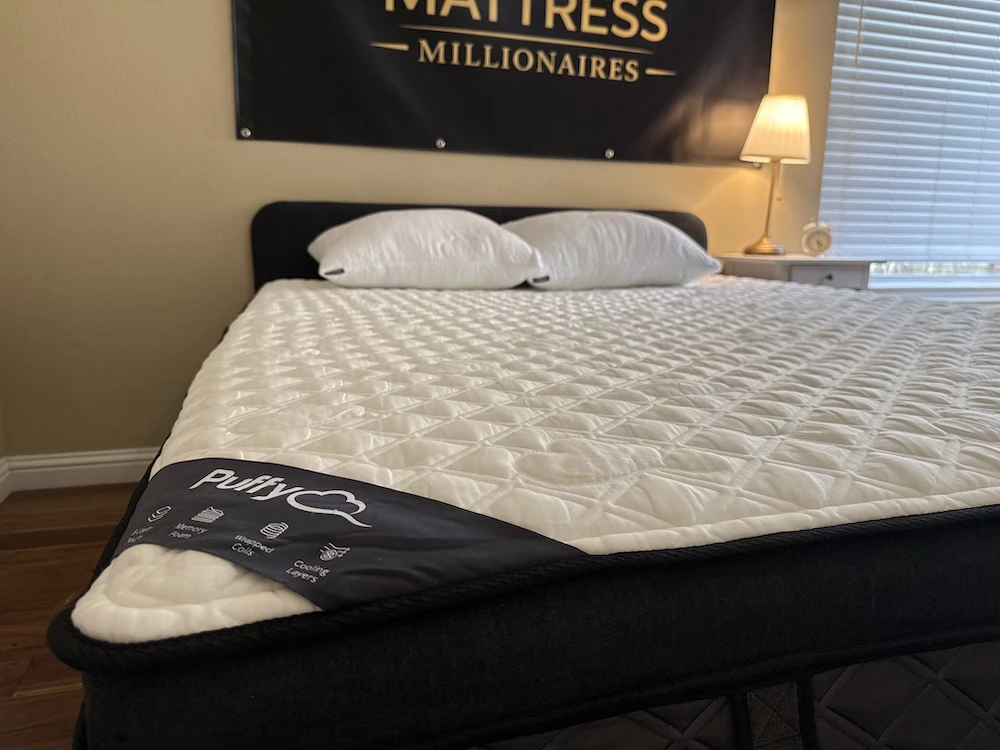
These observations reflect the versions and configurations reviewed. Body weight, distance between sleepers, bedding, and the foundation can affect your experience. Follow the linked reviews for the broader comfort and support findings before making a decision.
How We Evaluate Motion Isolation
Our published reviews include weighted-ball demonstrations and observations about how mattresses respond to movement. Our testing-methodology page also describes water-glass and partner-movement checks.
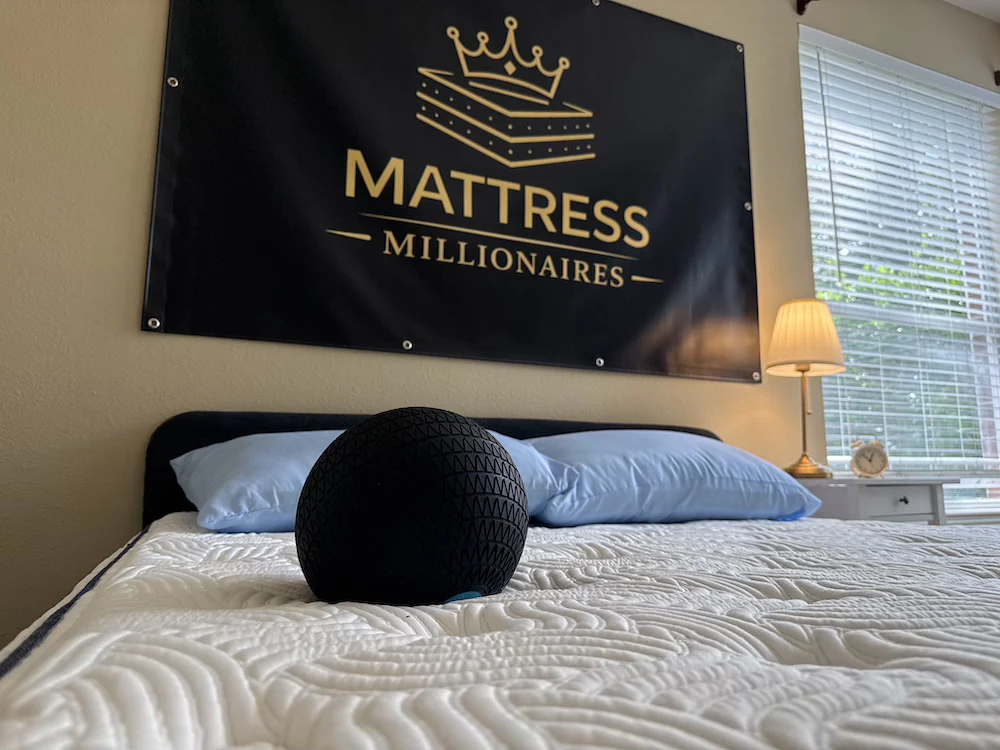
A ball-drop demonstration can help show rebound and surface disturbance. However, watching the ball bounce is not the same as measuring movement at the other sleeper’s position. Likewise, a steady glass does not prove that nobody will wake up.
We use these observations to describe practical performance, not to claim clinical sleep benefits. For readers, the most useful question is whether normal movements feel distracting in their own sleeping arrangement.
How to Check Motion Isolation Yourself
When shopping together or evaluating a mattress during its trial period, try a simple partner test:
- Lie in your usual positions. Use the spacing you would normally have at home.
- Have one person roll over. Start with ordinary movement rather than exaggerated bouncing.
- Try sitting up and getting out. These movements can feel different from turning over.
- Switch roles. Each person’s weight and sensitivity can change the experience.
- Identify the disturbance. Notice whether you feel mattress movement, frame shaking, blanket pulling, or direct contact.
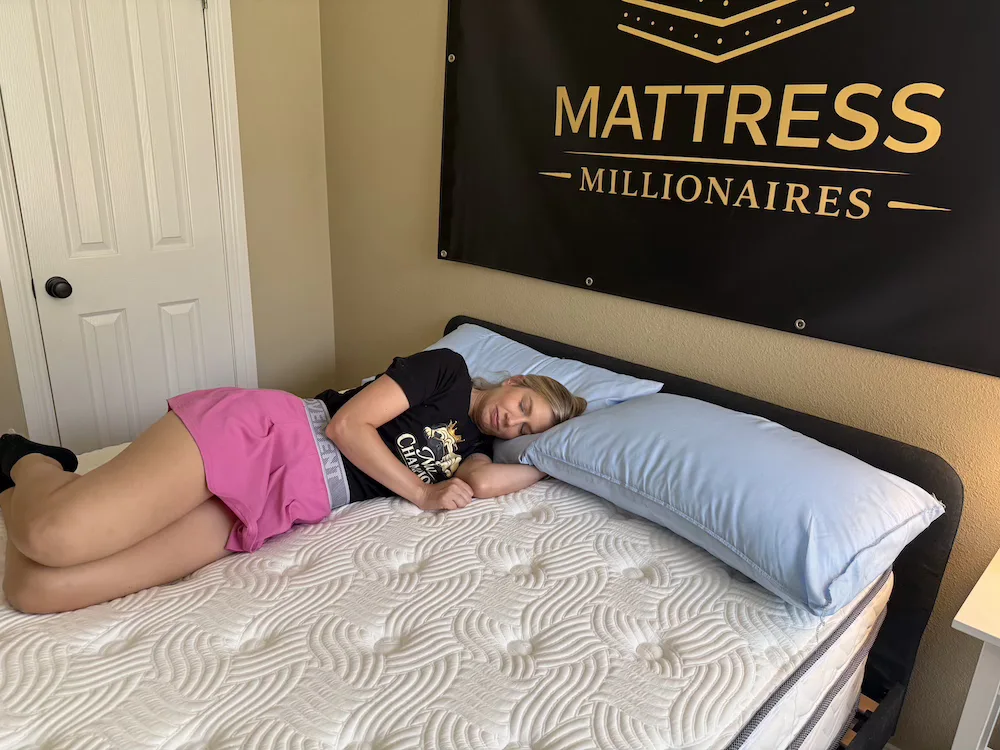
Use your normal bedding during home testing. A quick showroom check helps you compare impressions, but several nights at home provide more context about your actual routine.
Can You Improve Motion Isolation Without Replacing Your Mattress?
Sometimes, but first identify what is moving. A mattress purchase may be unnecessary if a loose frame or shared blanket is the main problem.
Check the Foundation and Frame
Look for loose connections, damaged slats, or unsupported areas. Follow the bed and mattress manufacturers’ instructions when correcting problems. Our guide to choosing a mattress foundation explains the main support options.
Consider a Topper Carefully
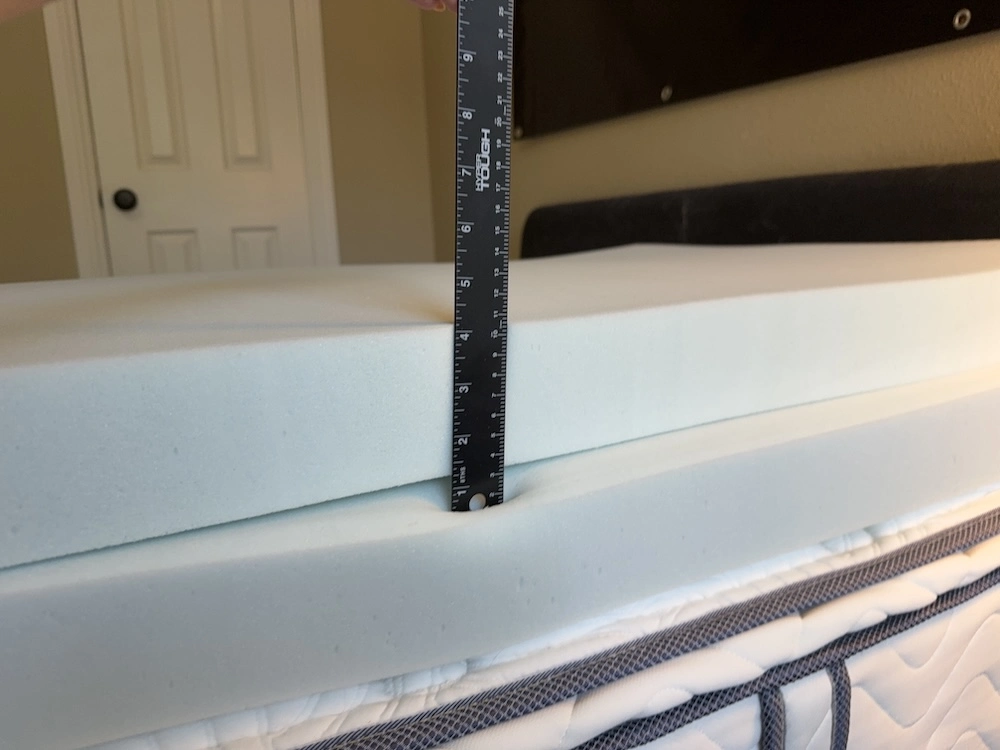
A memory-foam topper may soften some surface movement, but results depend on the topper and mattress underneath. It cannot reliably solve a shaking frame or repair a worn-out support system. It can also make the bed softer, so check that added cushioning suits both sleepers.
Separate the Bedding
If you wake when someone pulls the comforter, separate blankets may address the actual disturbance. This changes bedding movement rather than the mattress’s motion-isolation performance.
Evaluate Sleeping Space
More room may reduce direct contact and crowding. However, a larger mattress does not automatically absorb motion better. Consider size alongside construction, room dimensions, and the cost of replacing the base and bedding.
Is Split Firmness the Same as Motion Isolation?
No. Split firmness gives each person a different comfort feel, while motion isolation concerns movement transfer. A mattress can offer customized firmness and still have shared layers that transmit movement.
Our split-firmness mattress guide explains the setup we tested with DLX. That approach addresses differing comfort preferences within one mattress.
A split king uses two separate mattresses, usually two twin XLs. Physical separation can reduce movement traveling directly through a shared mattress, but a common base or connected bedding can still transmit disturbance. Consider the center gap and your preferred sleeping arrangement, too.
What Motion Isolation Cannot Fix
A movement-absorbing mattress does not stop snoring, prevent a partner from touching you, or treat a sleep disorder. It also cannot guarantee uninterrupted sleep.
If disrupted sleep includes loud snoring, gasping, breathing pauses, or significant daytime sleepiness, discuss those symptoms with a healthcare professional. The NHLBI’s sleep-apnea symptom guide explains why those signs deserve attention beyond mattress shopping.
Frequently Asked Questions: What is Motion Isolation in a Mattress?
Does good motion isolation mean zero movement?
No. You may still notice someone sitting nearby, getting out of bed, or moving close to you. Good isolation reduces transfer; it does not make two people physically independent on one sleeping surface.
Are hybrid mattresses bad for motion isolation?
No. Our Puffy Lux and DLX reviews document strong movement absorption in hybrid designs. The comfort layers and complete construction matter more than the hybrid label alone.
Is motion isolation important if I sleep alone?
Usually, it is a lower priority. Focus first on comfort, support, temperature, and ease of movement. It becomes more relevant if a pet shares your bed or you expect to share it with another person.
Should couples buy the softest mattress available?
No. Choose a firmness that supports both sleepers comfortably, then evaluate motion isolation separately. Excessive sinkage is a poor trade for reduced movement if it makes either person uncomfortable.
Mattress Millionaires Final Verdict
Start with the disturbance you actually notice. If your partner’s movements travel through the mattress and bother you, prioritize motion isolation while keeping support and ease of movement in the decision.
From the reviews compared here, Puffy Lux and DLX are useful starting points for researching stronger movement control. Origin Adapt and Purple Plus illustrate why responsiveness deserves separate consideration. Read the full reviews, test together when possible, and choose the balance that works for both of you.
Ready To Sleep Better?
Take our quiz to find the mattress that fits your sleep style and budget.
"I found my perfect mattress in 60 seconds." - Sarah H., side sleeper
✅ Super fun! 🥳
⭐ Trusted by 10,000+ sleepers 😴
🛏 Personalized mattress match 💤