

A firm mattress can feel supportive, stable, and reassuring. But there is a point where firmness stops helping and starts working against you.
Yes, a mattress can be too firm.
If your mattress does not allow heavier or wider parts of your body—particularly your shoulders and hips—to sink into the surface enough, it can create uncomfortable pressure points and make it harder to maintain a comfortable sleeping position. You may wake up with sore hips, shoulder pain, numbness, stiffness, or an aching back even though the mattress technically provides plenty of support.
This is especially common among side sleepers and lighter-weight sleepers, who may not compress a firm mattress enough to benefit from its comfort layers.
The confusing part is that a mattress that is too firm can sometimes produce symptoms similar to a mattress that is too soft. Both can leave you waking up stiff or uncomfortable, but for very different reasons.
So how can you tell which problem you actually have?
In this guide, we’ll cover the most common signs your mattress is too firm, how firmness affects spinal alignment and pressure relief, which sleepers are most likely to struggle with a hard mattress, how to test your mattress at home, and what you can do to make a firm bed more comfortable without immediately replacing it.
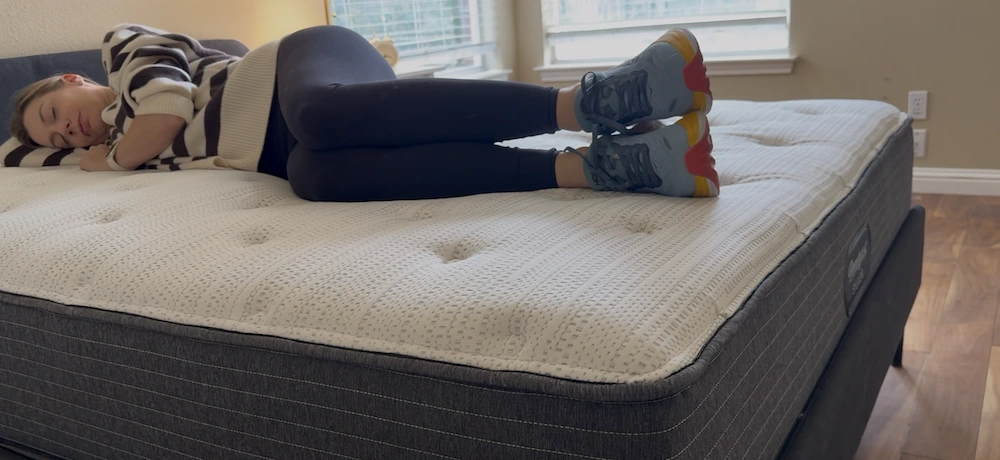
Can a Mattress Really Be Too Firm?
Absolutely.
There is a common belief that the firmer a mattress is, the better it must be for your back. But firmness and support are not the same thing.
A supportive mattress keeps your body stable and prevents excessive sinking.
A firm mattress simply resists compression more strongly.
Those characteristics can overlap, but they are not interchangeable.
A mattress can have a relatively soft, cushioned surface while still providing excellent underlying support. Likewise, a mattress can feel extremely hard while doing a poor job of accommodating your body’s natural shape.
For a mattress to feel comfortable, it generally needs to do two things at the same time:
- Support your body so heavier areas do not sink excessively
- Contour enough to relieve pressure and accommodate your natural curves
If a mattress is too soft, you may sink too deeply.
If it is too firm, you may not sink enough.
Either extreme can create problems.
The ideal balance depends on your body weight, sleep position, body shape, and personal comfort preferences. If you are not sure where you fall on the firmness spectrum, our guide to choosing the right mattress firmness is a good place to start.
8 Signs Your Mattress Is Too Firm
You do not need special equipment to determine whether your mattress may be too firm.
Your body usually provides the most useful clues.
One symptom alone does not prove that firmness is the problem, but if several of the following signs sound familiar, your sleeping surface may be harder than your body needs.
1. You Wake Up With Sore Shoulders
Shoulder discomfort is one of the most common signs of an overly firm mattress, particularly for side sleepers.
When you sleep on your side, a significant amount of your upper-body weight is concentrated around one shoulder.
Ideally, the mattress should compress enough to allow that shoulder to sink slightly into the comfort layers.
If the surface barely gives, the mattress pushes back against your shoulder instead.
This can create concentrated pressure around the joint and surrounding soft tissue.
You may notice that your shoulder feels sore when you wake up but gradually improves after you begin moving.
You might also find yourself repeatedly switching sides during the night because one shoulder becomes uncomfortable.
Some people respond by rotating partially toward their stomach or back without realizing it. That can relieve shoulder pressure temporarily but may introduce twisting through the torso.
If your shoulder feels as though it is being pressed against the mattress rather than settling into it, excessive firmness is worth considering.
2. Your Hips Hurt When You Sleep on Your Side
Your hips are another major pressure point when you sleep on your side.
A mattress needs to compress beneath the hip enough to distribute your weight across a larger area.
On a very firm surface, more force can remain concentrated around the outside of the hip.
You may wake up with:
- Aching around the outside of the hip
- Tenderness when you roll onto that side
- Pressure that forces you to switch sides
- Discomfort that improves after getting out of bed
Mattress firmness is not the only possible cause of hip pain, so persistent or significant discomfort should not automatically be blamed on your bed.
But if the pain appears primarily during side sleeping and improves when you use a softer mattress, firmness becomes a stronger suspect.
We explore this issue in more detail in our guide on whether a mattress can cause hip pain while side sleeping.
3. Your Arms or Hands Go Numb While Sleeping
Occasional numbness can happen when you sleep in a position that compresses a nerve or restricts circulation temporarily.
However, if you frequently wake with a “dead arm,” tingling hand, or numb shoulder while side sleeping, excessive pressure from your sleeping surface may be contributing.
A very firm mattress may not allow your shoulder to sink enough, increasing pressure around the area.
You may compensate by placing your arm under your pillow, stretching it overhead, or rolling forward to reduce pressure.
Those positions can sometimes create additional discomfort.
Frequent, persistent, unexplained, or worsening numbness deserves medical attention because neurological symptoms can have causes unrelated to your mattress.
4. You Wake Up Feeling Stiff
Morning stiffness is another clue.
If your mattress does not contour to your body, your muscles may spend the night compensating for gaps between your body and the mattress or for pressure around prominent areas.
You may wake feeling stiff through your:
- Lower back
- Hips
- Shoulders
- Upper back
Then, after walking around or stretching naturally during your morning routine, the stiffness begins to disappear.
This pattern does not prove the mattress is responsible. Morning stiffness has many potential causes.
But when stiffness consistently happens after sleeping on one mattress and improves on a softer bed, your sleeping surface deserves closer examination.
5. You Toss and Turn Frequently
A mattress that creates uncomfortable pressure can make it difficult to remain in one position.
You may not consciously think, “My mattress is too firm.”
Instead, you simply keep moving.
You roll from your left side to your right. Then onto your back. Then back onto your side.
Your body is searching for a position that reduces pressure.
Frequent movement is not always a problem. Everyone changes position during sleep.
But if you feel unable to settle comfortably or repeatedly wake because your hip or shoulder hurts, the mattress may not be providing enough pressure relief.
6. You Feel Like You Are Sleeping On Top of the Mattress
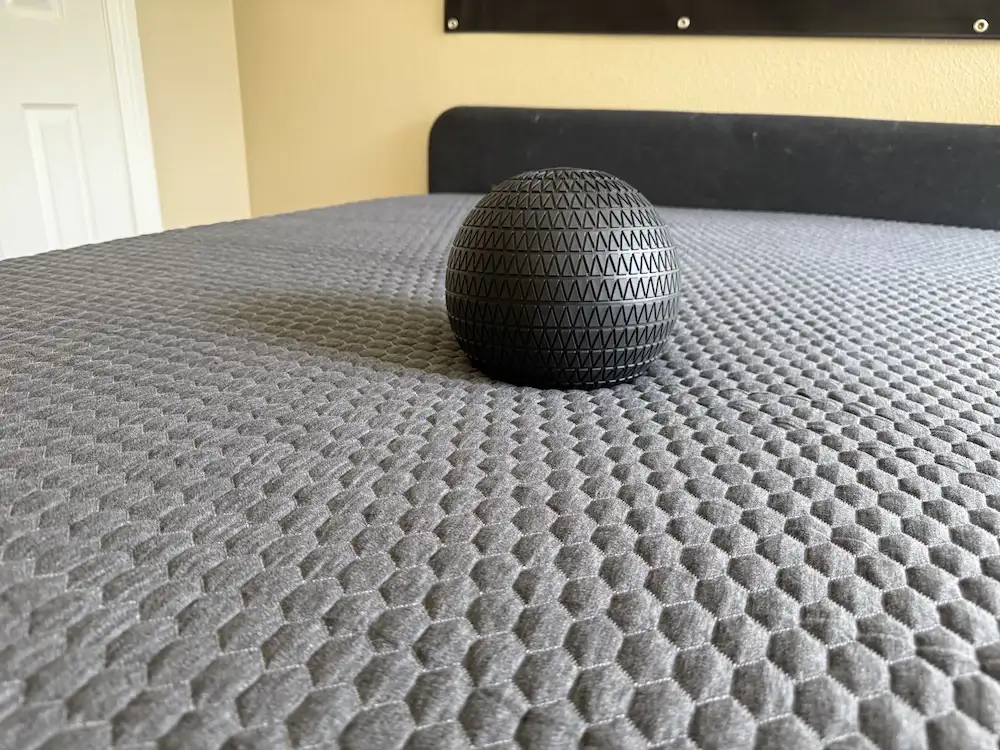
People often describe a very firm mattress as feeling like they are sleeping “on” it rather than “in” it.
That description can actually be useful.
A mattress does not need to envelop your body deeply, but some contouring is usually beneficial.
Your shoulders, hips, and other curves should be able to settle into the comfort layers to some degree.
If your mattress feels almost completely flat underneath you, with very little compression even after you have been lying down for several minutes, it may be too firm for your weight.
This is especially likely if you are relatively lightweight.
7. You Sleep Better on Softer Mattresses
One of the simplest ways to evaluate your mattress is to compare it with other beds.
Maybe you sleep at a hotel and wake up feeling surprisingly good.
Maybe your guest-room mattress feels noticeably more comfortable.
Or perhaps you sleep better at your partner’s home, where the mattress has a softer comfort layer.
If this happens repeatedly, pay attention.
A single night away from home is not a controlled experiment. Travel, fatigue, pillows, room temperature, and other factors can affect sleep.
But a consistent pattern of feeling better on moderately softer mattresses suggests your current bed may be firmer than your body prefers.
8. Adding a Soft Topper Makes You Feel Better
This is one of the most practical tests for excessive firmness.
If your mattress is structurally sound but simply too hard, adding a softer mattress topper changes the surface without changing the underlying support system very much.
If your shoulder pressure, hip discomfort, or morning stiffness improves substantially after adding a topper, that is useful evidence that your mattress was not providing enough cushioning.
A topper is not a perfect test, because its thickness and material can also affect alignment.
But improvement after adding a modest amount of cushioning is a strong clue that firmness or pressure relief was part of the problem.
Why Does a Mattress That Is Too Firm Hurt?
To understand why excessive firmness can be uncomfortable, it helps to think about how your body contacts the mattress.
Your body is not a flat object.
Your shoulders, hips, buttocks, waist, and lower back all have different shapes and widths.
A mattress needs to accommodate those differences.
When you lie down, some areas should sink more than others.
A mattress that is too firm may resist those natural differences too strongly.
This creates two main problems: pressure concentration and poor alignment.
Pressure Concentration
When a mattress conforms around your body, your weight is distributed over a larger surface area.
If the mattress barely compresses, your weight becomes concentrated around the parts of your body that stick out the most.
For a side sleeper, those areas are typically the shoulder and hip.
For a back sleeper, pressure may be concentrated around the pelvis, shoulder blades, or heels depending on body shape and mattress construction.
This is why a mattress can technically support your body while still feeling uncomfortable.
Our guide to pressure relief in a mattress explains how cushioning spreads weight around areas such as your shoulders and hips.
Poor Spinal Alignment
Pressure relief and alignment are closely connected.
Imagine a side sleeper lying on a perfectly rigid floor.
The shoulder and hip cannot sink into the surface. Because those areas protrude farther than the waist, the spine may bend rather than remaining comfortably aligned.
A mattress provides cushioning to reduce this effect.
But if the mattress is too firm for the sleeper, it can behave more like that rigid surface than intended.
The solution is not necessarily an extremely soft mattress.
You need enough cushioning for the prominent parts of your body to sink while still having enough support to prevent the heavier areas from dropping too far.
Firmness and Support Are Not the Same Thing
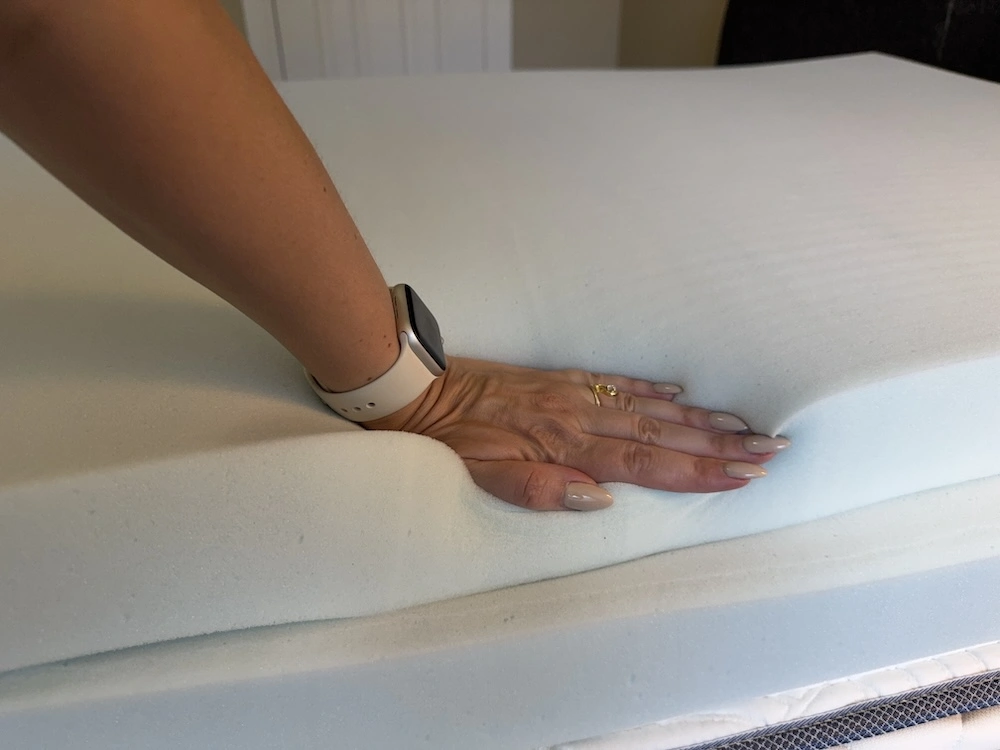
This distinction is important enough to repeat.
Firmness describes how hard or soft a mattress feels. Support describes how effectively the mattress keeps your body stable.
A plush mattress can be supportive.
A hard mattress can be unsupportive.
For example, consider a hybrid mattress with several inches of soft foam over a strong coil system.
The upper layers may feel plush and allow your shoulders and hips to sink comfortably. Once you compress those layers, the coils underneath provide stronger resistance and prevent excessive sinking.
That mattress can feel relatively soft while still offering substantial support.
Now consider a cheap, very firm mattress with thin comfort layers and a weak support core.
It may initially feel extremely hard, but that does not automatically mean it will maintain good alignment over time.
When shopping for a mattress, “firmer” should not automatically be interpreted as “more supportive.”
Who Is Most Likely to Find a Mattress Too Firm?
The same mattress can feel dramatically different to different sleepers.
Body weight and sleeping position are two of the biggest reasons.
Side Sleepers
Side sleepers are particularly sensitive to excessive firmness.
When you lie on your side, your body weight is concentrated across a relatively narrow area.
Your shoulder and hip need room to sink into the mattress.
If they cannot, pressure can build quickly.
The waist also needs enough support so that the middle of the body does not simply hang between the shoulder and hip.
That means a good side-sleeping mattress needs both contouring and support.
If you spend most of the night on your side, our guide to sleeping comfortably on your side covers positioning in more detail.
Lighter-Weight Sleepers
Body weight changes how deeply you compress a mattress.
A lighter person may barely compress the comfort layers of a firm mattress.
A heavier person on the exact same bed may sink several inches farther and experience substantially more contouring.
This means mattress firmness is subjective.
A bed marketed as “medium-firm” may feel very firm to a lightweight sleeper and comparatively soft to a heavier sleeper.
Lighter side sleepers are particularly likely to need softer comfort layers because they combine two factors: lower mattress compression and concentrated pressure around the shoulder and hip.
People With Broad Shoulders
Shoulder width matters for side sleepers.
A person with broad shoulders generally needs the shoulder to sink farther into the mattress to keep the neck and spine comfortably positioned.
If the surface is very firm, the shoulder remains elevated.
The sleeper may compensate with a thicker pillow, but the mattress still needs to accommodate the shoulder itself.
People With Prominent Hips
Body shape also matters.
A side sleeper with wider hips may need more contouring than someone with a straighter body profile.
Again, this does not necessarily mean choosing an extremely soft mattress.
It means choosing enough surface cushioning to accommodate the body’s curves while retaining adequate support underneath.
Can a Mattress Be Too Firm for a Back Sleeper?
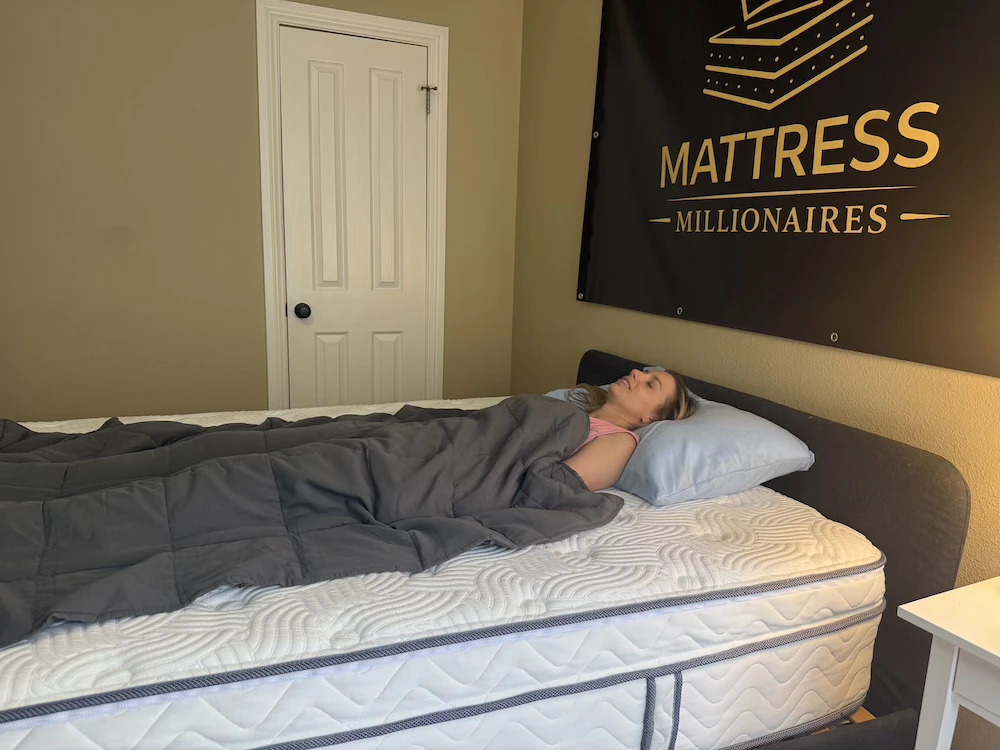
Yes.
Back sleepers generally tolerate firmer mattresses better than side sleepers, but that does not mean harder is always better.
When you lie on your back, your body has natural curves.
Your buttocks and upper back may contact the mattress more strongly, while your lumbar region curves slightly away from the surface.
A mattress with some contouring can accommodate these curves.
If the mattress is extremely firm, you may feel as though there is inadequate contact around the lower back.
Some sleepers describe this as a “gap” beneath the lumbar area.
That sensation can encourage muscle tension and discomfort.
A back sleeper generally needs enough firmness to prevent excessive hip sinking while retaining enough cushioning to contour around the pelvis and torso.
Can a Mattress Be Too Firm for a Stomach Sleeper?
Yes, although stomach sleepers often benefit from somewhat firmer support than side sleepers.
The main concern for stomach sleepers is excessive sinking around the abdomen and pelvis.
If the hips drop too deeply, the lower back may become more arched.
A firmer mattress can help prevent that.
However, an extremely hard mattress can still create pressure around the ribs, hips, knees, or other contact points.
Comfort matters even when strong support is needed.
Stomach sleepers therefore should not automatically choose the hardest mattress available.
Can a Mattress That Is Too Firm Cause Back Pain?
A mattress that is too firm can contribute to back discomfort in some sleepers.
This can happen when the surface fails to contour enough to support the body’s natural shape or when pressure causes the sleeper to twist and reposition repeatedly throughout the night.
The relationship between mattresses and back pain is complicated because back pain has many possible causes.
Your mattress may contribute without being the primary problem.
Look for patterns.
If your back pain:
- Is strongest when you wake up
- Improves after you begin moving
- Gets better on another mattress
- Appeared after switching to a significantly firmer bed
- Improves when you add cushioning
then mattress firmness is worth investigating.
For a more complete troubleshooting process, read our guide on how to tell if your mattress is causing back pain.
Can a Mattress That Is Too Firm Cause Hip Pain?
It can contribute to hip discomfort, particularly during side sleeping.
Your hip carries substantial pressure when you lie on your side.
A mattress that contours around the hip spreads that force across a larger area.
A very firm mattress may leave more pressure concentrated directly around the hip.
You might notice the discomfort primarily on whichever side you are sleeping.
Changing sides may provide temporary relief until the opposite hip begins feeling uncomfortable.
If this happens repeatedly, additional cushioning may help.
However, hip pain can also come from conditions unrelated to sleep, so persistent or severe pain should be discussed with a healthcare professional.
Can a Mattress That Is Too Firm Cause Shoulder Pain?
Shoulder pressure is one of the most common complaints associated with a firm mattress among side sleepers.
The shoulder needs enough space to settle into the mattress.
If the surface resists too strongly, the shoulder absorbs more pressure.
The sleeper may also begin rotating the upper body to escape that pressure, which can change the position of the neck and upper back.
Your pillow can complicate matters.
If your mattress is firm, your shoulder sinks less, so the distance between your head and the mattress is greater. You may therefore need a taller pillow than you would on a softer bed.
This is why mattress firmness and pillow loft should be considered together.
Can a Mattress That Is Too Firm Cause Numbness?
Excessive pressure can contribute to temporary numbness or tingling when you sleep in certain positions.
Side sleepers may notice this around the arm or shoulder.
Changing position usually relieves temporary pressure-related numbness.
However, recurring numbness, persistent tingling, weakness, or symptoms that continue after changing position should not simply be blamed on your mattress.
Those symptoms can have neurological or other medical causes and should be evaluated appropriately.
Can a Mattress That Is Too Firm Affect Sleep Quality?
Even if a firm mattress does not cause obvious pain, discomfort can interfere with sleep.
You may wake briefly every time pressure builds around your hip or shoulder.
You might not remember every awakening the next morning.
Instead, you simply feel poorly rested.
A comfortable mattress should make it easier to settle into a position without repeatedly searching for relief.
If you are constantly tossing and turning, consider whether pressure points are part of the reason.
How to Test Whether Your Mattress Is Too Firm
Before replacing your mattress, perform a few simple experiments.
The goal is to change one variable at a time and see whether your comfort improves.
Test 1: Pay Attention to Your Pressure Points
Lie in your normal sleeping position for at least 10 to 15 minutes.
Do not judge the mattress based only on the first few seconds.
Ask yourself:
- Where do I feel the most pressure?
- Does my shoulder feel compressed?
- Does my hip become uncomfortable?
- Do I feel a gap beneath my waist or lower back?
- Do I immediately want to change positions?
Pressure that steadily increases is more informative than a mattress simply feeling firm when you first lie down.
Test 2: Try a Softer Mattress for Several Nights
If possible, sleep on another mattress.
A guest bed, hotel bed, or family member’s mattress can provide a useful comparison.
You are not necessarily looking for the softest mattress available.
You simply want to compare your current firm mattress with something that offers more contouring.
If your normal shoulder, hip, or back discomfort improves substantially, excessive firmness becomes more plausible.
Test 3: Add a Mattress Topper
A topper is one of the easiest ways to modify firmness temporarily.
Choose a topper that adds meaningful cushioning without being so thick and soft that it completely changes your alignment.
Sleep on it for several nights.
If your pressure points improve while your back still feels supported, you may have found the problem.
Test 4: Check Your Pillow
A firm mattress can change the pillow height you need.
Side sleepers typically sink less deeply into a firm mattress, which leaves more space between the head and sleeping surface.
If your pillow is too thin, your neck may tilt downward.
Before concluding that the mattress itself is entirely responsible, make sure your pillow is appropriate for the combination of your body and mattress.
Test 5: Track Morning Symptoms
For a week, write down how you feel when you wake up.
Record:
- Shoulder discomfort
- Hip discomfort
- Back stiffness
- Numbness
- Number of remembered awakenings
- Your main sleeping position
Then compare those symptoms after making one change, such as adding a topper.
This is more useful than relying on your memory of whether you “think” the bed feels better.
How to Make a Firm Mattress Softer
If your mattress is too firm, you may not need to replace it immediately.
There are several ways to increase surface cushioning.
1. Add a Mattress Topper
A mattress topper is usually the most effective way to soften an otherwise supportive mattress.
Toppers are available in:
- Memory foam
- Latex
- Polyfoam
- Down
- Down alternatives
- Wool
Foam and latex toppers generally change the mattress feel more substantially than thin fiber-filled pads.
Thickness matters.
A thin topper may slightly reduce surface hardness.
A thicker topper can significantly change how deeply you sink.
Be cautious about adding a very thick, very soft topper if you already have lower-back alignment concerns.
The goal is to add enough cushioning for pressure relief without creating excessive sinkage.
2. Give a New Mattress Time to Break In
A brand-new mattress may feel firmer than the showroom model or the mattress you tested elsewhere.
Foams and other comfort materials can loosen somewhat during the first several weeks of regular use.
Your body is also adjusting to a new sleeping surface.
If the mattress is new and the discomfort is mild, it may be reasonable to give it some time within the manufacturer’s sleep-trial requirements.
Our guide on how long it takes to adjust to a new mattress explains this process in more detail.
3. Check Your Mattress Protector
Some thick, tight, or waterproof mattress protectors can slightly alter how a mattress feels.
A protector that fits too tightly may restrict the ability of the top comfort layers to contour.
If appropriate, test the mattress briefly without the protector to determine whether it affects the feel.
Continue protecting your mattress according to manufacturer requirements, particularly if protection is important for warranty or hygiene reasons.
4. Check the Foundation
Your mattress foundation can influence firmness.
A rigid platform generally allows very little flex.
Some compatible foundations provide slightly more give.
Do not switch foundations randomly, though.
Your mattress manufacturer may have specific requirements regarding slat width, slat spacing, center support, and foundation type.
Using an unsupported base can damage the mattress or affect warranty coverage.
Read our guide on choosing a mattress foundation before changing your setup.
5. Adjust Your Bedding
Thicker quilted pads can add a small amount of cushioning.
This will not transform an extremely firm mattress, but it may take the edge off a surface that is only slightly too hard.
Remember that thick bedding can also affect temperature.
If you already sleep hot, adding several insulating layers may create a different comfort problem.
Can You Break In a Mattress That Is Too Firm?
New mattresses often soften somewhat with regular use.
That does not mean an extra-firm mattress will eventually turn into a plush mattress.
The change is usually more modest.
Foam cells flex repeatedly, quilting compresses, and materials settle.
This is one reason showroom mattresses sometimes feel softer than newly delivered versions of the same model. The floor sample may have been used by hundreds of shoppers.
If your mattress is only slightly firmer than you want, normal break-in may improve it.
If it is dramatically too firm, waiting may not solve the problem.
Should You Walk on a New Mattress to Soften It?
You may see advice online recommending walking or crawling across a new mattress to accelerate the break-in process.
Be cautious.
Mattresses are designed to support distributed body weight while lying down, and concentrated standing pressure may not be appropriate for every construction.
Follow the manufacturer’s care instructions rather than using aggressive techniques that could damage the mattress.
Regular sleeping is the safest way to break in most mattresses.
How Long Does It Take for a Firm Mattress to Soften?
There is no exact timeline.
The amount of change depends on the mattress materials, construction, room temperature, body weight, and frequency of use.
Foam-heavy mattresses may change more noticeably than some latex or coil-focused designs.
If you are within a sleep trial, pay close attention to the company’s minimum break-in period and return deadline.
You do not want to wait so long for a mattress to soften that you accidentally miss your return window.
Memory Foam Mattress Too Firm: What Can You Do?
Memory foam can feel surprisingly firm when new, particularly in a cool bedroom.
Traditional memory foam is temperature sensitive. Some formulations become more conforming as they warm from body heat.
If your memory foam mattress feels too firm, first give it enough time to warm while you are lying on it.
You can also evaluate whether the room itself is unusually cold.
If the mattress remains too firm after the normal adjustment period, a compatible softer topper can add additional contouring.
If you are curious about why memory foam behaves differently from conventional foam, read our guide on what memory foam is and how it works.
Hybrid Mattress Too Firm: What Can You Do?
Hybrid mattresses use coils beneath foam, latex, or other comfort materials.
If a hybrid feels too firm, the issue is usually more related to the comfort layers than the coils themselves.
You may simply need more cushioning between your body and the support system.
A topper can be particularly effective in this situation because it adds comfort material while preserving the strong coil support underneath.
However, if the mattress uses a very firm zoned coil system that feels uncomfortable beneath your body, a topper may not completely change the sensation.
Latex Mattress Too Firm: What Can You Do?
Latex has a naturally buoyant feel.
Some people interpret that pushback as firmness even when the mattress has reasonable pressure relief.
If a latex mattress genuinely feels too hard, a softer latex or foam topper can change the surface.
A memory foam topper will usually create a more body-hugging feel, while a latex topper tends to preserve more responsiveness.
Your choice depends on whether you want deeper contouring or simply a slightly softer version of the mattress’s existing feel.
Should You Put a Memory Foam Topper on a Firm Mattress?
A memory foam topper can be a good option if your mattress is supportive but lacks pressure relief.
Memory foam contours closely around the shoulders and hips, which can reduce the hard “on top of the bed” sensation.
The tradeoff is that thicker memory foam can increase sinkage and may retain more body heat.
If your mattress is only slightly too firm, you may not need the thickest topper available.
Start by identifying how much change you actually want.
Is a 2-Inch or 3-Inch Topper Better for a Firm Mattress?
There is no universal answer.
A thinner topper generally makes a smaller adjustment.
A thicker topper changes the mattress more dramatically and allows greater sinkage.
Lighter sleepers may experience a substantial difference from a relatively modest topper because they do not compress materials as deeply.
Heavier sleepers may compress through a thin, soft topper quickly and may need a more substantial comfort layer.
Material firmness is just as important as thickness.
A firm three-inch latex topper can feel less cushioning than a softer two-inch memory foam topper.
Can a Mattress Topper Make a Bed Too Soft?
Yes.
This is why you should avoid assuming that more cushioning is always better.
If you add a thick, very soft topper, your hips may begin sinking too deeply.
You may solve your shoulder pressure while creating lower-back discomfort.
The goal is balance.
If the mattress is structurally supportive and only slightly too firm, make the smallest adjustment that solves the pressure problem.
If added cushioning leaves you sinking too deeply, check these signs your mattress is too soft before making another adjustment.
Should You Replace a Mattress That Is Too Firm?
Replacement makes sense when reasonable adjustments do not solve the problem.
Consider replacing or returning the mattress if:
- You consistently wake with pressure-related discomfort
- You cannot sleep comfortably in your normal position
- A topper would need to be so thick that it fundamentally changes the mattress
- You are still within the sleep trial
- The mattress is simply a poor match for your body type
- You repeatedly sleep better on other mattresses
If your mattress is new, review the return or exchange policy before spending a significant amount on toppers.
Sometimes exchanging the mattress for the correct firmness is more sensible than trying to rebuild an unsuitable mattress with accessories.
What Firmness Should You Choose Instead?
If your current mattress is too firm, do not automatically jump several firmness levels in the opposite direction.
A smaller adjustment may be enough.
Think about why the current mattress is uncomfortable.
If your back feels well supported but your shoulder hurts, you may need only a modest increase in surface cushioning.
If your entire body feels like it cannot settle into the mattress, you may need a more significant change.
Your sleeping position provides a useful starting point.
Side Sleepers
Side sleepers generally need more pressure relief because the shoulder and hip bear concentrated weight.
Medium-soft to medium-firm mattresses are common starting points, but body weight changes the equation substantially.
Back Sleepers
Back sleepers often prefer a balanced medium to firm feel that provides lumbar support without feeling rigid.
Again, the correct choice depends on body weight and construction.
Stomach Sleepers
Stomach sleepers generally need stronger resistance beneath the midsection and may prefer firmer options.
But they still need enough cushioning to avoid uncomfortable pressure.
Why Body Weight Changes Mattress Firmness
Firmness ratings can be misleading if you treat them as objective measurements.
They are better understood as approximations.
Suppose two people lie on the same mattress.
One weighs 120 pounds and the other weighs 240 pounds.
The heavier sleeper applies substantially more force and compresses the comfort layers more deeply.
The lighter sleeper may remain primarily on the uppermost surface.
As a result, they effectively experience different mattresses.
This is why reading a reviewer’s body weight and sleeping position can be useful when evaluating mattress reviews.
A firmness assessment without context only tells you so much.
Why Mattress Materials Change How Firmness Feels
Two mattresses with the same advertised firmness can feel completely different because of their materials.
Memory Foam
Memory foam responds slowly and contours closely.
Even a relatively firm memory foam mattress may eventually create a hugging sensation as the foam warms and compresses.
Latex
Latex responds quickly and pushes back against the body.
It can therefore feel more buoyant and “on top of the bed” even when pressure relief is adequate.
Polyfoam
Polyfoam comes in many formulations.
Some versions are soft and responsive, while others are dense and firm.
Coils
Coils provide structural support and responsiveness.
The gauge, shape, arrangement, and zoning of coils all influence how the mattress feels.
This is why shopping solely according to a number on a 1-to-10 firmness scale can be misleading.
Our mattress materials guide explains these construction differences in more detail.
Does a Mattress Get Softer as It Ages?
Usually, mattress comfort layers soften to some degree with use.
Initially, that may make a slightly firm mattress more comfortable.
Eventually, however, excessive softening can become a different problem.
Foams may lose resilience and permanent impressions may develop.
A mattress that was once appropriately firm can eventually become too soft or uneven.
If your mattress has changed significantly with age, read our guide on how long mattresses typically last.
Is Your Mattress Actually Too Firm—or Just New?
This distinction matters if you recently bought the mattress.
A brand-new mattress can feel different for three reasons.
First, the materials have not yet experienced normal use.
Second, your body may be accustomed to the contours of your previous mattress.
Third, showroom samples and heavily tested review models may already be broken in.
If the mattress is only mildly uncomfortable and you are still early in the trial period, allow reasonable adjustment time.
If you experience significant pain or clearly cannot tolerate the firmness, check your exchange options rather than assuming you must endure it.
Is Your Mattress Too Firm—or Is Your Pillow Wrong?

These problems can easily be confused.
A side sleeper on a firm mattress does not sink very deeply.
That means the shoulder remains relatively high above the mattress.
A pillow that worked perfectly on a softer mattress may suddenly be too thin.
Your head tilts downward toward the bed, creating neck and shoulder tension.
You may blame the new mattress even though the mattress-pillow combination is the actual problem.
Likewise, moving to a softer mattress may cause your shoulder to sink farther, making your previous pillow too thick.
Whenever you substantially change mattress firmness, reassess your pillow.
Is Your Mattress Too Firm—or Is the Foundation Wrong?
The surface underneath a mattress can affect how it performs.
A rigid platform may make some mattress constructions feel firmer than a compatible flexible foundation.
However, you should never modify the foundation without checking manufacturer specifications.
A mattress that requires closely spaced slats may sag or become damaged on an incompatible frame.
If you suspect your base is affecting the feel, verify the manufacturer’s requirements first.
Is Your Mattress Too Firm—or Are You Sleeping in the Wrong Position?
A mattress may be well suited to one sleeping position and poorly suited to another.
Suppose you bought a firm mattress because you primarily slept on your stomach.
Later, you began spending most of the night on your side.
The mattress did not change, but your needs did.
Your shoulder and hip now require substantially more pressure relief.
This is particularly relevant for combination sleepers.
If you regularly use several positions, you generally need a mattress versatile enough to accommodate all of them.
What If You Share the Bed With Someone Who Likes a Firm Mattress?
Couples frequently disagree about mattress firmness.
One person may love a hard sleeping surface while the other wakes with sore shoulders.
This difference is not necessarily about preference alone.
If the partners have different body weights or sleep positions, they genuinely interact with the mattress differently.
Possible solutions include:
- Choosing a middle-ground firmness
- Using a mattress with zoned support
- Choosing a customizable mattress
- Using a split-firmness design
If your preferences are dramatically different, see our explanation of split-firmness mattresses.
Can You Use a Topper on Only One Side of the Bed?
Some couples attempt to soften only one side of a shared mattress.
This can work in certain setups, particularly with split toppers or products designed for one side of a king-size bed.
However, placing a conventional topper over only half the mattress can create a noticeable height difference down the center.
A purpose-built split setup is generally cleaner if two sleepers need dramatically different feels.
Should People With Back Pain Sleep on a Hard Mattress?
Not necessarily.
The old advice that everyone with back pain should sleep on an extremely hard surface is too simplistic.
A mattress needs to support your body while also allowing appropriate contouring.
For some sleepers, a very firm mattress may increase pressure or fail to accommodate the body’s natural curves.
For others—particularly some heavier stomach or back sleepers—a firmer mattress may feel much more supportive.
The right firmness is individual.
If back pain is your main concern, evaluate alignment, pressure relief, sleep position, and body weight rather than simply buying the hardest mattress you can find.
When a Firm Mattress Is Actually the Better Choice
Firm mattresses are not bad.
For the right sleeper, they can be extremely comfortable.
A firmer mattress may be preferable if:
- You sleep primarily on your stomach
- You are heavier and sink deeply into softer mattresses
- You prefer sleeping on top of the surface
- You dislike the hugging sensation of soft foam
- Your hips tend to sink excessively
- You need easier movement and repositioning
The point is not that firm mattresses should be avoided.
The point is that firmness needs to match the sleeper.
When a Softer Mattress Is Probably the Better Choice
You may benefit from a softer surface if:
- You sleep primarily on your side
- You are relatively lightweight
- You have prominent shoulders or hips
- You consistently experience pressure points
- You wake with shoulder or hip soreness
- You sleep better on mattresses with more contouring
“Softer” does not mean unsupportive.
Look for a mattress with pressure-relieving comfort layers over a stable support system.
When Should You Stop Trying to Fix a Mattress That Is Too Firm?
There comes a point where modifying the mattress is less practical than replacing it.
If you need several inches of additional foam just to tolerate the bed, you are essentially building a new comfort system on top of the mattress you purchased.
That may make sense for an older mattress you cannot replace immediately.
It makes less sense for a brand-new mattress that can still be exchanged.
Consider replacement when:
- The mattress causes persistent discomfort
- Your normal sleeping position remains uncomfortable
- A reasonable topper does not solve the problem
- Your sleep quality has clearly deteriorated
- You are still eligible for an exchange or return
- You consistently feel much better on other beds
When to Talk to a Healthcare Professional
Do not assume every ache, pain, or neurological symptom comes from your mattress.
Mattress firmness can affect comfort, but it cannot explain every medical problem.
Consider seeking medical advice if pain is severe, persistent, worsening, unexplained, or accompanied by concerning symptoms.
Seek prompt medical attention for symptoms such as:
- Significant weakness
- Persistent numbness or tingling
- Loss of bladder or bowel control
- Numbness around the groin or saddle area
- Back pain following significant trauma
- Fever with significant back pain
- Unexplained weight loss
- Severe or rapidly worsening pain
A healthcare professional can evaluate whether your symptoms are related to muscles, joints, nerves, or another underlying issue.
A Simple Checklist: Is My Mattress Too Firm?
Ask yourself the following questions:
- Do my shoulders hurt when I sleep on my side?
- Do my hips develop uncomfortable pressure?
- Do I wake with temporary numbness after lying on one side?
- Do I toss and turn because pressure builds in one position?
- Does my body barely sink into the mattress?
- Do I wake stiff but loosen up after moving?
- Do I consistently sleep better on slightly softer mattresses?
- Does adding a soft topper improve my comfort?
- Am I a lightweight side sleeper using a very firm mattress?
- Did my discomfort begin after switching to a firmer bed?
If you answered yes to several of these questions, your mattress may be too firm for your body and sleep position.
What to Do If You Think Your Mattress Is Too Firm
Start with the least expensive changes before replacing the entire mattress.
- Confirm the pattern. Track where and when you feel discomfort.
- Check your pillow. Make sure its height matches your sleep position and mattress firmness.
- Give a new mattress reasonable break-in time. Follow the manufacturer’s trial requirements.
- Try additional cushioning. A suitable topper can provide more pressure relief.
- Check your foundation. Make sure it is compatible with the mattress.
- Compare another bed. See whether you consistently feel better on a softer mattress.
- Use the sleep trial. If the mattress is clearly wrong for you, consider exchanging it before the deadline.
Do not keep forcing yourself to sleep on a mattress that consistently causes discomfort simply because you have heard that firm beds are healthier.
Your body weight, sleeping position, and pressure-relief needs matter more than a generic rule.
Frequently Asked Questions
How do I know if my mattress is too firm?
Your mattress may be too firm if you regularly wake with sore shoulders or hips, experience uncomfortable pressure while side sleeping, toss and turn frequently, feel like your body barely sinks into the mattress, or sleep noticeably better on softer beds. Improvement after adding a soft topper is another useful clue.
What are the symptoms of sleeping on a mattress that is too firm?
Possible signs include shoulder pressure, hip discomfort, morning stiffness, frequent repositioning, temporary numbness in pressure-sensitive areas, and difficulty settling comfortably into your normal sleeping position.
Can a mattress be too firm for your back?
Yes. An excessively firm mattress may fail to contour appropriately around your body and can create pressure or uncomfortable positioning. However, back pain has many possible causes, so persistent pain should not automatically be attributed to your mattress.
Can a mattress that is too firm cause lower-back pain?
A mattress that does not accommodate your body’s natural curves may contribute to lower-back discomfort in some sleepers. If your pain is strongest after sleeping, improves after moving, and gets better on a slightly softer mattress, firmness may be worth investigating.
Can a firm mattress cause hip pain?
A very firm mattress can contribute to pressure around the hips, especially for side sleepers. The hip needs to sink into the comfort layers enough to distribute pressure comfortably.
Can a firm mattress cause shoulder pain?
Yes, particularly for side sleepers. If the shoulder cannot sink into the mattress, pressure can become concentrated around the joint and surrounding tissue.
Can a firm mattress cause numbness?
Excessive pressure in certain sleeping positions may contribute to temporary numbness or tingling. Persistent or unexplained numbness, weakness, or neurological symptoms should be evaluated by a healthcare professional rather than assumed to be mattress-related.
Is a firm mattress better for back pain?
Not necessarily. The best mattress for back comfort generally balances support and pressure relief. Extremely firm mattresses may be uncomfortable for some people, particularly lighter-weight and side sleepers.
Is a hard mattress good for side sleepers?
Very hard mattresses are often challenging for side sleepers because the shoulders and hips need enough cushioning to sink into the surface. A supportive mattress with more pressure-relieving comfort layers is often a better fit.
How can I make my mattress softer?
The easiest option is usually adding a compatible mattress topper. You can also give a new mattress time to break in, check whether your mattress protector is restricting contouring, and make sure your foundation is appropriate for the mattress.
Will a mattress topper help a bed that is too firm?
Often, yes. A topper can add pressure relief while preserving the support of the mattress underneath. The appropriate material, firmness, and thickness depend on how much softer you want the bed to feel.
Is a 2-inch topper enough for a firm mattress?
It can be if you only need a modest change. A thicker topper generally changes the feel more dramatically, but material firmness and your body weight matter just as much as thickness.
How long does it take to break in a firm mattress?
There is no exact break-in period that applies to every mattress. Comfort materials may soften somewhat during the first several weeks of regular use. Follow the manufacturer’s guidance and make sure you understand the deadlines of your sleep trial.
Will my firm mattress eventually get softer?
Most mattresses soften to some degree with use, particularly mattresses containing foam comfort layers. However, a mattress that is dramatically too firm may never soften enough to become a good fit.
Why does my new mattress feel harder than the one in the store?
Showroom mattresses have often been used repeatedly and may already be broken in. Your new mattress may also need time for its comfort materials to loosen slightly with normal use.
Should I return a mattress that is too firm?
If the mattress remains uncomfortable after a reasonable adjustment period and simple changes do not help, using the manufacturer’s return or exchange policy may make sense. Check the sleep-trial rules before the deadline.
What mattress firmness is best for side sleepers?
Side sleepers generally benefit from enough cushioning to relieve pressure around the shoulders and hips, but the exact firmness depends heavily on body weight and body shape. There is no single firmness rating that works for every side sleeper.
What mattress firmness is best for back sleepers?
Back sleepers often prefer a balanced surface that prevents excessive hip sinking while contouring around the lower back and pelvis. Medium through firmer options are common, but body weight and personal preference matter.
What mattress firmness is best for stomach sleepers?
Stomach sleepers often need stronger support beneath the midsection to prevent excessive hip sinking. They may therefore prefer firmer mattresses than side sleepers, although an extremely hard surface is not automatically better.
The Bottom Line
Yes, a mattress can be too firm.
A mattress should support your body, but support does not mean sleeping on the hardest surface possible.
Your shoulders, hips, and natural curves need enough room to settle into the comfort layers while the mattress underneath keeps the rest of your body stable.
If your mattress is too firm, you may notice sore shoulders, hip pressure, morning stiffness, frequent tossing and turning, temporary pressure-related numbness, or the feeling that your body is lying completely on top of the bed.
Side sleepers and lighter-weight sleepers are particularly likely to experience these problems because they may not compress a firm mattress deeply enough.
Before replacing your bed, check your pillow and foundation, give a new mattress reasonable time to break in, and consider testing a suitable mattress topper.
Most importantly, compare how your body responds.
If you repeatedly feel better on a slightly softer sleeping surface, that tells you far more than the firmness number printed on a mattress specification sheet.
The goal is not to find the firmest mattress.
It is to find a mattress that provides the right combination of support, pressure relief, and comfort for your body.
If you are still unsure which firmness you need, read our guide to choosing the right mattress firmness. And if morning back pain is your main concern, see how to tell whether your mattress is causing back pain.
Ready To Sleep Better?
Take our quiz to find the mattress that fits your sleep style and budget.
"I found my perfect mattress in 60 seconds." - Sarah H., side sleeper
✅ Super fun! 🥳
⭐ Trusted by 10,000+ sleepers 😴
🛏 Personalized mattress match 💤