

If you sleep with a partner and are frequently woken up at night, learning how to reduce motion transfer in your bed may help improve your sleep quality. Unfortunately I am very restless at night and frequently change positions, while my husband Casey is a light sleeper, so we had to test different ways to lower these disturbances.
To reduce motion transfer in your bed, first check whether the disturbance comes from the mattress, the frame, or your bedding. Stabilize loose supports, try separate blankets, and evaluate the mattress with both people lying down. If movement still travels across the surface, a suitable topper or a mattress with better motion isolation may help.
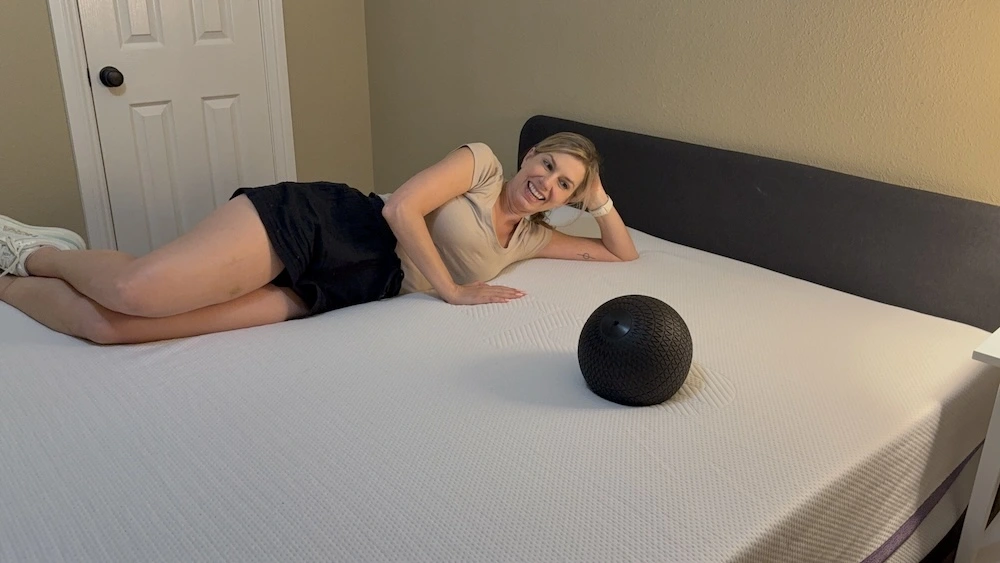
Mattress Millionaires Quick Verdict: How to Reduce Motion Transfer in Bed
When your partner rolls over and your side of the bed moves with them, it is easy to assume you need a new mattress. Sometimes you do. But a shaking frame, a sagging sleep surface, or a tightly shared comforter can create problems that a mattress purchase alone will not solve.
At Mattress Millionaires, we test mattresses for comfort, support, responsiveness, and motion isolation. One thing becomes clear quickly: the bounce that makes a bed easy to move on can also be the movement another sleeper finds distracting.
- Start with free fixes: identify the disturbance, check the frame, and separate your blankets.
- Consider a topper selectively: it may help with surface movement, but it cannot repair damaged support.
- Shop by tested performance: firmness and the word “hybrid” do not tell you enough about motion isolation.
- Consider a split setup for persistent transfer: separate mattresses can reduce one shared path for movement, although the base and bedding still matter.
1. Identify What Is Actually Waking You
Motion transfer is movement that travels from one part of the mattress to another. Motion isolation describes how well the mattress limits that movement.
If you want a closer look at what motion isolation means in a mattress, our explainer covers how it differs from firmness, support, and bounce, with examples from mattresses we have tested.
However, feeling disturbed when your partner moves does not automatically mean the mattress is the cause. Try this quick check while you are both awake:
- Lie in your normal sleeping positions with your usual pillows.
- Have one person slowly roll over, sit up, and get out of bed.
- Notice whether the mattress ripples, the frame rocks, or the blankets pull.
- Repeat with separate blankets, then switch roles.
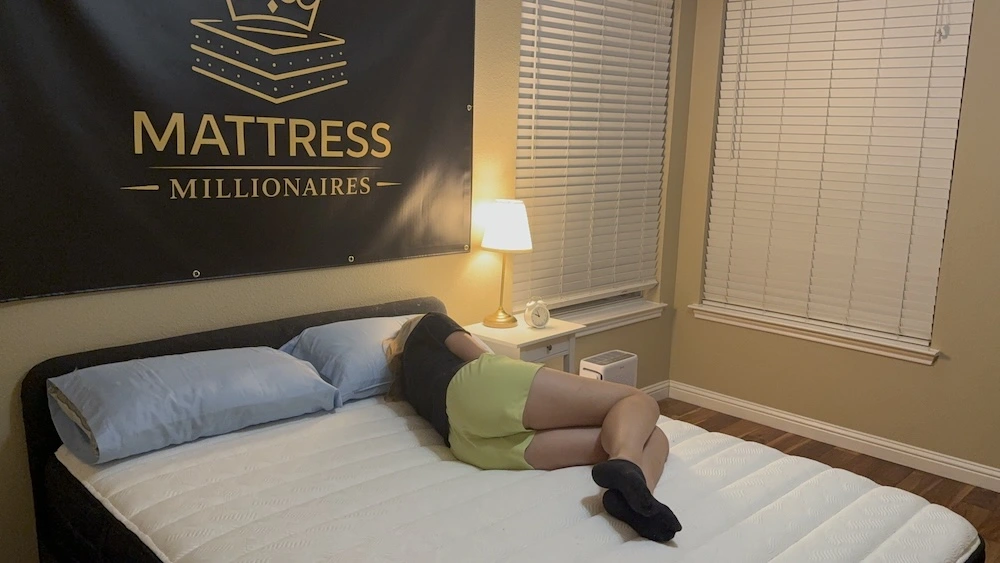
Keep the movements realistic. Jumping onto a mattress creates a different disturbance from an ordinary nighttime position change.
| What you notice | Possible source | First step |
|---|---|---|
| The whole bed rocks or rattles. | Frame connections, support legs, or headboard contact. | Inspect the frame and follow its assembly instructions. |
| Your side dips or bounces when your partner turns. | Movement through the mattress. | Compare the feel with different spacing and check for sagging. |
| You feel a tug across your body. | A shared blanket or tightly stretched bedding. | Try separate blankets and check bedding fit. |
| You roll toward the middle. | Uneven support, mattress wear, or excessive sinkage. | Inspect the mattress and its foundation together. |
2. Stabilize the Bed Frame and Foundation
A mattress cannot compensate for a frame that shifts underneath it. Before adding another foam layer, check that the bed is assembled correctly and supported as intended.
- Inspect bolts and connections, tightening them according to the manufacturer’s directions.
- Check for cracked, displaced, or damaged slats.
- Confirm that required center supports are installed and their feet contact the floor.
- Check whether the headboard or frame knocks against a wall or nearby furniture.
- Verify that the base meets your mattress manufacturer’s support requirements.
Use approved replacement parts for damaged components. Avoid improvising with unstable stacks of objects beneath the frame.
Our guide to choosing a mattress foundation explains the main support options. Correcting a loose frame may reduce rocking, but it will not change the movement-absorbing properties of the mattress itself.
3. Try Separate Blankets
This is one of the simplest changes to test before spending money on a mattress. Two individual blankets let each person turn and adjust their covers without pulling directly on the other person’s bedding.
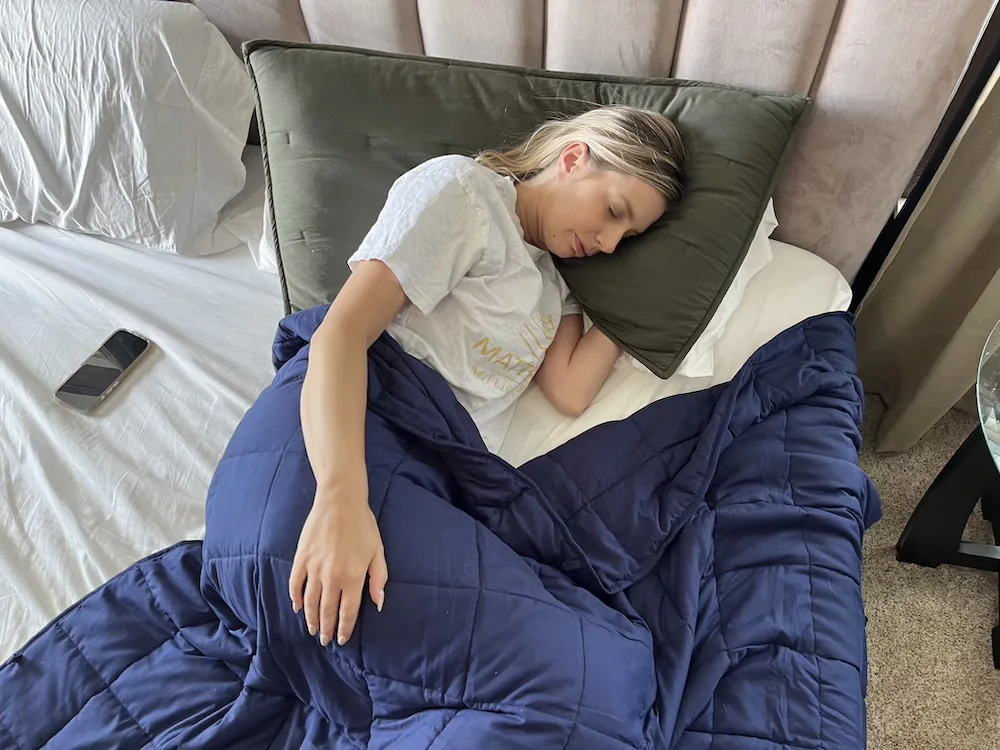
Start with blankets you already own. Also check that your fitted sheet and protector fit the mattress properly rather than stretching tightly across it or slipping loose.
If the disturbance improves, you have identified a bedding problem. If you still feel the sleeping surface move, continue checking the mattress and support system.
4. Check for Sagging or Too Much Sinkage
A dip between sleepers can make sharing a bed uncomfortable even when the mattress absorbs small movements reasonably well. One person may feel drawn toward the other, especially when both settle into the middle.
Inspect the unloaded surface and the base beneath it. Compare how the bed feels with one person lying down versus both people in place.
Our sagging-mattress guide can help you distinguish support problems from mattress wear. If the bed feels excessively soft under your hips, also review the signs that you need more support.
Rotation may redistribute use if the manufacturer recommends it, but it does not rebuild worn materials. A topper also cannot restore a failing support core.
5. Consider a Mattress Topper Carefully
A memory-foam topper may absorb some surface movement and change how a responsive mattress feels. We would treat it as a potential adjustment, especially when the existing mattress remains supportive and you also want additional cushioning.
The result depends on the topper, the mattress underneath, and both sleepers. A thick topper is not automatically the best choice: extra softness may create deeper sinkage or make repositioning harder.
Before buying, ask:
- Is the current mattress flat and properly supported?
- Would both of us be comfortable with a softer surface?
- Can we return the topper if the improvement is too small?
For more on the material’s feel, read our memory-foam explainer. We have not performed a controlled topper comparison for this article, so we would not promise a particular reduction in partner disturbance.
6. Evaluate Space Before Upsizing Your Bed
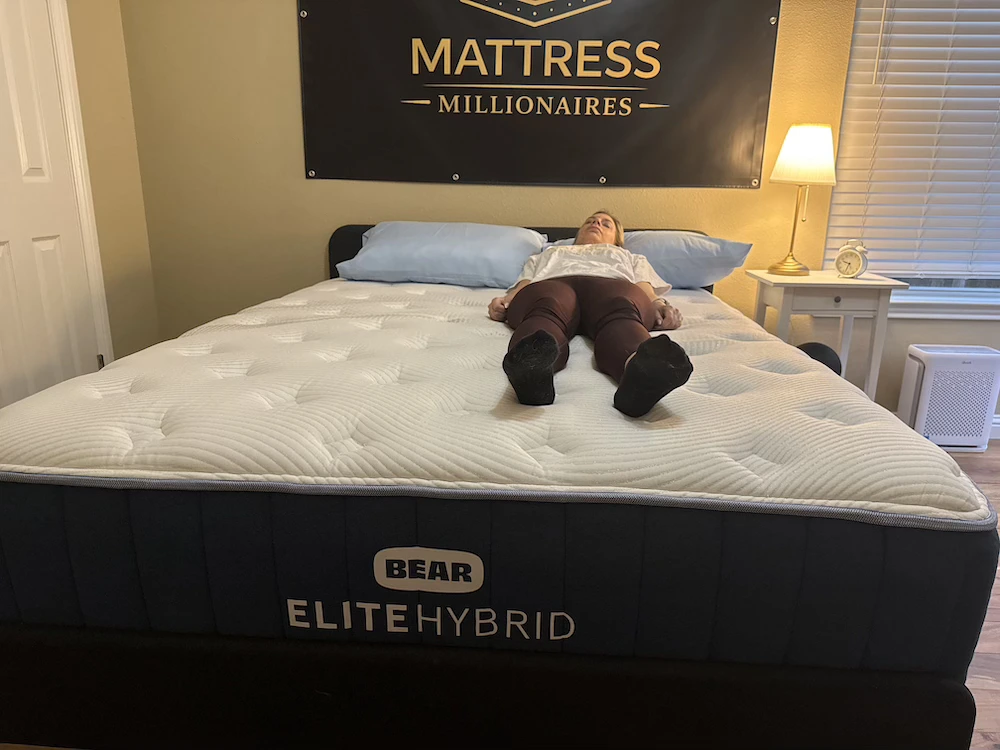
More space can help if the main problem is direct contact, crowding, or being pushed toward an uncomfortable edge. Try sleeping slightly farther apart on your current mattress while staying comfortably supported.
A larger bed does not automatically have better motion isolation. If movement travels strongly through the mattress or frame, buying the same construction in a larger size may leave the underlying problem unresolved.
Before upsizing, account for the room, foundation, bedding, and usable edge support. You should not have to balance on the perimeter to avoid your partner’s movements.
7. Choose Better Motion Isolation When Replacement Makes Sense
If your frame is stable, the bedding is not pulling, and ordinary movement still bothers you, mattress construction deserves closer attention.
Memory foam often has a slower, more movement-absorbing feel. Hybrids can also perform well when their comfort layers limit movement from the coil system. Responsive designs may make turning easier while allowing more movement to travel.
Choose a model based on its complete performance. A mattress that feels still but leaves you sinking uncomfortably is not a successful upgrade.
Partner Movement Across Mattresses We Have Tested
This comparison summarizes our existing reviews. These are observations from separate mattress evaluations, not a new head-to-head experiment or measurements of how often partners woke up. The recommendations explain how we would use those findings when shopping.
| Mattress | What our review found | What it means for couples |
|---|---|---|
| Puffy Lux Hybrid | Strong motion absorption, with minimal bounce or transfer during the weighted-ball demonstration. The feel was plush and slow to respond. | A starting point for movement-sensitive sleepers who also enjoy deep cushioning. Check support and ease of turning. |
| DLX Premier Hybrid, Soft/Medium split | Minimal surface bouncing in our 10-pound-ball test, while repositioning still felt responsive. | Worth investigating for a balance of movement control and ease of movement. Our tested configuration felt relatively soft. |
| Origin Adapt Hybrid | Moderate motion isolation, with more rebound than its initial foam feel suggested. | Its responsiveness may suit some couples, but very movement-sensitive sleepers should weigh the trade-off carefully. |
| Bear Elite Hybrid | Moderate motion control. We noticed movement when one person changed positions or got in and out of bed. | Consider it for cushioning and easy movement, with greater caution if partner disturbance is your main complaint. |
| Purple Plus | The scorecard describes movement traveling across the surface, alongside strong responsiveness. | A buoyant feel may appeal to combination sleepers, but this would not be our first research choice for maximum isolation. |
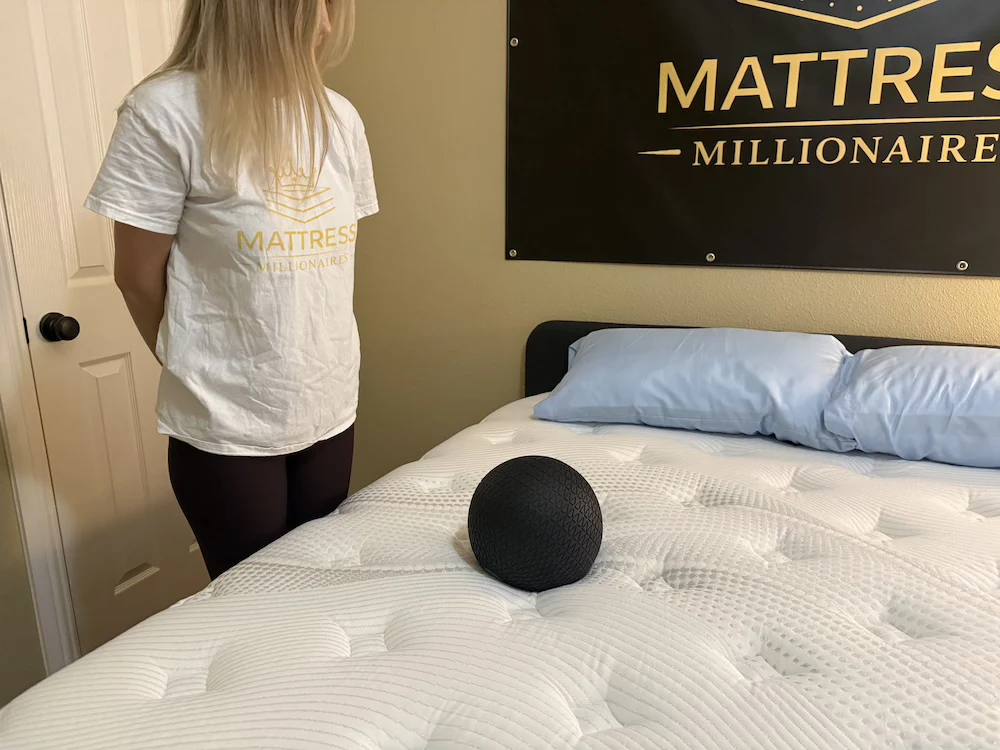
Read the full reviews for support, cooling, and comfort details. Body weight, mattress configuration, spacing, and the base can change your experience. Our testing-methodology page explains our broader evaluation process.
8. Consider a Split King for Persistent Transfer
A split king generally uses two twin XL mattresses side by side. Separating the mattresses removes the continuous sleeping surface through which some movement would otherwise travel.
However, a shared frame can still transmit movement. A common topper, tightly connected bedding, or direct contact can also carry disturbance across the divide.
If considering this setup, evaluate the mattresses and supports together. Separate stable bases may offer more physical separation, but check compatibility and how the arrangement will fit your room.
Also distinguish a split king from a split-firmness mattress. Split firmness gives each sleeper a different comfort level within one mattress; it does not necessarily separate the support system.
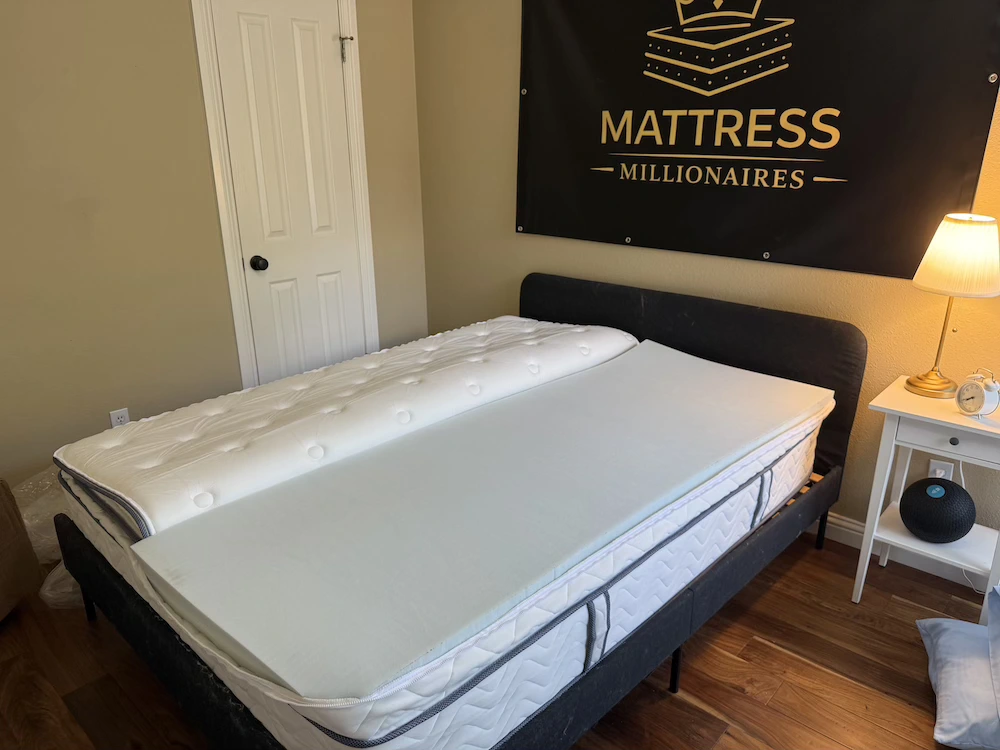
Think about the center gap, cuddling, sheet changes, and mattress heights before committing. A full-width topper that hides the gap may also reconnect the surfaces.
Test One Change at a Time
Keep a short log of what you changed and what you noticed. Record whether the disturbance was bouncing, rocking, blanket pulling, noise, or direct contact.
Repeat the same ordinary movements after each adjustment. If possible, keep the other conditions similar so you can tell what helped.
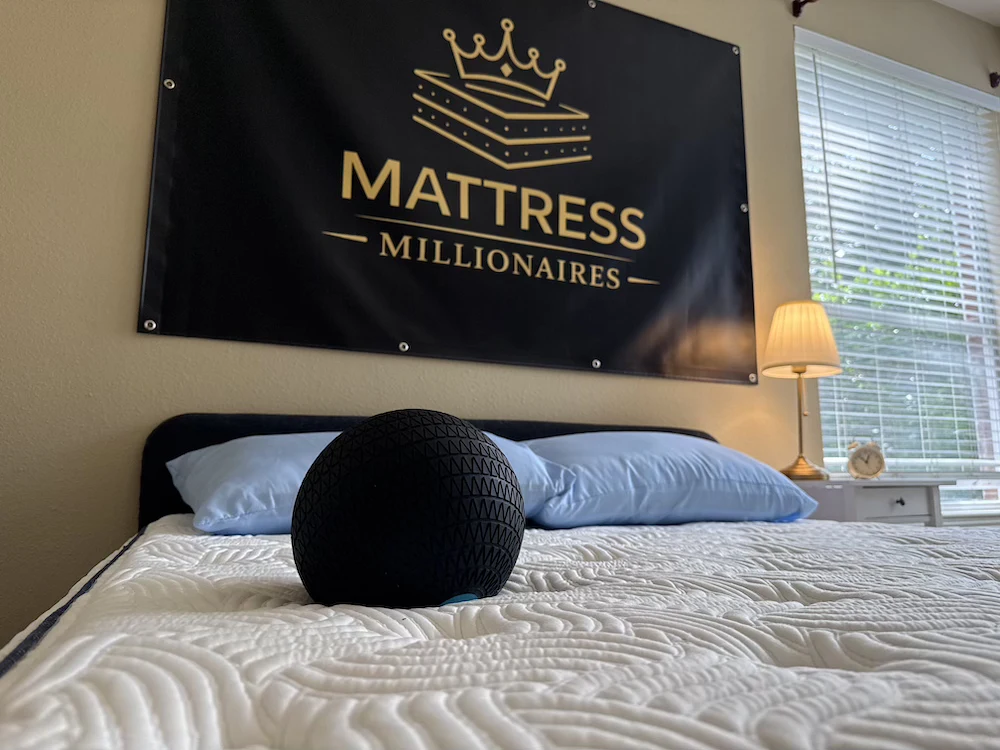
A ball or water-glass demonstration can illustrate surface behavior, but your experience lying in bed is more relevant to this decision. Neither demonstration proves that a mattress will prevent awakenings.
During a product trial, check the actual return deadline, any minimum trial requirement, fees, and whether accessories have separate policies. Give both sleepers a say before deciding to keep it.
When the Problem Goes Beyond the Mattress
Repeated sleep disruption deserves attention. The National Heart, Lung, and Blood Institute explains that sleep deficiency includes poor-quality sleep, not just too few hours in bed.
That does not mean sharing a bed is inherently harmful. A small study of 12 young, healthy couples found more REM sleep and less fragmented REM sleep during shared sleep, despite increased limb movements. It did not compare mattresses or establish which motion-isolation fixes work.
Focus on your actual experience. If loud snoring, gasping, breathing pauses, or substantial daytime sleepiness accompany the disturbances, discuss them with a healthcare professional. The NHLBI’s sleep-apnea symptom guide explains these warning signs. Frequent forceful movements or injuries during sleep also warrant medical attention.
Frequently Asked Questions: How to Reduce Motion Transfer in Bed
Will a firmer mattress reduce motion transfer?
Not necessarily. Firmness describes feel; motion isolation depends on construction. Choose adequate support and evaluate movement transfer separately.
Can a mattress topper stop my partner’s movements completely?
No. A topper may reduce some surface disturbance, but it cannot eliminate every movement or fix a shaking frame.
Does white noise help with motion transfer?
White noise does not reduce physical movement. If sound is the disturbance, assess it separately from mattress bounce.
Do separate blankets work on a king mattress?
Yes. Each person can use an individual blanket on a shared king. This addresses pulling covers, while the mattress remains shared.
Should we replace the frame or mattress first?
Start with the identified problem. Repair or replace damaged support first. If the base is stable and movement clearly travels through the mattress, investigate its construction and condition.
Our Recommendation
Begin with a realistic partner test, stabilize the frame, and try separate blankets. Then assess sagging, comfort, and whether a topper is appropriate.
If replacement is necessary, compare movement control alongside support and ease of turning. The goal is a bed where both people can move normally and remain comfortable, with less disturbance reaching the other side.
Ready To Sleep Better?
Take our quiz to find the mattress that fits your sleep style and budget.
"I found my perfect mattress in 60 seconds." - Sarah H., side sleeper
✅ Super fun! 🥳
⭐ Trusted by 10,000+ sleepers 😴
🛏 Personalized mattress match 💤