

Combination sleepers rotate sleep positions between side and back throughout the night, so it is important to have a mattress that has enough cushioning to be comfortable, but without sinking so deep that is difficult to move. In this article, we will discuss is the Leesa Sapira good for combination sleepers based on our hands-on testing of its firmness, support, bounce, pressure relief, cooling, edge support, and who should buy it.
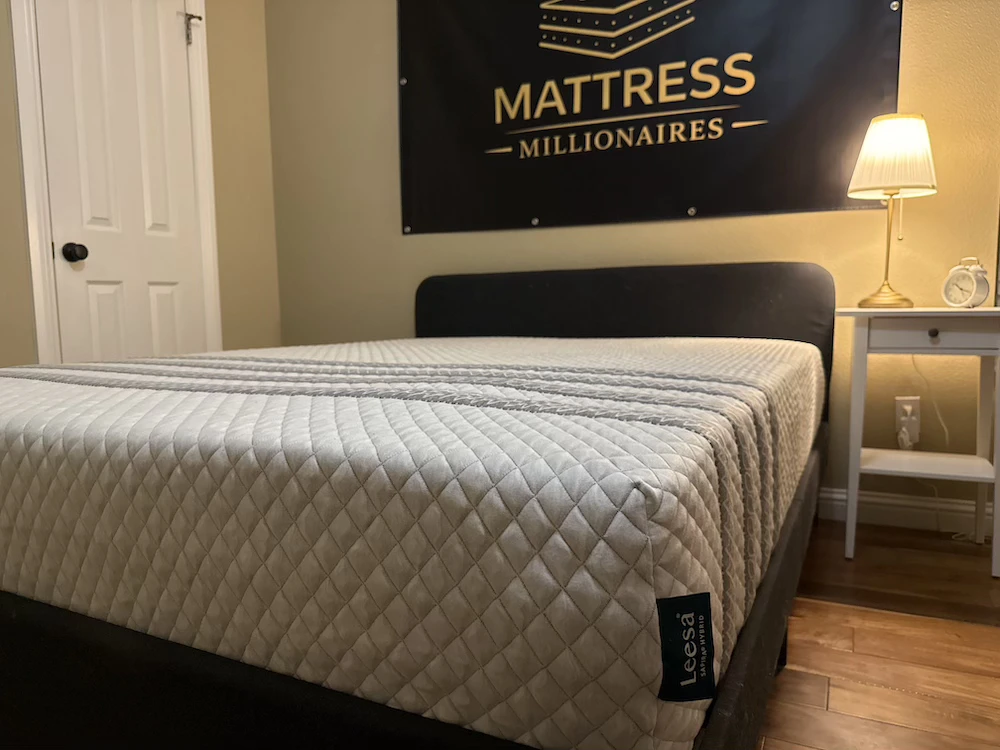
Mattress Millionaires Quick Verdict: Is Leesa Sapira Good For Combination Sleepers?
Yes, the Leesa Sapira Hybrid is a very good mattress for combination sleepers. It has enough foam on top for pressure relief around the hips and shoulders, but the coil system underneath makes it easier to move around on than all-foam mattress that you slowly sink into.
Overall it is a good hybrid mattress that will work well for a wide range of sleepers. Our only caution is that strict stomach sleepers or heavier individuals might need a firmer, even more supportive surface.
Here is a quick breakdown:
| Category | Our Take |
|---|---|
| Best for | Side/back combination sleepers, couples, restless sleepers, people who want a balanced hybrid feel |
| Not ideal for | Strict stomach sleepers, sleepers who want an extra-firm mattress, people who love deep memory foam sink |
| Mattress type | Hybrid: foam comfort layers over individually wrapped coils |
| Firmness | Medium to medium-firm, around 6 to 6.5 out of 10 |
| Feel | Cushioned, responsive, slightly contouring, not stuck-in-the-mud |
| Ease of movement | Excellent for most combination sleepers |
| Pressure relief | Very good for side and back sleepers |
| Back support | Strong for average-weight back sleepers |
| Stomach support | Fair to good, depending on body weight |
| Cooling | Better than most all-foam beds, but not an icy cooling mattress |
| Motion isolation | Strong for a hybrid |
| Edge support | Good, but not the strongest we have tested |
| Trial / warranty | Leesa currently lists a 120-night trial and limited lifetime warranty on the Sapira Hybrid product page. |
Who Should Buy the Leesa Sapira Hybrid?
You should consider the Leesa Sapira Hybrid if you are a combination sleeper who wants a mattress that can handle more than one position well.
This is the person who starts on their side, wakes up on their back, rolls back to their side, maybe spends ten minutes on their stomach, and does not want to feel like they are wrestling with the mattress all night.
A good combination-sleeper mattress needs three things:
- Enough pressure relief for side sleeping.
- Enough support for back and occasional stomach sleeping.
- Enough responsiveness so you can change positions without feeling stuck.
The Leesa Sapira Hybrid checks those boxes better than many mattresses in the medium-firm hybrid category.
If you want a deeper look at our complete testing results, read our full Leesa Sapira Hybrid review, where we break down its feel, firmness, cooling, motion isolation, edge support, pressure relief, and overall value.
It should be especially appealing if you want a mattress that feels comfortable quickly. Some firmer hybrids can feel supportive but a little unforgiving at first. Some foam beds feel cozy at first but become annoying when you try to move. The Sapira Hybrid sits between those two extremes.
It gives you foam comfort, but the coils keep the mattress from feeling dead.
Who Should Avoid the Leesa Sapira Hybrid?
The Leesa Sapira Hybrid is not for everyone. You may want to skip it if:
- You are a strict stomach sleeper over 200 pounds.
- You love an ultra-firm mattress.
- You are looking for a mattress with a deep, slow memory foam hug.
Sleepers who prefer deeper contouring and stronger motion isolation may want to see our Leesa Sapira vs Nectar Premier comparison before deciding between a responsive hybrid and an all-foam mattress.
Why Combination Sleepers Need a Different Kind of Mattress
Combination sleepers are difficult shoppers because they need a mattress that can perform in several positions.
A strict side sleeper can prioritize pressure relief. A strict back sleeper can prioritize lumbar support. A strict stomach sleeper can prioritize firmness and hip lift. A combination sleeper has to balance all of it.
That is why a medium to medium-firm hybrid often makes sense. Research on mattress firmness has found that medium-firm mattresses can promote comfort, sleep quality, and spinal alignment, which lines up with why this firmness range tends to work for a lot of mixed-position sleepers.
The keyword is balance.
A mattress for combination sleepers should not be too soft, too firm, too slow, or too bouncy. Too soft, and you may feel unsupported on your back or stomach. Too firm, and side sleeping can feel rough on the shoulder and hip. Too slow-moving, and changing positions becomes a chore. Too bouncy, and couples may feel too much movement across the bed.
The Leesa Sapira Hybrid gets a lot right because it blends foam pressure relief with coil support. That hybrid construction is exactly what many combination sleepers need.
Leesa Sapira Hybrid Firmness: Is It Right for Combination Sleepers?
We would put the Leesa Sapira Hybrid around a 6 to 6.5 out of 10 on the firmness scale, depending on your body weight and how you interpret firmness.
That is an important range.
For side sleepers, a 6.5 can sometimes feel a little firm if the comfort layers do not have enough give. For back sleepers, a 6.5 is often right in the sweet spot. For occasional stomach sleepers, it can work if the person is light to average weight and does not need extra-firm hip support.
For combination sleepers, this firmness is one of the reasons the Sapira Hybrid works.
It is soft enough to relieve pressure when you roll onto your side, but firm enough that you do not feel like your midsection is sinking too far when you roll onto your back.
That said, your body weight matters.
A lightweight sleeper may experience the Sapira Hybrid as firmer because they do not sink as deeply into the comfort layers. An average-weight sleeper will probably experience it as medium-firm and balanced. A heavier sleeper may experience more sink through the foam layers, especially around the hips and stomach.
How the Leesa Sapira Hybrid Feels When You Change Positions
It is easy to change positions on the Leesa Sapira Hybrid because of its responsive, buoyant feel. There is some foam contouring, but you do not feel trapped, and the coils give the mattress a little lift.
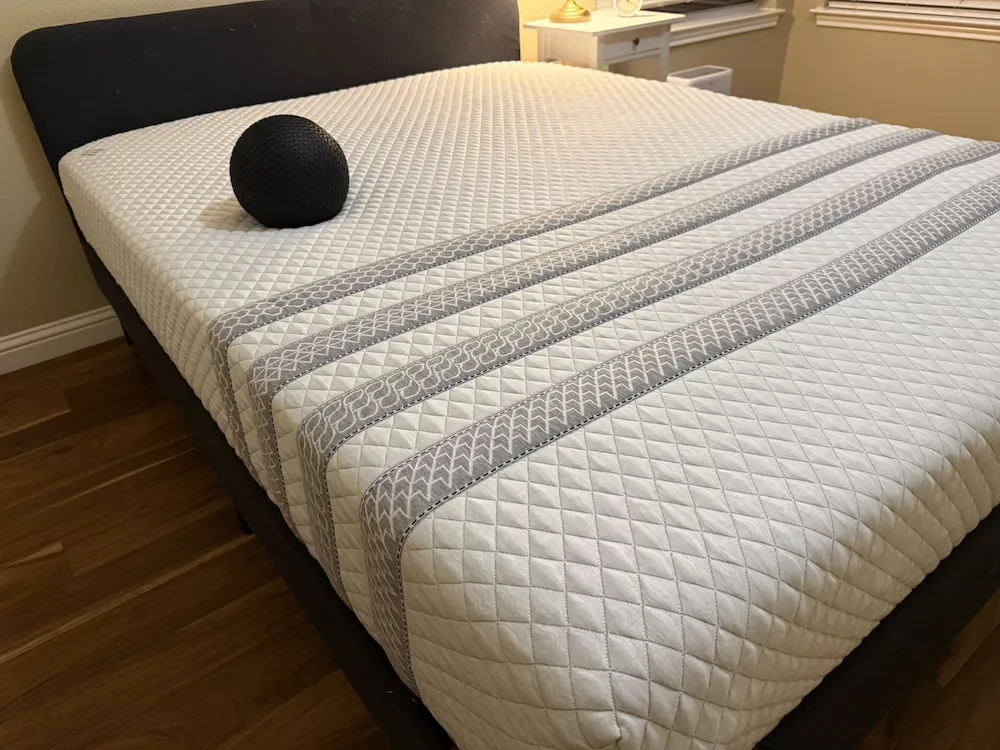
This matters because combination sleepers often wake up when a mattress resists movement. Dense memory foam can feel comfortable in one position, but is not ideal when you want to turn over. You have to push through the foam, climb out of your own body impression, and reset.
Together, the foam and coil combination in the Leesa Sapira create a surface that feels comfortable, but not sluggish, so this is an advantage for combination sleepers and restless sleepers who move around a lot.
Is Leesa Sapira Good for Side and Back Combination Sleepers?
Yes, it is an ideal match for side/back combination sleepers because it cushions the shoulders and hips while still supporting the lower back. On your side, the foam layers help reduce pressure points. On your back, the coil system gives you a more lifted, supportive feel.
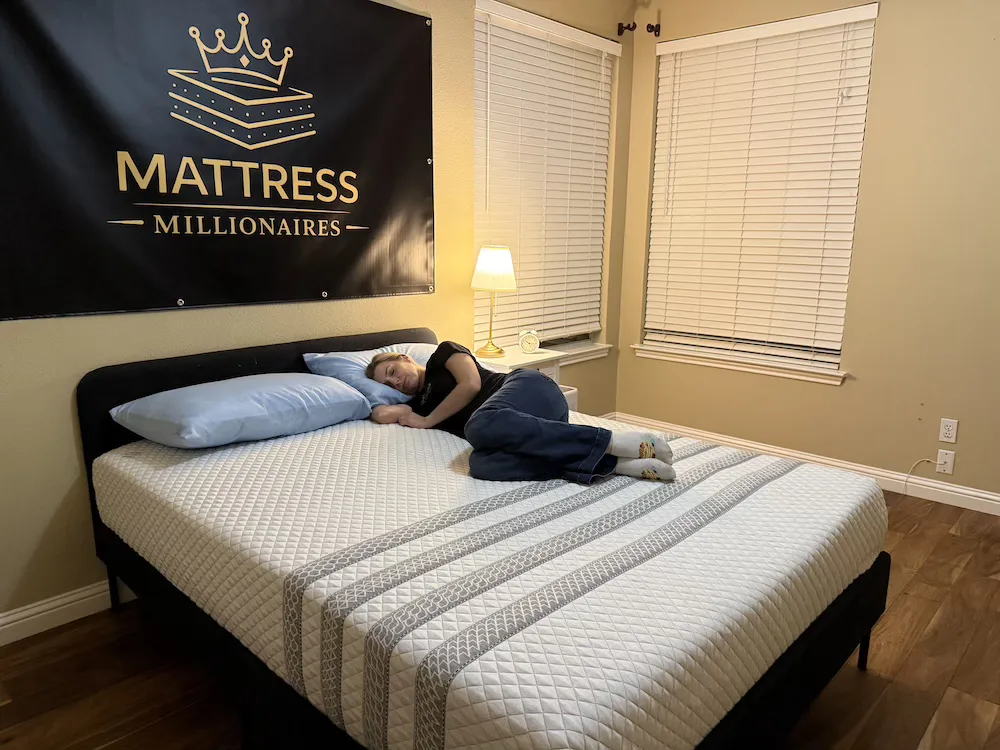
You get enough contouring to avoid that “sleeping on a board” feeling, but not so much sink that your spine falls out of alignment when you roll onto your back.
Is Leesa Sapira Good for Back and Stomach Combination Sleepers?
It depends.
If you mostly sleep on your back and only occasionally roll onto your stomach, the Sapira Hybrid can work. The coils give it enough support for back sleeping, and the medium-firm feel should be fine for short periods of stomach sleeping.
But if you spend half the night or more on your stomach, I would be more cautious.
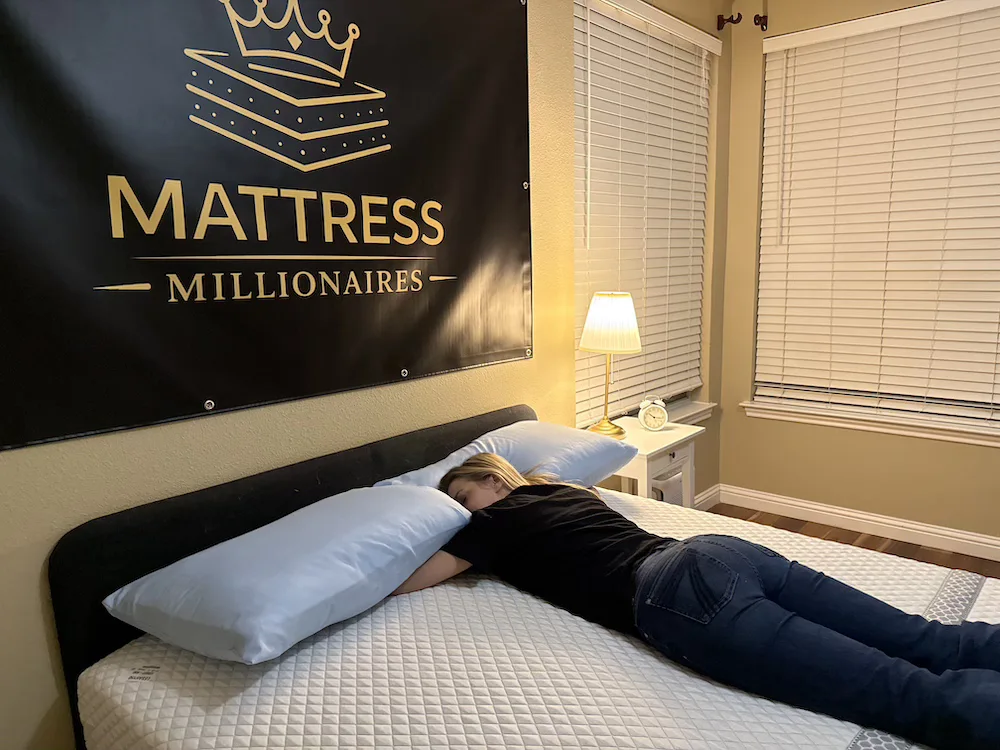
Stomach sleeping puts more demand on a mattress because the hips need to stay lifted. If your hips sink too far, your lower back can take on extra strain. Cleveland Clinic notes that awkward sleep positions can put stress on the body and contribute to back, neck, or shoulder pain, which is why neutral alignment matters.
For strict stomach sleepers, I would usually look for something firmer and flatter than the Leesa Sapira.
For occasional stomach sleepers, it is fine.
Is Leesa Sapira Good for Side and Stomach Combination Sleepers?
This is the toughest combination.
Side sleepers need pressure relief. Stomach sleepers need firmness. Those two needs fight each other.
The Leesa Sapira Hybrid leans more toward side-sleeping comfort than stomach-sleeping firmness. That is good if you spend most of the night on your side and only briefly rotate to your stomach. It is not as good if you split your time evenly between side and stomach.
Stomach sleepers generally need a firmer, more supportive surface because the midsection and hips can sink too deeply if the mattress is soft, which pulls the spine out of a neutral position and places additional strain on the lower back.
If you are a side/stomach combination sleeper under 150 pounds, the Leesa Sapira has a better chance of working because lighter sleepers do not sink as deeply. If you are over 200 pounds and spend meaningful time on your stomach, I would be careful.
In that case, you may want a firmer hybrid or a mattress with zoned lumbar support that keeps the hips more elevated.
Body Weight Guide: How the Leesa Sapira Hybrid Works for Combination Sleepers
Lightweight Combination Sleepers Under 130 Pounds
Lightweight combination sleepers may find the Sapira Hybrid slightly firmer than average. That is not necessarily bad.
If you sleep on your back and side, it can still work well. You may feel more “on top” of the mattress than “in” it, which helps with movement. The only concern is side sleeping pressure relief. If you are very lightweight and have sensitive shoulders, you may want something a little softer.
Best match: back/side combination sleepers.
Possible concern: petite side sleepers who want a plush feel.
Average-Weight Combination Sleepers 130 to 230 Pounds
This is the sweet spot.
Average-weight combination sleepers are the best fit for the Leesa Sapira Hybrid. The mattress should feel balanced, supportive, and easy to move on. Side sleeping should feel cushioned enough. Back sleeping should feel well supported. Occasional stomach sleeping should be fine for many people, though not perfect.
Best match: side/back combination sleepers and couples with different sleep styles.
Possible concern: stomach-dominant sleepers.
Heavier Combination Sleepers Over 230 Pounds
Heavier combination sleepers may still like the Leesa Sapira, especially if they sleep mostly on their side and back. The coil support is helpful, and the mattress should feel more responsive than an all-foam bed.
The concern is deeper sinkage through the comfort layers.
If you are over 230 pounds and spend a lot of time on your stomach, I would look for a firmer, more supportive hybrid. If you sleep mostly on your side and back, the Leesa Sapira can still be a good option, but edge support and long-term support should be part of your decision.
Best match: heavier side/back sleepers who want cushion.
Possible concern: heavier stomach sleepers or people who want maximum edge support.
Leesa Sapira Hybrid Construction: Why It Works for Combination Sleepers
The Leesa Sapira is a premium hybrid that combines breathable foams with 1,000+ individually wrapped springs. This construction performs well for combination sleeping.
The foam layers give the mattress its comfort and pressure relief. The coils give it support, bounce, and easier movement. Compared with an all-foam mattress, the Sapira Hybrid feels more responsive. Compared with a traditional innerspring, it feels more cushioned and pressure-relieving.
That is the whole point of a good hybrid.
For combination sleepers, the support system matters because you are not staying in one position all night. A responsive coil unit helps the mattress adjust as your weight shifts from your shoulder to your back to your hip.
The mattress should not feel like it collapses when you move. It should recover quickly, and we found that the Leesa Sapira did this well during our testing.
Pressure Relief: Good Enough for Side Sleeping?
Yes, for most people.
The Leesa Sapira Hybrid has enough cushioning to make side sleeping comfortable for many average-weight sleepers. You should feel some give around the shoulder and hip, which is important if you spend part of the night on your side.
Side sleepers usually need more pressure relief than back or stomach sleepers because body weight is concentrated over narrower areas. The shoulder and hip press into the mattress, and if the surface is too firm, pressure can build quickly.
The Leesa Sapira is not the plushest mattress we have tested, but it is not overly firm either. It has a comfortable, balanced top layer that works well for side/back combination sleepers.
If you are a strict side sleeper with sharp shoulder pain, you may prefer a softer mattress. But if you are a combination sleeper who needs side comfort without sacrificing movement, the Leesa Sapira is in a good range.
Support: Does the Leesa Sapira Keep Your Spine Aligned?
If you spine is not properly aligned or supported while you sleep, you can experience muscle tension, stiffness or cause existing structural issues to flare up and cause pain over time. During our testing, we found the Leesa Sapira Hybrid supportive enough to keep the spine aligned for back and side sleepers because you don’t sink too deeply.
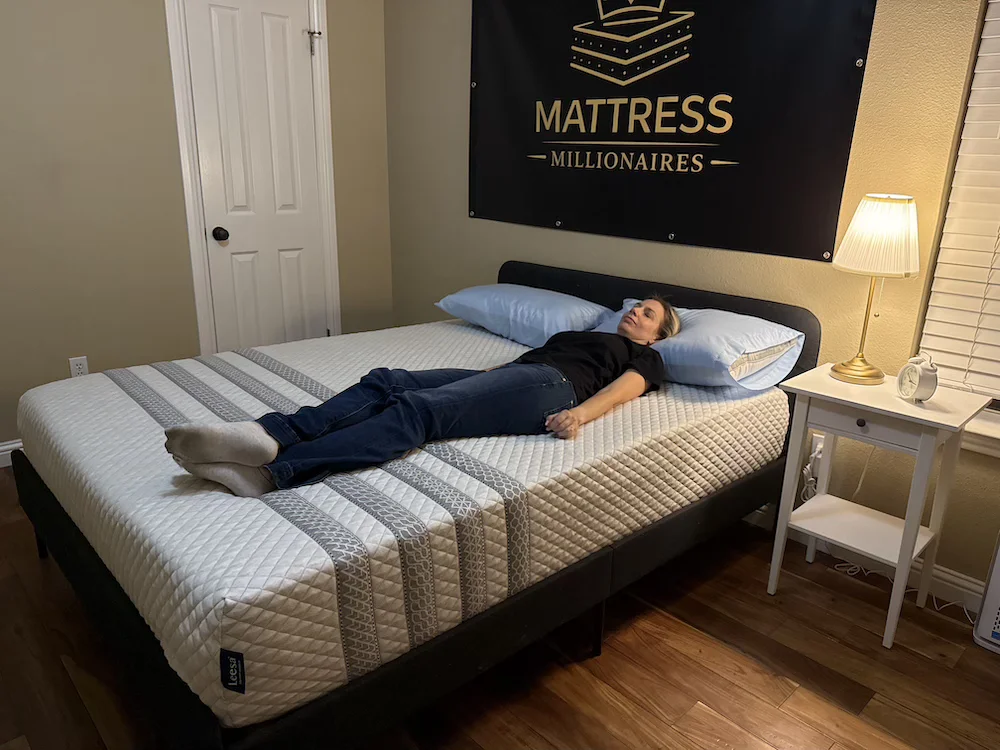
On your back, the mattress should support the lumbar area while still giving you light contouring. On your side, it should allow enough pressure relief for your shoulder and hip while keeping your torso from dipping too far.
No mattress can guarantee perfect alignment for every body type. Your height, weight, hip width, shoulder width, pillow height, and sleeping habits all matter.
But as a general rule, the Sapira Hybrid has the kind of medium-firm hybrid feel that tends to work for a broad range of sleepers.
That is why it is especially useful for combination sleepers. It does not over-specialize in one direction.
Ease of Movement: The Biggest Win for Combination Sleepers
Ease of movement is one of the most important categories for combination sleepers, and this is where the Leesa Sapira Hybrid earns a high score.
The mattress is responsive enough that rolling over feels natural. You do not have to fight the comfort layers. You do not feel swallowed. You do not get that delayed foam response where the mattress takes several seconds to catch up with your body.
This is a big reason I would choose the Sapira Hybrid over a softer, deeper memory foam mattress for combination sleepers.
Memory foam can be great for pressure relief and motion isolation. But for combination sleepers, too much slow-moving foam can become annoying. The Sapira Hybrid gives you some of the comfort benefits of foam without the stuck feeling.
That is the ideal compromise.
Motion Isolation: Is It Good for Couples Who Toss and Turn?
Yes, the Leesa Sapira Hybrid should work well for many couples.
Combination sleepers often move more than strict-position sleepers. That can be a problem if you share a bed with someone who wakes up easily. A mattress for couples needs to absorb motion well enough that every roll, shift, or blanket adjustment does not become a full-bed event.
The Sapira Hybrid is a hybrid, so it has more bounce than an all-foam mattress. But the foam layers help absorb movement before it travels across the bed.
That makes it a nice option for couples who want easier movement without sacrificing too much motion isolation.
If your partner is an extremely light sleeper, a dense all-foam mattress may still isolate motion better. But for most couples, the Sapira Hybrid offers a smart balance.
Cooling: Does the Leesa Sapira Sleep Hot?
The Leesa Sapira Hybrid should sleep cooler than many all-foam mattresses, but I would not call it an extreme cooling mattress.
The hybrid design helps because coils leave more room for airflow than a solid foam base. Leesa also uses uses GreenFlex foam with an open-cell structure and ventilated channels to help disappate heat retention.
For combination sleepers, cooling matters because changing positions can trap heat if the mattress has a deep foam hug. The more you sink, the more the mattress can wrap around your body. The Leesa Sapira does not have that dense, body-swallowing feel, which helps.
That said, if you are a very hot sleeper, you may want to compare it with dedicated cooling models. Leesa also sells the Sapira Chill Hybrid, which is positioned as a cooling pillow-top hybrid with multiple comfort options.
For most people, the Leesa Sapira should be temperature neutral to slightly cooling. For very hot sleepers, it may not be enough.
Edge Support: Can You Use the Full Mattress?
The edge support is good, but not the strongest category.
For combination sleepers, edge support matters more than people think. If you roll around a lot, share the bed, or sleep near the edge, you want the perimeter to feel stable. Weak edge support can make a mattress feel smaller than it is.
The Sapira Hybrid performs well enough for normal sleeping near the edge. Most people should be able to use the full surface of the mattress comfortably.
However, if you sit on the edge of the bed every morning to put on shoes, or if you are a heavier sleeper who needs maximum perimeter strength, there are stronger edge-support mattresses out there.
This is not a dealbreaker for most combination sleepers. It is just not the main reason to buy the mattress.
Leesa Sapira Hybrid for Couples With Different Sleep Positions
The Leesa Sapira Hybrid is a strong choice for couples, especially when one person sleeps on their side and the other sleeps on their back.
This is one of the hardest couple setups because the mattress cannot be too soft or too firm. A plush mattress may feel great to the side sleeper but unsupportive to the back sleeper. A firm mattress may support the back sleeper but create pressure for the side sleeper.
The Sapira Hybrid lands in the middle.
It also has enough responsiveness for movement and enough motion isolation for most couples. That is a useful combination because many couples have different sleep schedules, different sleep positions, and different movement patterns.
If one partner is a strict stomach sleeper and the other is a strict side sleeper, the Sapira Hybrid may be a compromise rather than a perfect match. But for side/back couples or mixed-position couples, it is a very reasonable pick.
Leesa Sapira Hybrid vs Dense Memory Foam for Combination Sleepers
For combination sleepers, I would usually choose the Leesa Sapira Hybrid over a slow-moving memory foam mattress.
The reason is simple: movement.
Memory foam can feel amazing when you first lie down. It contours closely, absorbs motion, and creates that classic pressure-relieving hug. But for sleepers who move around, the same qualities can become a downside. Too much hug can make it harder to roll over.
The Sapira Hybrid gives you a more responsive feel.
You still get cushioning, but you do not feel buried. You still get motion isolation, but you also get bounce. You still get pressure relief, but you are more on top of the mattress than inside it.
For combination sleepers, that is usually the better formula.
If easy movement is your top priority, the Leesa Sapira is not the only responsive hybrid worth considering. In our hands-on Leesa Sapira vs Casper Dream comparison, we found that the Casper Dream had more bounce and faster response, while the Leesa offered better pressure relief and motion isolation. The Leesa is our preference for side/back combination sleepers, while the Casper may be the better fit if you change positions constantly and prioritize effortless movement.
Leesa Sapira Hybrid vs Firmer Hybrids for Combination Sleepers
Compared with firmer hybrids, the Leesa Sapira Hybrid is more forgiving.
That is good for side sleeping. Firmer hybrids can be excellent for back and stomach sleepers, but they may feel too rigid when you roll onto your side. The Leesa Sapira has more comfort-layer give, which makes it easier to settle in.
However, if you are a stomach sleeper, you may need a firmer surface that keeps hips lifted.
A firmer hybrid may keep the hips more lifted for stomach sleepers, especially heavier stomach sleepers. The Sapira Hybrid is better for side/back combination sleepers than back/stomach or stomach-dominant sleepers.
So the right choice depends on your dominant position. If you mostly sleep side and back, choose the Leesa Sapira Hybrid.
What We Like About the Leesa Sapira Hybrid for Combination Sleepers
The thing we like most about the Leesa Sapira for combination sleepers is the balance it provides.
The Sapira Hybrid does not feel like a niche mattress. It does not scream “only for side sleepers” or “only for firm mattress people.” It feels like a mattress designed to make a lot of people comfortable.
That can be a negative if you want something very specific. But for combination sleepers, broad appeal is a strength.
We like that it is responsive without feeling cheap or springy. We like that it cushions without feeling mushy. We like that it isolates motion better than many bouncy hybrids. We like that it should work for couples who cannot agree on an extreme firmness level.
Most of all, we like that changing positions feels easy.
What We Do Not Like
The Leesa Sapira Hybrid is not the best mattress for stomach sleepers.
It is also not the best choice if you want a luxury pillow-top feel or a super-plush hotel mattress. It has comfort, but it is not a cloud-like mattress. It is more balanced than plush.
Edge support is good, but not elite. If edge support is your top priority, you may find stronger options.
Cooling is also good, but not extreme. Hot sleepers may want a dedicated cooling mattress, especially if they already know they overheat on foam.
Finally, because the Sapira Hybrid is such a balanced mattress, it may not excite people who want a very distinct feel. It is not super soft. It is not super firm. It is not deep memory foam. It is not a bouncy traditional innerspring. It is a modern hybrid with broad appeal.
For combination sleepers, that is usually a positive.
Should You Buy the Leesa Sapira Hybrid If You Toss and Turn?
Yes, especially if you toss and turn because you are trying to get comfortable.
Some people move a lot because the mattress is wrong for them. It is too firm on the shoulder, too soft under the hips, too hot, or too hard to move on. A balanced hybrid like the Sapira may help because it gives you more comfort across several positions.
That does not mean it will solve every sleep issue. Sleep position can be affected by pain, temperature, stress, breathing, pillow height, and other factors. Cleveland Clinic notes that sleeping position may matter more for people with snoring or obstructive sleep apnea, and some people are advised to avoid back sleeping for that reason.
But strictly from a mattress-performance standpoint, the Sapira Hybrid is a strong option for people who move around.
Leesa Sapira Hybrid Pros and Cons
Pros
| Pros | Why It Matters |
|---|---|
| Easy to move on | Great for combination sleepers who rotate positions |
| Balanced medium-firm feel | Works for side and back sleeping better than many extremes |
| Good pressure relief | Helps reduce shoulder and hip pressure for side sleeping |
| Strong back support | Good fit for back sleepers and side/back combination sleepers |
| Better airflow than all-foam | Hybrid coils help with breathability |
| Good motion isolation for a hybrid | Useful for couples |
| Broad appeal | A safer pick for people who do not want an extreme feel |
Cons
| Cons | Why It Matters |
|---|---|
| Not firm enough for all stomach sleepers | Heavier or strict stomach sleepers may need more hip support |
| Not ultra-plush | Some side sleepers may want a softer mattress |
| Edge support is good, not elite | Couples who use the full bed may want stronger edges |
| Not an extreme cooling mattress | Very hot sleepers may need a dedicated cooling model |
| Balanced feel may be too neutral for some | Not ideal if you want a dramatic memory foam hug or extra-firm lift |
Final Verdict: Is Leesa Sapira Good for Combination Sleepers?
Yes, the Leesa Sapira Hybrid is a very good mattress to choose for combination sleepers. It works especially well for side/back combination sleepers and couples who want one mattress that can comfortably handle more than one sleep style because it feels cushioned, supportive, and easy to move on.
The hybrid design gives it more bounce and mobility than a typical all-foam mattress, while the foam layers provide better pressure relief than a basic innerspring.
However, the Leesa Sapira is not perfect for everyone. Strict stomach sleepers may need something firmer. Very hot sleepers may want a more advanced cooling mattress. People who want a plush pillow-top or deep memory foam hug may prefer a different feel.
For the average combination sleeper, this is exactly the kind of mattress I would put on the shortlist.
It has the balanced, adaptable feel that mixed-position sleepers usually need. It supports back sleeping well, cushions side sleeping comfortably, and makes it easy to roll over without fighting the mattress.
FAQs: Is the Leesa Sapira Hybrid good for combination sleepers?
Does the Leesa Sapira Hybrid feel like memory foam?
Not exactly. It has foam cushioning, but it does not have a deep, slow-moving memory foam feel. It feels more responsive and easier to move on than many all-foam mattresses.
Is the Leesa Sapira Hybrid good for couples?
Yes. It is a good option for couples because it offers a balanced feel, good motion isolation for a hybrid, and enough responsiveness for easy movement. It is especially useful for couples with different sleep positions.
Does the Leesa Sapira Hybrid sleep hot?
It should sleep cooler than many all-foam mattresses because it uses a hybrid coil system and breathable foams. However, it is not the most advanced cooling mattress. Very hot sleepers may want to compare it with dedicated cooling models.
What firmness is the Leesa Sapira Hybrid?
The Leesa Sapira Hybrid feels medium to medium-firm, around 6 to 6.5 out of 10. That firmness range is one reason it works well for combination sleepers.
Is the Leesa Sapira Hybrid worth it?
For combination sleepers, yes, especially if you want a mattress that balances pressure relief, support, motion isolation, and ease of movement. It is not the cheapest hybrid mattress, but it has a versatile feel that should work for a wide range of sleepers.
What type of sleeper is the Leesa Sapira Hybrid best for?
The Leesa Sapira Hybrid is best for side/back combination sleepers, average-weight back sleepers, couples, and people who want a cushioned hybrid that is easy to move on.
Ready To Sleep Better?
Take our quiz to find the mattress that fits your sleep style and budget.
"I found my perfect mattress in 60 seconds." - Sarah H., side sleeper
✅ Super fun! 🥳
⭐ Trusted by 10,000+ sleepers 😴
🛏 Personalized mattress match 💤