

A soft mattress can feel incredibly comfortable when you first lie down. Plush foam cushions your shoulders, your hips settle into the surface, and the mattress seems to wrap around your body.
But there is a difference between a mattress that feels comfortably soft and one that is too soft to support you properly.
Yes, a mattress can be too soft.

If your mattress allows your hips, abdomen, or other heavier parts of your body to sink significantly deeper than the rest of you, it can make it difficult to maintain a comfortable sleeping position. You may wake up with lower-back stiffness, feel trapped in the mattress, struggle to change positions, or notice that your bed has developed a hammock-like feeling.
This is especially common among stomach sleepers, back sleepers, heavier sleepers, and people whose mattresses have softened significantly with age.
However, softness alone is not necessarily a problem.
A mattress can have a plush surface while still providing excellent support underneath. Likewise, a mattress can feel relatively firm but have a weak support system.
The real question is whether your mattress allows your body to sink appropriately while still keeping you stable throughout the night.
In this guide, we’ll explain the most common signs your mattress is too soft, why excessive sinking can cause discomfort, which sleepers are most affected, how to test your mattress at home, and what you can do if your bed no longer provides enough support.
Can a Mattress Really Be Too Soft?
Yes.
A mattress becomes too soft when your body sinks farther than is comfortable or supportive for your body weight and sleeping position.
The key word is your.
There is no universal firmness level at which a mattress suddenly becomes too soft for everyone.
A mattress that feels perfectly supportive to a 130-pound side sleeper may allow a 250-pound stomach sleeper to sink much too deeply.
Likewise, a mattress that works well for someone sleeping on their side may feel too soft when that same person rolls onto their stomach.
Mattress softness is therefore relative.
It depends on factors including:
- Your body weight
- Your sleeping position
- Your body shape
- The thickness of the comfort layers
- The strength of the support core
- The condition and age of the mattress
- Your personal preference
A good mattress should allow your shoulders and hips to sink enough to reduce pressure while preventing heavier areas from dropping excessively.
If your body sinks too deeply, the mattress may no longer keep you in a comfortable position.
If you are unsure how soft or firm your mattress should be, our guide to choosing the right mattress firmness explains how body weight and sleep position affect firmness needs.
8 Signs Your Mattress Is Too Soft
You do not need to know the exact firmness rating of your mattress to determine whether it may be too soft.
Instead, pay attention to what happens when you lie down and how your body feels when you wake up.
If several of the following signs apply to you, your mattress may not be providing enough support.
1. Your Hips Sink Much Deeper Than the Rest of Your Body
Excessive hip sinking is one of the clearest signs that a mattress may be too soft.
Your pelvis is one of the heavier areas of your body.
When you lie down, it naturally compresses the mattress more than lighter areas such as your lower legs.
Some sinking is normal and desirable.
The problem occurs when your hips continue sinking through the comfort layers until they sit noticeably lower than your shoulders and legs.
For back sleepers, this can cause the pelvis to tilt and exaggerate the curve through the lower back.
For stomach sleepers, the effect can be even more obvious because the abdomen and pelvis may drop into the mattress while the chest and head remain higher.
For side sleepers, excessive hip sinking can cause the spine to bend downward toward the mattress.
You may not immediately notice this when you first get into bed.
Soft mattresses often feel comfortable during the first few minutes.
The problem may become apparent only after you have been lying down long enough for the comfort layers to compress fully.
2. You Wake Up With Lower-Back Pain or Stiffness
Morning lower-back discomfort can have many causes, but a mattress that allows excessive sinking may contribute.
If your pelvis drops too deeply during sleep, your lower back may spend hours in an uncomfortable position.
You may wake feeling:
- Stiff through the lumbar area
- Sore around the lower back
- As though you need to stretch immediately
- Better after walking around for a while
The timing is important.
If your lower back feels relatively normal before bed but repeatedly hurts when you wake up, your sleeping surface deserves closer examination.
Likewise, if your discomfort improves when you sleep on a more supportive mattress, excessive softness becomes a stronger possibility.
Mattress firmness is only one possible factor, however. Back pain can have many causes and should not automatically be blamed on your bed.
For a more complete troubleshooting process, see our guide on how to tell if your mattress is causing back pain.
3. You Feel Like You Are Sleeping in a Hammock
A supportive mattress should allow your body to settle into the surface without creating a deep valley underneath you.
If the center of your body sinks significantly lower than your head and feet, the bed may begin to feel like a hammock.
This sensation can occur because the mattress was too soft from the beginning, or because its materials have softened with age.
You might notice that:
- Your hips roll toward the center of the mattress
- Your body feels curved rather than level
- You naturally slide into the same depression every night
- The middle of the mattress feels softer than the edges
If two people share the bed, both sleepers may even begin rolling toward the center.
A pronounced hammock effect often suggests something more significant than a simple preference for firmer mattresses. It may indicate wear, sagging, foundation problems, or insufficient support.
4. You Feel Stuck in the Mattress
A soft mattress—particularly one with thick, slow-response foam—can allow you to sink deeply enough that changing positions becomes difficult.
You may feel as though you need to climb out of an impression every time you roll over.
This is sometimes described as feeling “stuck in the mud.”
The sensation can be particularly noticeable for:
- Combination sleepers
- Heavier sleepers
- People with limited mobility
- People who frequently change positions
A mattress does not need to feel bouncy, but you should generally be able to reposition yourself without fighting against the surface.
If every movement requires extra effort because you are deeply embedded in the comfort layers, the mattress may be softer than you need.
5. Sleeping on Your Stomach Feels Uncomfortable
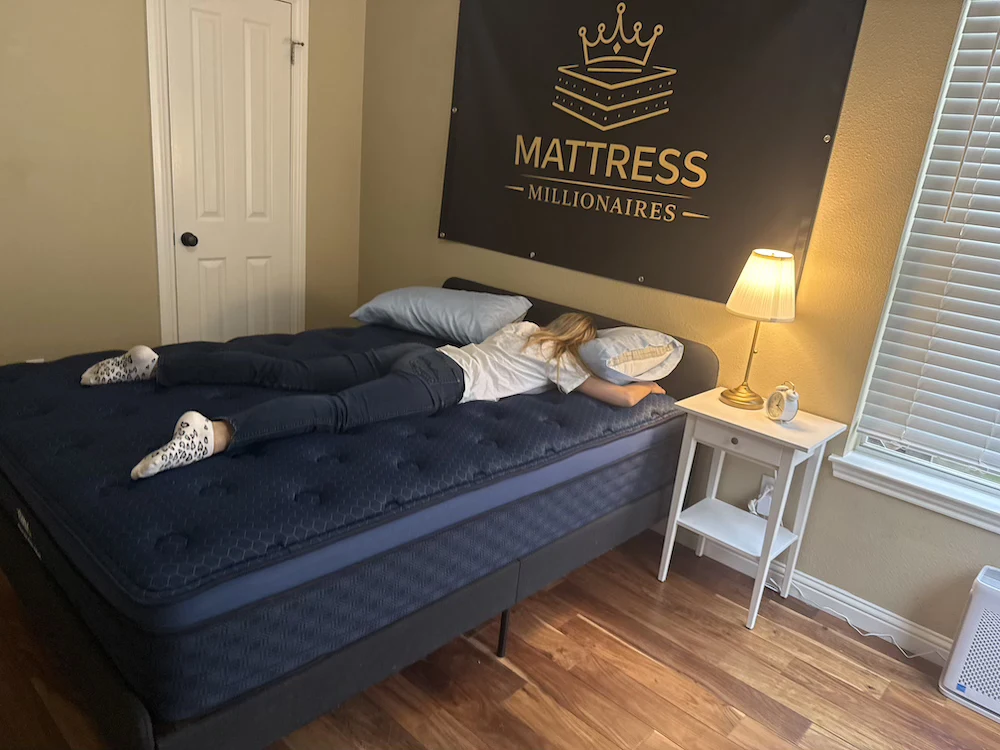
Stomach sleepers are particularly sensitive to mattresses that are too soft.
When you sleep on your stomach, your torso has a relatively broad contact area with the bed.
The pelvis and abdomen are also relatively heavy.
If those areas sink too deeply, the lower back may become more arched.
You may notice:
- Lower-back tightness
- A feeling that your hips are dropping into the bed
- Difficulty lying flat comfortably
- An urge to place a pillow beneath your hips
- Relief when sleeping on a firmer mattress
Stomach sleepers often need stronger resistance beneath the midsection than side sleepers of a similar body weight.
That does not mean every stomach sleeper needs an extremely hard mattress. It simply means excessive sinkage tends to be particularly problematic in this position.
6. The Mattress Has Developed Deep Body Impressions
Your mattress may not have been too soft when you bought it.
It may have become too soft over time.
Foam comfort layers gradually experience wear. Coils can lose resilience. Materials can compress more readily in the areas where you sleep every night.
Eventually, you may notice body impressions or soft spots.
These can cause your hips to sink farther than they did when the mattress was new.
Inspect your mattress without sheets or bedding.
Look for:
- Visible depressions
- Uneven areas
- Deep impressions around the hips
- A raised ridge between two sleepers
- Noticeably softer areas where you normally lie
If your mattress has developed a significant dip, see our guide on how to fix a sagging mattress before deciding what to do next.
7. You Sleep Better on Firmer Mattresses
One of the best ways to evaluate your mattress is to compare it with another bed.
Perhaps you spend a weekend at a hotel and notice that your back feels better in the morning.
Maybe your guest-room mattress is firmer and you consistently sleep more comfortably there.
Or perhaps you stay with family and immediately notice that you do not sink as deeply.
One night is not enough to prove anything.
But repeated improvement on more supportive mattresses is useful evidence.
If your back consistently feels better and you find movement easier on slightly firmer beds, your current mattress may be too soft.
8. You Are More Comfortable Near the Edge or Middle of an Unused Area
This is a surprisingly useful test for an older mattress.
Lie in your normal sleeping spot.
Then move to an area that receives less use, such as the center of a mattress normally shared by two people or a section closer to the edge.
Does the unused area feel noticeably firmer?
Does your body feel better supported?
If so, the problem may not be the mattress’s original firmness.
The materials in your normal sleeping area may simply have softened substantially from years of compression.
Why Does a Mattress That Is Too Soft Cause Problems?
Softness itself is not harmful.
The problem is uncontrolled or uneven sinking.
A mattress should respond differently to different parts of your body.
Your shoulders and hips should compress the comfort layers more than your ankles, for example.
But the support system underneath those comfort layers should eventually stop the heavier parts of your body from continuing downward.
When that support arrives too late—or not strongly enough—you may sink beyond a comfortable position.
This can affect spinal alignment, movement, and overall sleep comfort.
Excessive Sinkage
Imagine lying in a hammock.
Your hips naturally fall toward the lowest point while your head and legs remain higher.
A mattress that is far too soft can create a milder version of the same shape.
Your body settles into a valley rather than resting on a relatively stable surface.
Uneven Spinal Positioning
Your spine has natural curves, so perfect straightness is not the goal.
But a mattress should not exaggerate those curves unnecessarily.
If your pelvis sinks much farther than your upper body, the position of your lumbar spine changes.
For side sleepers, uneven sinking can cause the spine to bend laterally.
For stomach sleepers, it can increase extension through the lower back.
Difficulty Moving
Deep sinkage also creates a practical problem.
Every time you change positions, you must push against the mattress to climb out of the depression your body has created.
That can make sleep feel less effortless.
Softness and Support Are Not the Same Thing
This is one of the most important concepts when evaluating a mattress.
Softness describes the initial feel of the mattress. Support describes how effectively the mattress keeps your body stable once you settle into it.
A mattress can be soft and supportive at the same time.
For example, imagine a hybrid mattress with plush foam on top and a strong coil system underneath.
The foam allows your shoulders and hips to sink comfortably.
As your body moves deeper into the mattress, the coils provide increasing resistance.
You get cushioning without continuing to sink indefinitely.
That is very different from a mattress with thick, weak comfort layers over an inadequate support core.
Both beds may feel soft when you first lie down.
Only one may provide the support you need after several hours.
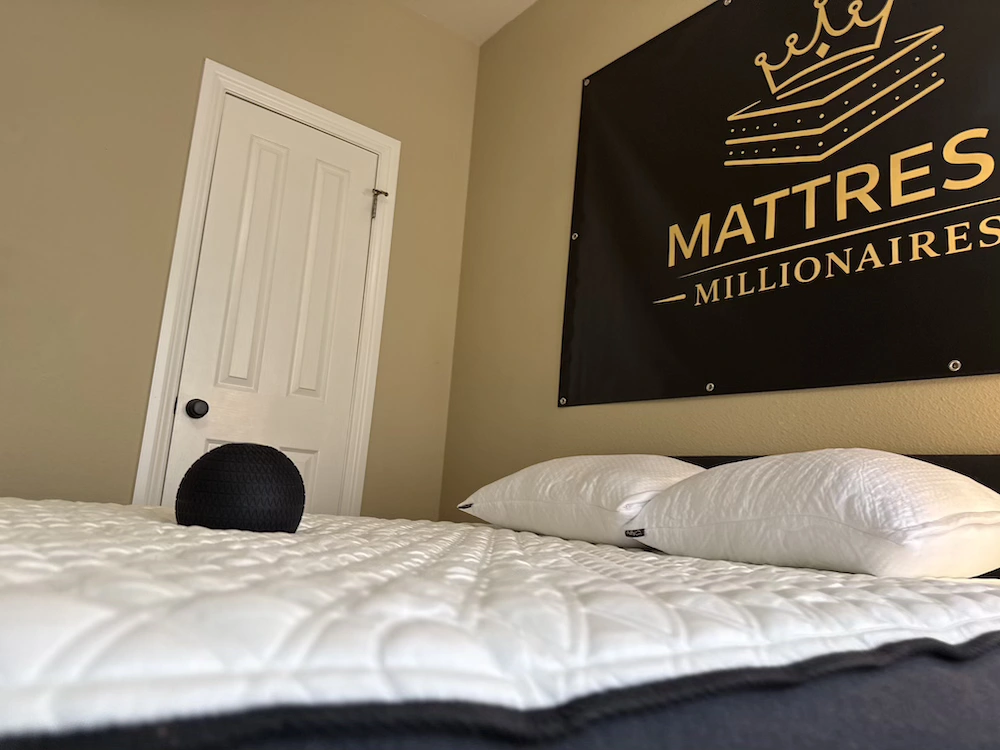
How Soft Is Too Soft?
There is no universal answer.
The mattress is too soft when it allows your body to sink more deeply than is comfortable for your sleeping position.
A firmness scale can provide a useful starting point, but it cannot tell the entire story.
Mattress reviewers commonly describe firmness on a numerical scale, but the number is subjective.
Your experience depends heavily on how much you weigh and how your weight is distributed.
A lightweight sleeper may describe a mattress as medium.
A heavier sleeper may experience the exact same mattress as soft because they compress farther into its layers.
Instead of obsessing over a firmness number, ask:
- Are my hips sinking much deeper than my shoulders?
- Can I move easily?
- Does my lower back feel supported?
- Am I comfortable in my normal sleeping position?
- Do I wake up feeling better or worse than when I went to bed?
Those questions are often more useful than the number printed on a mattress specification page.
Who Is Most Likely to Find a Mattress Too Soft?
Some sleepers are more sensitive to excessive softness than others.
Stomach Sleepers
Stomach sleepers are among the most likely to struggle with soft mattresses.
The pelvis and abdomen need enough support to remain relatively level with the rest of the torso.
When those areas sink too deeply, the lower back may arch excessively.
A mattress that feels pleasantly plush to a side sleeper can therefore feel completely unsupportive to a stomach sleeper.
Back Sleepers
Back sleepers can also struggle with excessive softness.
The hips and buttocks naturally carry substantial weight.
If they sink too far, the pelvis may tilt downward.
Back sleepers generally need enough contouring to accommodate the natural curves of the body without allowing the midsection to collapse into the mattress.
Heavier Sleepers
Body weight changes mattress performance dramatically.
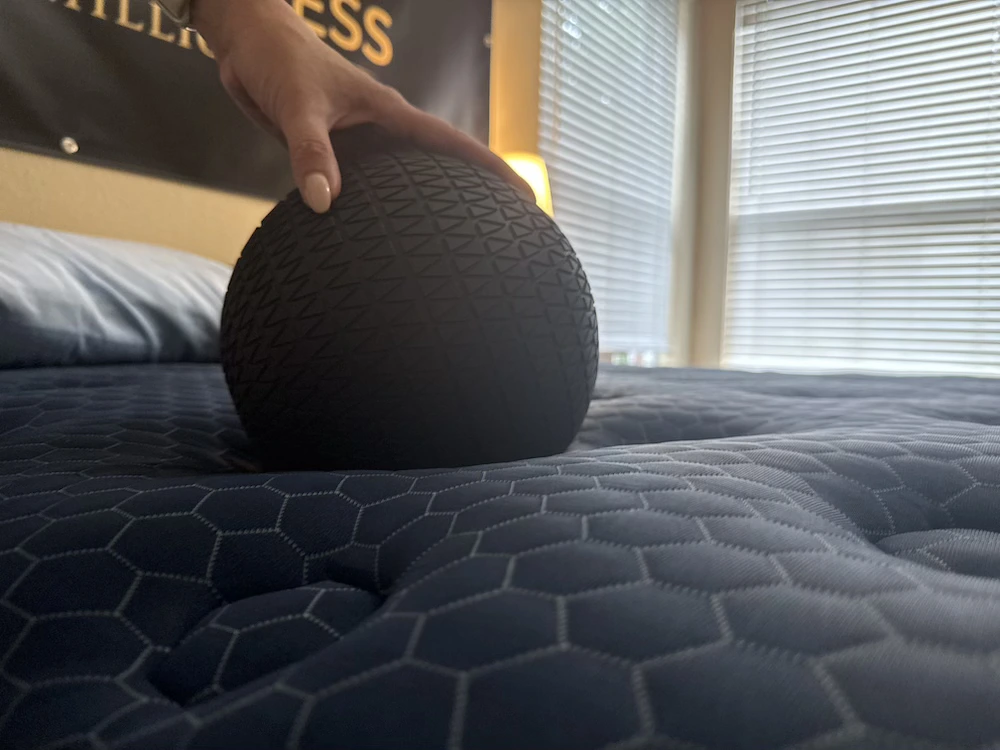
Heavier sleepers compress comfort layers more deeply.
They may therefore move through soft upper foams quickly and interact more directly with the layers underneath.
A mattress that feels medium-firm to a lighter person may feel significantly softer under greater weight.
Heavier sleepers often benefit from durable comfort materials and robust support systems that resist excessive compression.
Combination Sleepers
If you change positions frequently, a deeply conforming mattress may make movement more difficult.
Combination sleepers often appreciate some responsiveness because it allows them to roll from side to back or stomach without fighting a deep body impression.
People With Limited Mobility
Deeply soft mattresses can also make getting into and out of bed more difficult.
If you have limited mobility, you may prefer a mattress with stronger edge support and enough responsiveness to provide leverage when sitting up or standing.
Can a Mattress Be Too Soft for Side Sleepers?
Yes.
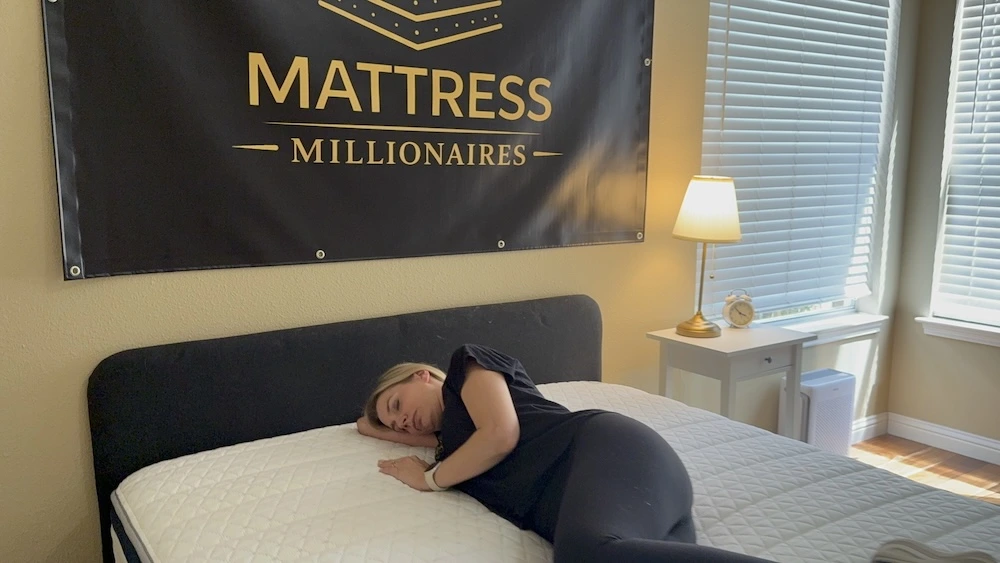
Side sleepers generally need more cushioning than back or stomach sleepers, but there is still such a thing as too much.
Your shoulder and hip should sink enough to reduce pressure.
However, if your hip sinks dramatically deeper than your shoulder and waist, your spine can bend downward.
A side sleeper needs a balance between pressure relief and support.
The mattress should contour around the shoulder and hip while supporting the waist and preventing the pelvis from collapsing too deeply.
If you primarily sleep on your side, our guide on how to sleep comfortably on your side covers positioning and support in more detail.
Can a Mattress Be Too Soft for Back Sleepers?
Absolutely.
Back sleepers need enough support underneath the pelvis to prevent excessive sinking.
If your hips fall deeply into the mattress, your lower back may become more curved than is comfortable.
Signs that a mattress may be too soft for back sleeping include:
- Your hips feel noticeably lower than your chest
- Your lower back feels stiff when you wake
- You feel trapped in the center of the mattress
- You feel better on a slightly firmer surface
A back sleeper does not necessarily need a hard mattress.
Some contouring around the hips and lumbar region can be comfortable.
The mattress simply needs enough underlying support to prevent uncontrolled sinking.
Can a Mattress Be Too Soft for Stomach Sleepers?
Yes, and stomach sleepers may notice the problem sooner than other sleepers.
When you sleep on your stomach, your pelvis is positioned over a relatively small area of the mattress and can sink substantially into soft comfort layers.
This may increase the curve through your lower back.
Your pillow can make the situation more complicated.
If your hips are sinking while your head is elevated on a thick pillow, your spine may be placed in an even more exaggerated position.
Stomach sleepers often do better with a supportive mattress that limits midsection sinkage and a relatively low-loft pillow.
Can a Soft Mattress Cause Back Pain?
A mattress that is too soft for your body and sleeping position can contribute to back discomfort.
The most common concern is excessive sinking around the pelvis.
However, you should be cautious about assuming your mattress is the sole cause of back pain.
Back pain can result from many different factors, including injuries, muscle strain, medical conditions, posture, and daily activity.
Your mattress becomes more suspicious when your discomfort follows a clear sleep-related pattern.
For example:
- Your back feels worse immediately after waking
- The discomfort improves after you start moving
- You feel better after sleeping on a firmer mattress
- Your mattress has obvious soft spots or sagging
- Your symptoms appeared as the mattress became softer with age
If several of these apply, mattress support may be part of the problem.
Can a Soft Mattress Cause Lower-Back Pain?
Lower-back discomfort is one of the symptoms most commonly associated with excessive mattress sinkage.
The pelvis is heavy and tends to compress a soft mattress substantially.
If the mattress does not resist that compression soon enough, the pelvis may sit lower than the rest of the torso.
This changes the position of the lumbar area.
Again, that does not mean every case of lower-back pain is caused by a soft mattress.
But if you consistently wake with lumbar stiffness that improves on more supportive sleeping surfaces, it is worth investigating.
Can a Soft Mattress Cause Hip Pain?
People often associate hip pain with mattresses that are too firm, but excessive softness can also create problems.
On a very firm mattress, the issue may be concentrated pressure directly against the hip.
On a mattress that is too soft, the issue may instead be excessive sinking and poor positioning.
This is an important distinction.
If your hip feels painfully pressed against the surface, you may need more cushioning.
If your hip feels as though it is collapsing deeply into the bed and pulling your spine out of position, you may need more support.
Our guide on mattresses and hip pain during side sleeping explains these possibilities in more detail.
Can a Mattress Be Too Soft Without Sagging?
Yes.
A brand-new mattress can be too soft even if its surface is perfectly flat.
Sagging refers to permanent or semi-permanent deformation of the mattress.
Softness refers to how easily the mattress compresses when weight is applied.
A mattress may return to its original shape every morning while still allowing your body to sink too deeply every night.
This distinction matters because a visual inspection may not reveal the problem.
If your mattress looks perfectly normal but your hips drop substantially when you lie down, it may simply be too soft for your needs.
What Is the Difference Between a Soft Mattress and a Sagging Mattress?
A soft mattress is designed—or has evolved through wear—to compress easily under body weight.
A sagging mattress has developed areas that remain lower or provide less support than the surrounding surface.
A mattress can be:
- Soft without sagging
- Sagging without originally being soft
- Both soft and sagging
If your mattress was comfortable for years and recently began feeling too soft, material deterioration may be responsible.
If it felt unsupportive from the first night, the original firmness may simply have been wrong for you.
How to Test Whether Your Mattress Is Too Soft
Before buying a replacement, perform a few simple tests.
Test 1: Look at Your Alignment
Lie in your normal sleeping position and ask another person to look at your body from the side or take a photo for you.
You are not trying to perform a medical assessment.
You are looking for obvious sinking.
If you sleep on your back or stomach, do your hips appear dramatically lower than your shoulders and legs?
If you sleep on your side, does your pelvis drop much deeper than your upper torso?
Obvious uneven sinking suggests the mattress may not be providing enough resistance.
Test 2: Move to an Unused Part of the Mattress
Lie in the area where you normally sleep.
Then move to a less-used area.
If the unused area feels significantly firmer and more supportive, your normal sleeping area may have softened from wear.
Test 3: Sleep on a Firmer Mattress
If possible, spend several nights on a somewhat firmer bed.
Compare your:
- Morning back stiffness
- Ease of movement
- Sleep quality
- Feeling of support beneath the hips
If these consistently improve, your current mattress may be too soft.
Test 4: Inspect the Foundation
A weak foundation can make a mattress feel much softer than intended.
Remove the mattress if practical and inspect the support underneath.
Look for:
- Broken slats
- Bowed slats
- Large gaps
- A weak center beam
- Missing support legs
- A damaged box spring
A perfectly good mattress can sag into an inadequate base.
Before changing foundations, check the manufacturer’s specifications. Our guide on how to choose a mattress foundation covers the major options.
Test 5: Rotate the Mattress
If the manufacturer allows it, rotate your mattress 180 degrees.
This moves your hips and shoulders onto areas that may have experienced less wear.
If the bed suddenly feels more supportive, uneven softening may have been part of the problem.
Do not flip a one-sided mattress unless it is specifically designed for flipping.
For more information, see our guide on whether you should rotate your mattress.
How to Make a Soft Mattress Firmer
Making a mattress softer is relatively easy because you can add cushioning on top.
Making a mattress genuinely firmer is more difficult.
If the mattress itself is structurally too soft, there is no accessory that can completely redesign its support system.
Still, several adjustments may help depending on the cause.
1. Check the Foundation
Start underneath the mattress.
If your foundation flexes excessively or has damaged components, repairing or replacing it with a compatible base may make the mattress feel more stable.
This is particularly important if the mattress has recently started feeling softer without an obvious change to the mattress itself.
2. Rotate the Mattress
Rotation may move your body away from softened areas.
This is usually a temporary improvement rather than a permanent repair, but it can extend usable comfort in some mattresses.
3. Remove an Overly Soft Topper
If you currently use a thick mattress topper, the topper itself may be creating the problem.
Try sleeping without it.
A three- or four-inch plush memory foam topper can dramatically increase sinkage even when the mattress underneath is relatively supportive.
4. Check Thick Mattress Pads
Some quilted mattress pads add more cushioning than expected.
Removing unnecessary soft layers may allow you to interact more directly with the mattress’s support system.
5. Use the Correct Foundation
A more rigid compatible foundation may reduce unnecessary flex beneath the mattress.
However, do not simply place the mattress on plywood or the floor without checking manufacturer requirements.
Ventilation, support spacing, moisture, and warranty conditions all matter.
6. Consider Replacement
If the mattress itself is too soft, replacement may ultimately be the only complete solution.
This is especially true if the comfort layers have broken down or the mattress has developed significant sagging.
Will a Firm Mattress Topper Fix a Soft Mattress?
Usually not as effectively as people hope.
A firmer topper may slightly change the surface feel, but the soft mattress underneath can still compress.
Imagine placing a firm cushion on top of a hammock.
The cushion may feel firm initially, but the hammock underneath still bends when weight is applied.
A topper works best when the mattress underneath is structurally sound and you are trying to change surface comfort.
It is much less effective at repairing inadequate underlying support.
If your mattress is only slightly too soft, a firmer latex topper may make a modest difference.
If your hips are already sinking deeply through the mattress, a topper is unlikely to solve the fundamental problem.
Will Plywood Make a Soft Mattress Firmer?
Placing a rigid board beneath a mattress can make the sleeping setup feel firmer if the existing foundation is flexing.
But it does not make the mattress materials themselves firmer.
If the mattress has weak or deteriorated comfort layers, those layers will continue compressing even on a rigid surface.
There are also practical concerns with placing solid plywood underneath certain mattresses, including reduced airflow and possible conflicts with manufacturer support requirements.
Check your mattress warranty and foundation instructions before making this modification.
Will Putting a Mattress on the Floor Make It Firmer?
Placing a mattress on a rigid floor can eliminate flex from the bed frame or foundation, so the mattress may feel somewhat firmer.
However, this should be considered a diagnostic experiment rather than an automatic long-term solution.
Mattresses placed directly on floors can have reduced airflow underneath, which may allow moisture to accumulate depending on the environment.
The setup may also violate manufacturer recommendations.
If your mattress feels dramatically better on a rigid surface, inspect your existing foundation carefully.
The base—not the mattress—may be the problem.
Can You Fix a Mattress That Has Become Too Soft?
It depends on why it became soft.
If the problem is a broken or flexible foundation, fixing the foundation may restore proper support.
If the mattress has worn unevenly, rotation may provide temporary relief.
If an overly plush topper is causing the problem, removing it may solve the issue immediately.
But if the mattress’s internal foams or support components have deteriorated, there is no reliable way to restore them to their original condition.
Once foam has permanently softened or coils have lost substantial support, replacement is usually the long-term solution.
Why Do Mattresses Get Softer Over Time?
Mattresses are repeatedly compressed for thousands of hours.
That mechanical stress gradually changes materials.
Foam Softening
Foam flexes every time you lie down, roll over, sit on the edge, or get out of bed.
Over time, it may become easier to compress.
Body Impressions
The areas beneath your shoulders and hips experience more pressure than other parts of the mattress.
This can create uneven wear.
Coil Wear
Coils are designed to compress and rebound repeatedly, but support systems can eventually lose some resilience.
Foundation Wear
Sometimes what appears to be mattress softening is actually a deteriorating foundation.
A bowed slat or weakened box spring allows the entire mattress to flex more deeply.
How Long Should a Mattress Stay Supportive?
There is no universal expiration date.
Mattress longevity depends on construction, material quality, body weight, usage, maintenance, and foundation support.
Instead of replacing a mattress simply because it reaches a certain birthday, evaluate how it performs.
Warning signs include:
- Significant sagging
- Permanent body impressions
- Loss of support
- Excessive softness
- Collapsed edges
- Increasing morning discomfort
If you are trying to determine whether your bed has reached the end of its useful life, read our guide on how long a mattress should last.
Is Your Mattress Too Soft—or Just Broken In?
New mattresses often change slightly during the first few weeks of use.
Comfort layers loosen and begin feeling more like the showroom model.
This is normal to a point.
However, there is a difference between normal break-in and a mattress becoming unsupportive.
A properly broken-in mattress should still keep your body stable.
If your hips begin sinking dramatically or you develop a hammock-like feeling, the issue goes beyond the mattress simply becoming more comfortable.
If your mattress is new, keep track of the sleep-trial deadline.
Do not wait until after the return window to decide that the mattress is clearly too soft for you.
Our guide on how long it takes to adjust to a new mattress can help you distinguish normal adaptation from a poor fit.
Is Your Mattress Too Soft—or Is the Foundation the Problem?
This is worth checking before spending money on a replacement mattress.
A weak foundation can mimic many symptoms of an overly soft mattress.
If the support beneath the bed bows downward, the mattress follows it.
That can create:
- A dip through the center
- Excessive hip sinking
- A hammock sensation
- Difficulty rolling toward the edge
Inspect the bed frame carefully.
For larger mattresses, make sure there is adequate center support.
Check slat spacing against the mattress manufacturer’s requirements.
If you use an older box spring, inspect it for weakened or broken components.
Is Your Mattress Too Soft—or Is Your Topper the Problem?
A mattress topper can completely change the feel of a bed.
If you added a thick, soft topper because your mattress originally felt too firm, you may have overcorrected.
This is particularly easy to do with thick memory foam.
The topper allows your body to sink several inches before the mattress itself begins providing meaningful support.
Try removing the topper for a few nights.
If your back feels better and movement becomes easier, you may not need a new mattress at all.
Is Your Mattress Too Soft—or Is Your Pillow Wrong?
Pillow height interacts with mattress softness.
The softer the mattress, the farther your shoulder may sink when you sleep on your side.
That reduces the distance between your head and the mattress.
A pillow that worked well on a firm mattress may therefore become too tall when used on a soft mattress.
This can tilt your neck upward.
Back sleepers may also find that a very thick pillow pushes the head forward while the torso sinks into a soft mattress.
If you recently changed mattresses but kept the same pillow, reassess both pieces of your sleep setup.
Is Your Mattress Too Soft—or Is It Simply the Wrong Mattress Type?
Different materials create different sensations even at similar firmness levels.
Memory Foam
Memory foam tends to contour closely and respond relatively slowly.
Some sleepers love this hugging sensation.
Others interpret it as excessive softness because they dislike sinking deeply into the surface.
If you are unfamiliar with the material, our guide on what memory foam is explains how it behaves.
Latex
Latex generally feels more buoyant and responsive.
Even a softer latex mattress may make you feel more “on top” of the bed than a memory foam mattress of similar firmness.
Hybrid Mattresses
Hybrids combine comfort layers with a coil support system.
They can range from very plush to very firm.
Some sleepers who find all-foam beds too enveloping prefer hybrids because the coils add responsiveness and pushback.
Innerspring Mattresses
Traditional innerspring mattresses usually have thinner comfort layers than modern hybrids.
They often produce a more elevated sleeping sensation with less deep contouring.
Our mattress materials guide provides a broader comparison.
What Mattress Firmness Should You Choose Instead?
If your current mattress is too soft, resist the temptation to buy the firmest mattress you can find.
Overcorrecting can create pressure-point problems.
Instead, identify how much additional support you actually need.
If You Are a Side Sleeper
You still need substantial pressure relief around your shoulders and hips.
Consider moving moderately firmer rather than choosing an extremely hard surface.
If You Are a Back Sleeper
Look for a mattress that prevents your pelvis from sinking excessively while still contouring around your lower back.
If You Are a Stomach Sleeper
Stronger support beneath the midsection should be a priority.
You may benefit from a firmer feel, particularly if your current mattress allows obvious hip sinking.
If You Are a Heavier Sleeper
Consider not only firmness but also construction quality.
A mattress can initially feel firm enough while using comfort materials that soften too quickly under greater compression.
Durability and support-core strength matter.
Can a Mattress Be Too Soft for a Heavy Person?
Yes.
Heavier sleepers generally compress mattress layers more deeply than lighter sleepers.
This means they can experience significantly more sinkage on the same mattress.
A bed described as medium-firm by a lightweight reviewer may feel much softer to someone with greater body weight.
Heavier sleepers may want to look for:
- Robust coil systems
- Durable comfort materials
- Strong edge support
- Enough firmness to limit excessive hip sinking
- Comfort layers thick enough to prevent bottoming out
The goal is not necessarily an ultra-firm mattress.
It is a mattress built to maintain support under greater compression.
Can a Mattress Be Too Soft for a Light Person?
It can, although lighter sleepers generally experience mattresses as firmer because they compress the materials less.
A very plush mattress with thick comfort layers may still allow a lightweight sleeper to sink more than they prefer.
Sleep position also matters.
A lightweight stomach sleeper may find a plush mattress too soft even though a lightweight side sleeper finds it comfortable.
What If One Partner Thinks the Mattress Is Too Soft?
This is a common problem.
Two people can experience the same mattress very differently.
Suppose one partner weighs substantially more than the other.
The heavier partner may sink deeply and feel unsupported, while the lighter partner barely compresses the mattress and thinks it feels perfect.
Different sleep positions can create the same disagreement.
A side sleeper may enjoy the cushioning while a stomach-sleeping partner feels their hips dropping too deeply.
Possible solutions include:
- A compromise firmness
- Zoned support
- Customizable mattress layers
- Split-firmness construction
If this sounds familiar, read our guide explaining what a split-firmness mattress is.
Can You Put a Firmer Topper on Only One Side?
Some couples use split toppers or half-width comfort layers to change the feel on only one side of the bed.
This may provide a modest adjustment.
However, remember that a topper cannot completely correct a weak support system underneath.
If one sleeper sinks too deeply because the mattress itself is structurally too soft, a firm topper on that side may have limited effect.
How Do You Know If You Need More Support or More Pressure Relief?
This is one of the most useful distinctions to understand.
You may need more support if:
- Your hips sink excessively
- You feel trapped in the mattress
- Your lower back feels unsupported
- You sleep better on firmer surfaces
- Your mattress feels hammock-like
You may need more pressure relief if:
- Your shoulders feel jammed against the mattress
- Your hips hurt from direct pressure
- You experience pressure-related numbness while side sleeping
- Your body barely sinks into the surface
- You sleep better on softer mattresses
These are almost opposite problems.
That is why simply saying “my mattress hurts my back” is not enough to determine whether you need a firmer or softer bed.
For a closer look at cushioning, read our guide to what pressure relief means in a mattress.
If your symptoms sound more like the second group, read our companion guide: Can a Mattress Be Too Firm? Signs Your Mattress Is Too Hard.
Too Soft vs. Too Firm: How to Tell the Difference
A mattress that is too soft and one that is too firm can both leave you waking up uncomfortable.
But the sensations are usually different.
| Sign | Mattress Too Soft | Mattress Too Firm |
|---|---|---|
| Hip sinking | Often excessive | Usually limited |
| Shoulder pressure | Usually lower | Often higher for side sleepers |
| Movement | May feel difficult or “stuck” | Usually easier |
| Overall sensation | Sleeping deeply “in” the mattress | Sleeping “on top” of the mattress |
| Common back issue | Excessive sinking around the pelvis | Insufficient contouring |
| Common side-sleeper complaint | Hip sinking too deeply | Hip and shoulder pressure |
| Topper effect | Soft topper may worsen the problem | Soft topper may improve comfort |
This comparison is not diagnostic, but it can help you identify which direction to investigate.
Should You Buy a Firm Mattress if Your Current Mattress Is Too Soft?
Possibly, but “firmer” is a better goal than simply “firm.”
If you jump from a very soft mattress to an extra-firm mattress, you may solve excessive sinking only to create uncomfortable pressure points.
A better approach is to identify what you liked about your current mattress and what needs to change.
For example:
If you love the pressure relief but your hips sink too deeply, look for a mattress with a similar comfort layer over a stronger support system.
If you dislike the deep hugging sensation entirely, consider a more responsive hybrid or latex construction.
If you are a stomach sleeper, prioritize resistance beneath the midsection.
If you are a heavier sleeper, prioritize durable support rather than firmness alone.
What Should You Look for in a More Supportive Mattress?
If you decide to replace your soft mattress, consider several factors.
Appropriate Firmness
The mattress should resist excessive sinking without creating unnecessary pressure.
A Strong Support Core
Hybrid and innerspring mattresses rely primarily on coils for structural support.
All-foam mattresses generally use a dense polyfoam base.
Latex mattresses may use firmer latex layers underneath softer comfort layers.
Progressive Support
Ideally, a mattress becomes more supportive as you sink deeper.
The top can feel comfortable and cushioning while the lower layers provide increasing resistance.
Durable Comfort Materials
Weak comfort materials can soften prematurely even if the support core remains intact.
Durability is particularly important for heavier sleepers.
Good Edge Support
If you sit or sleep near the edge, strong perimeter support can make the mattress feel more stable and make getting out of bed easier.
A Useful Sleep Trial
You cannot always determine whether a mattress provides enough support after lying on it for five minutes.
A reasonable at-home trial gives you time to evaluate how your body feels after full nights of sleep.
Always read the actual trial and return conditions.
Are Hybrid Mattresses Good for People Who Find Foam Too Soft?
They can be.
Hybrid mattresses use a coil support system beneath comfort layers.
The coils often create more responsiveness and stronger pushback than the base foam used in many all-foam mattresses.
This can make changing positions easier.
However, hybrids can still be extremely soft if they use thick plush comfort layers.
The word “hybrid” does not guarantee firmness.
Evaluate the individual construction and firmness rather than relying on mattress category alone.
Is Latex Better if You Hate Sinking Into a Mattress?
Latex is worth considering if you dislike deep sinkage.
It tends to compress while pushing back against the body more quickly than memory foam.
Many sleepers describe latex as buoyant.
You can still get pressure relief, but the sensation is usually less enveloping.
Latex comes in different firmness levels, so it is possible to find both plush and firm designs.
Is Memory Foam Always Too Soft?
No.
Memory foam can be manufactured in a wide range of firmness levels.
The material is known for contouring, but a memory foam mattress can still provide substantial support when properly designed.
What matters is the complete construction:
- How thick the memory foam is
- How soft the memory foam is
- What transition layers sit underneath it
- How strong the support core is
- How deeply your body compresses the mattress
A thin layer of memory foam over a robust support system feels completely different from several inches of very soft memory foam.
Should You Replace an Old Mattress That Has Become Too Soft?
If the softness is caused by material deterioration, replacement may be the most practical long-term solution.
Rotation and foundation repairs can help in certain situations, but they cannot restore worn foam to its original resilience.
Replacement becomes more reasonable when:
- The mattress has significant body impressions
- Your hips sink deeply in your normal sleeping area
- Rotation provides only temporary relief
- The mattress feels substantially softer than it once did
- You consistently wake with discomfort
- You sleep noticeably better on other mattresses
Should You Return a New Mattress That Is Too Soft?
If a new mattress is clearly too soft for your body and sleep position, use the sleep trial if appropriate.
First, check whether the manufacturer requires you to keep the mattress for a minimum number of nights.
Some companies require a break-in period before accepting returns.
Also remember that mattresses generally soften rather than become firmer with regular use.
If a brand-new mattress already feels substantially too soft, waiting for it to “break in” is unlikely to make it more supportive.
That is an important difference from a mattress that initially feels slightly too firm.
When to Talk to a Healthcare Professional
A mattress can affect sleep comfort, but it should not become the default explanation for persistent pain.
Back and hip pain have many potential causes.
Consider discussing symptoms with a healthcare professional if your pain is severe, persistent, worsening, unexplained, or not clearly related to sleeping position.
Seek prompt medical attention for concerning symptoms such as:
- Significant weakness
- Persistent numbness or tingling
- Loss of bladder or bowel control
- Numbness around the groin or saddle area
- Significant pain after an accident or fall
- Fever associated with significant back pain
- Unexplained weight loss
- Severe or rapidly worsening symptoms
A healthcare professional can help determine whether your discomfort is related to muscles, joints, nerves, an injury, or another underlying issue.
A Simple Checklist: Is My Mattress Too Soft?
Ask yourself these questions:
- Do my hips sink noticeably deeper than the rest of my body?
- Do I wake with lower-back stiffness?
- Does the mattress feel like a hammock?
- Do I feel trapped when changing positions?
- Is stomach sleeping particularly uncomfortable?
- Has my mattress developed soft spots or body impressions?
- Do I sleep better on firmer mattresses?
- Does an unused part of my mattress feel more supportive?
- Has my mattress become significantly softer with age?
- Does removing my soft topper improve my comfort?
- Does my foundation sag or flex?
- Do my symptoms improve when my hips are better supported?
If you answered yes to several of these questions, your mattress may be too soft or may have lost some of its original support.
What to Do If Your Mattress Is Too Soft
If you suspect excessive softness, work through the problem systematically.
- Check your alignment. Look for obvious sinking around your hips and midsection.
- Inspect the foundation. Make sure the bed frame or base is not causing the mattress to sag.
- Remove overly soft accessories. Test the mattress without a thick topper or plush mattress pad.
- Rotate the mattress if allowed. This may move your body onto less-worn materials.
- Compare another mattress. See whether you consistently feel better on a more supportive bed.
- Check the sleep trial. If the mattress is new, determine whether you can exchange it for a firmer model.
- Consider replacement. If the mattress itself has deteriorated, accessories are unlikely to restore its original support.
Avoid spending large amounts of money trying to transform a mattress that is fundamentally wrong for your body.
If you are still within the return period, choosing a better firmness may be simpler and more effective.
Frequently Asked Questions
How do I know if my mattress is too soft?
Your mattress may be too soft if your hips sink much deeper than the rest of your body, you feel trapped in the mattress, you wake with lower-back stiffness, the bed feels hammock-like, or you consistently sleep better on firmer mattresses.
What are the symptoms of a mattress that is too soft?
Common signs include excessive hip sinking, morning lower-back stiffness, difficulty changing positions, a hammock-like feeling, soft spots, body impressions, and feeling more comfortable on a firmer sleeping surface.
Can a mattress that is too soft cause back pain?
A mattress that allows excessive sinking may contribute to back discomfort by placing your body in an uncomfortable position for long periods. However, back pain has many possible causes, so persistent or severe symptoms should not automatically be blamed on your mattress.
Can a mattress that is too soft cause lower-back pain?
It can contribute in some sleepers. If the pelvis sinks too deeply, the position of the lower back can change. A pattern of morning stiffness that improves after getting up or when sleeping on a firmer bed may suggest mattress support is a factor.
Can a mattress be too soft for a side sleeper?
Yes. Side sleepers need pressure relief, but excessive hip sinking can cause the spine to bend toward the mattress. The ideal bed cushions the shoulder and hip while supporting the waist and pelvis.
Can a mattress be too soft for a back sleeper?
Yes. If the hips sink substantially deeper than the upper body, a back sleeper may feel unsupported through the lumbar area.
Can a mattress be too soft for a stomach sleeper?
Yes. Stomach sleepers are particularly sensitive to excessive softness because the pelvis and abdomen can sink into the mattress and increase the curve through the lower back.
Can a mattress be too soft for a heavy person?
Yes. Heavier sleepers compress mattress layers more deeply and may experience substantially more sinkage than lighter sleepers on the same bed. Strong support and durable materials become especially important.
Can a soft mattress cause hip pain?
It can contribute to hip discomfort if excessive sinking places the hip and pelvis in an uncomfortable position. Hip pain can also occur when a mattress is too firm, in which case direct pressure may be the bigger issue.
How can I make a soft mattress firmer?
Check the foundation, remove overly soft toppers, rotate the mattress if permitted, and make sure the bed uses the manufacturer’s recommended support system. If the mattress itself is structurally too soft or worn out, replacement may be necessary.
Will a firm topper make a soft mattress firmer?
A firm topper may slightly change the surface feel, but it cannot fully correct a mattress with inadequate underlying support. The mattress beneath the topper can still compress and sag.
Does putting plywood under a mattress make it firmer?
A rigid board may make a mattress feel firmer if the existing foundation is flexing. It will not restore worn mattress materials, and it may affect airflow or conflict with manufacturer requirements.
Will putting my mattress on the floor make it firmer?
A rigid floor can reduce flex underneath the mattress and may make the setup feel firmer. However, floor placement can create ventilation and moisture concerns and may not meet the manufacturer’s support requirements.
Can a mattress get too soft over time?
Yes. Comfort materials can soften with repeated use, and body impressions can develop in frequently compressed areas. A mattress that originally felt supportive may eventually feel too soft.
Should I replace a mattress that has become too soft?
Replacement may make sense if the mattress has significant sagging, deep body impressions, deteriorated materials, or persistent loss of support that is not caused by the foundation.
Will a new mattress get firmer over time?
Generally, no. New mattresses more commonly soften somewhat as comfort materials break in. If a new mattress already feels significantly too soft, waiting is unlikely to make it substantially firmer.
Is a soft mattress bad for your back?
Not inherently. A soft mattress can provide excellent support when its underlying construction prevents excessive sinking. Problems arise when the mattress is too soft for your body weight and sleep position.
Is a firm mattress better than a soft mattress?
Neither is universally better. The right mattress provides enough cushioning for pressure relief and enough support to prevent excessive sinking.
How do I know whether my mattress is too soft or too firm?
Excessive hip sinking, feeling trapped, and a hammock sensation point more toward a mattress being too soft. Strong shoulder and hip pressure, minimal contouring, and feeling completely on top of the mattress point more toward excessive firmness.
The Bottom Line
Yes, a mattress can be too soft.
The problem is not softness itself. The problem is excessive sinking without enough underlying support.
If your mattress is too soft for your body weight and sleeping position, your hips or midsection may sink substantially deeper than the rest of your body. You may wake with lower-back stiffness, feel trapped when changing positions, notice a hammock-like sensation, or consistently sleep better on firmer mattresses.
Stomach sleepers, back sleepers, heavier sleepers, and people using older mattresses with softened comfort layers may be particularly sensitive to these problems.
Before replacing your mattress, inspect the foundation, remove overly soft toppers, rotate the mattress if the manufacturer allows it, and compare how you feel on a more supportive sleeping surface.
If the mattress itself has deteriorated or was simply too soft from the beginning, there is only so much an accessory can do.
And remember: the answer is not necessarily to buy the hardest mattress available.
A mattress that is too firm can create an entirely different set of pressure and comfort problems.
The goal is to find the middle ground where your shoulders and hips receive enough cushioning while your heavier areas remain properly supported.
If you are deciding which direction to go next, read our guide to choosing the right mattress firmness. If you suspect the opposite problem, see the signs your mattress is too firm.
Ready To Sleep Better?
Take our quiz to find the mattress that fits your sleep style and budget.
"I found my perfect mattress in 60 seconds." - Sarah H., side sleeper
✅ Super fun! 🥳
⭐ Trusted by 10,000+ sleepers 😴
🛏 Personalized mattress match 💤