

If you have spent any time shopping for a mattress, you have probably seen the phrase “pressure relief” everywhere.
Mattress companies advertise pressure-relieving foam. Reviewers test mattresses for pressure relief. Side sleepers are frequently told to prioritize pressure relief when choosing a bed.
But what does pressure relief in a mattress actually mean?
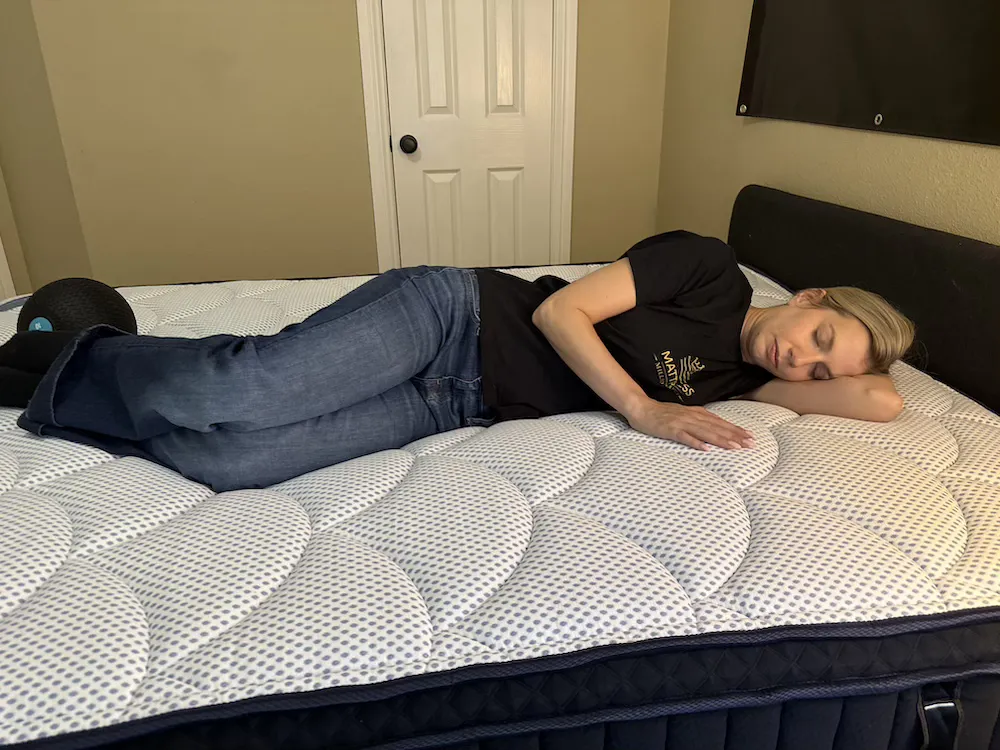
Mattress pressure relief describes how well a mattress distributes your body weight and cushions areas that press most heavily into the sleeping surface. Instead of concentrating pressure around places such as your shoulders and hips, a pressure-relieving mattress contours around your body and spreads that force across a larger area.
Pressure relief is particularly important for side sleepers because the shoulders and hips carry a large amount of pressure in that position. However, every sleeping position can benefit from an appropriate balance of pressure relief and support.
And that balance is important.
A mattress should not simply allow you to sink as deeply as possible. Too much softness can create its own problems, including excessive hip sinking and poor support.
The goal is to find a mattress that cushions your pressure points while still keeping your body comfortably supported.
In this guide, we’ll explain how mattress pressure relief works, where pressure points develop, why sleeping position and body weight matter, which mattress materials tend to relieve pressure best, and how you can determine whether your current mattress provides enough pressure relief.
What Does Pressure Relief Mean in a Mattress?
Pressure relief refers to a mattress’s ability to reduce concentrated pressure between your body and the sleeping surface.
When you lie on a mattress, your weight is not distributed evenly.
Some parts of your body press much more heavily into the mattress than others.
Exactly where that pressure develops depends on your sleeping position and body shape.
For example, when you sleep on your side, your shoulder and hip protrude farther than your waist. Those areas therefore make stronger contact with the mattress.
When you sleep on your back, more pressure may be concentrated around your pelvis, upper back, and heels.
A pressure-relieving mattress compresses appropriately around these areas.
Instead of your hip pressing against a nearly rigid surface, the mattress contours around the hip. This increases the amount of surface area supporting your body and can reduce the sensation of concentrated pressure.
This is one reason mattresses use comfort layers.
The upper layers of foam, latex, fibers, or other cushioning materials help accommodate the shape of your body before the deeper support system takes over.
Why Does Mattress Pressure Relief Matter?
Pressure relief matters primarily because excessive pressure can become uncomfortable.
You may initially feel fine when you lie down.
But after spending 20, 30, or 60 minutes in the same position, pressure around your shoulder or hip may begin building.
Your body responds by moving.
You roll to the other side.
You move onto your back.
You reposition your arm.
Then pressure begins building somewhere else.
Some position changes during sleep are completely normal. Nobody needs to remain perfectly still all night.
But a mattress that creates significant pressure can make it difficult to remain comfortable for extended periods.
You may notice:
- Sore shoulders
- Hip discomfort
- Frequent tossing and turning
- Temporary pressure-related numbness or tingling
- Difficulty staying in your preferred sleeping position
- Feeling more comfortable on a softer or more contouring mattress
Pressure relief is therefore one component of overall mattress comfort.
It is not the only component.
A mattress also needs to provide adequate support, appropriate firmness, temperature regulation, and enough responsiveness for your preferences.
What Are Pressure Points?
A pressure point is an area where your body places relatively concentrated force against the mattress.
Pressure points are not necessarily painful.
Everyone has areas of greater and lesser pressure when lying down.
The problem occurs when the mattress does not accommodate those areas comfortably.
Common pressure points include:
- Shoulders
- Hips
- Pelvis
- Elbows
- Knees
- Heels
Your sleeping position determines which areas matter most.
Where Do Pressure Points Develop When You Sleep?
Different sleeping positions distribute body weight differently.
This is why a mattress that provides excellent pressure relief for one person may feel uncomfortable to another.
Side Sleepers: Shoulders and Hips
Side sleepers generally have the greatest pressure-relief needs.
When you lie on your side, your body contacts the mattress across a relatively narrow area.
Your shoulder and hip protrude outward and bear a significant portion of your weight.
If the mattress is too firm, those areas may not sink sufficiently.
Pressure can build around the shoulder and outer hip.
If the mattress is too soft, however, the opposite problem can occur.
Your hip may sink too deeply, potentially affecting how the rest of your body is positioned.
Good pressure relief for a side sleeper therefore requires enough cushioning to accommodate the shoulder and hip without allowing excessive sinking.
If you primarily sleep in this position, our guide on how to sleep comfortably on your side explains positioning in greater detail.
Back Sleepers: Pelvis, Upper Back, and Heels
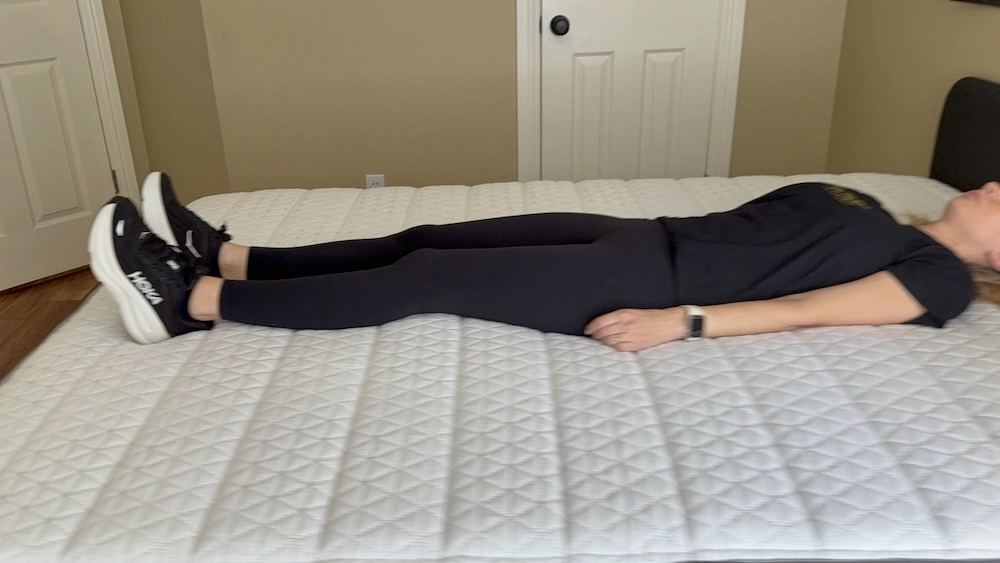
Back sleepers distribute their body weight across a larger surface area than side sleepers.
As a result, they often need somewhat less deep pressure relief.
However, pressure can still develop around the pelvis, shoulder blades, and heels.
A back-sleeping mattress should contour enough to accommodate the body’s natural curves while preventing the hips from sinking excessively.
This is where the relationship between pressure relief and support becomes especially important.
Stomach Sleepers: Hips, Ribs, and Knees
Stomach sleepers generally need less deep contouring because excessive sinking around the midsection can create an uncomfortable position.
However, an extremely hard mattress can still create pressure around the ribs, hips, knees, or other prominent areas.
The ideal surface usually provides modest cushioning over a relatively supportive core.
| Factor | Pressure Relief | Support |
|---|---|---|
| Primary purpose | Cushions pressure points and distributes body weight | Keeps your body stable and limits excessive sinking |
| Main areas affected | Shoulders, hips, knees, elbows, and other contact points | Hips, pelvis, lower back, and overall spinal positioning |
| Usually comes from | Comfort layers such as memory foam, latex, polyfoam, and quilting | Coils, dense support foam, firmer latex, and transition layers |
| If there is too little | You may feel pressure, soreness, or discomfort at the shoulders and hips | You may sink too deeply, feel stuck, or wake with lower-back stiffness |
| If there is too much softness | Pressure may feel reduced, but your body can sink excessively | Support can suffer if the mattress allows the hips or torso to drop too far |
| Especially important for | Side sleepers and people with sensitive pressure points | Back sleepers, stomach sleepers, heavier sleepers, and anyone prone to excessive sinkage |
| Ideal result | Your body feels cushioned without painful pressure points | Your body feels stable without excessive sinking |
Pressure Relief vs. Support: What Is the Difference?
Pressure relief and support are closely related, but they are not the same thing.
Pressure relief is primarily about cushioning and distributing force. Support is primarily about keeping your body stable and preventing excessive sinking.
A good mattress needs both.
Imagine a very soft block of foam.
It may provide excellent initial cushioning because your shoulders and hips sink easily into it.
But if your pelvis continues sinking until your body forms a deep curve, the material is not providing enough support.
Now imagine lying on a rigid floor.
The floor provides plenty of resistance. Your hips are certainly not going to sink too deeply.
But it provides almost no pressure relief.
Your shoulder and hip bear concentrated force against the hard surface.
A good mattress sits somewhere between these extremes.
The upper comfort layers cushion your body.
The deeper layers provide increasing resistance and prevent you from sinking too far.
Pressure Relief vs. Firmness
Firmness describes how hard or soft a mattress feels.
Pressure relief describes how effectively the mattress accommodates and distributes pressure around your body.
These characteristics are related, but you cannot assume that a softer mattress always provides better pressure relief.
Mattress construction matters.
A medium-firm mattress with well-designed contouring comfort layers may relieve pressure better than a soft mattress made from low-quality foam that collapses unevenly.
Likewise, a firm mattress can still provide reasonable pressure relief if its upper layers contour effectively before the deeper support system engages.
This is why mattress firmness ratings only tell you part of the story.
If you are unsure how firmness works, read our guide on what mattress firmness may be best for you.
Can a Mattress Be Too Firm for Good Pressure Relief?
Yes.
If a mattress is too firm for your body weight and sleeping position, you may not compress its comfort layers enough.
Instead of allowing your shoulder and hip to settle into the mattress, the surface pushes strongly against them.
This can lead to:
- Shoulder soreness
- Hip pressure
- Frequent position changes
- Temporary pressure-related numbness
- Difficulty getting comfortable while side sleeping
Lighter sleepers are particularly susceptible because they exert less force on the mattress.
A mattress that compresses comfortably beneath a 220-pound sleeper may barely move under someone weighing 120 pounds.
Side sleepers are also especially sensitive because of the concentrated pressure around the shoulder and hip.
If this sounds like your mattress, see our guide on the signs your mattress is too firm.
Can a Mattress Be Too Soft Even If It Relieves Pressure?
Yes.
This is the other side of the equation.
A mattress can provide excellent cushioning while allowing too much sinking.
You may feel almost no pressure around your shoulders and hips, yet still wake up uncomfortable because your pelvis is sinking much deeper than the rest of your body.
This is why pressure relief should never be evaluated by itself.
A mattress needs to relieve pressure and support your body.
Signs that you have moved beyond pressure relief into excessive softness include:
- Your hips sink substantially deeper than your shoulders
- You feel trapped in the mattress
- The mattress feels hammock-like
- You struggle to change positions
- You wake with lower-back stiffness
If those symptoms sound familiar, read our guide on how to tell if your mattress is too soft.
How Does a Mattress Relieve Pressure?
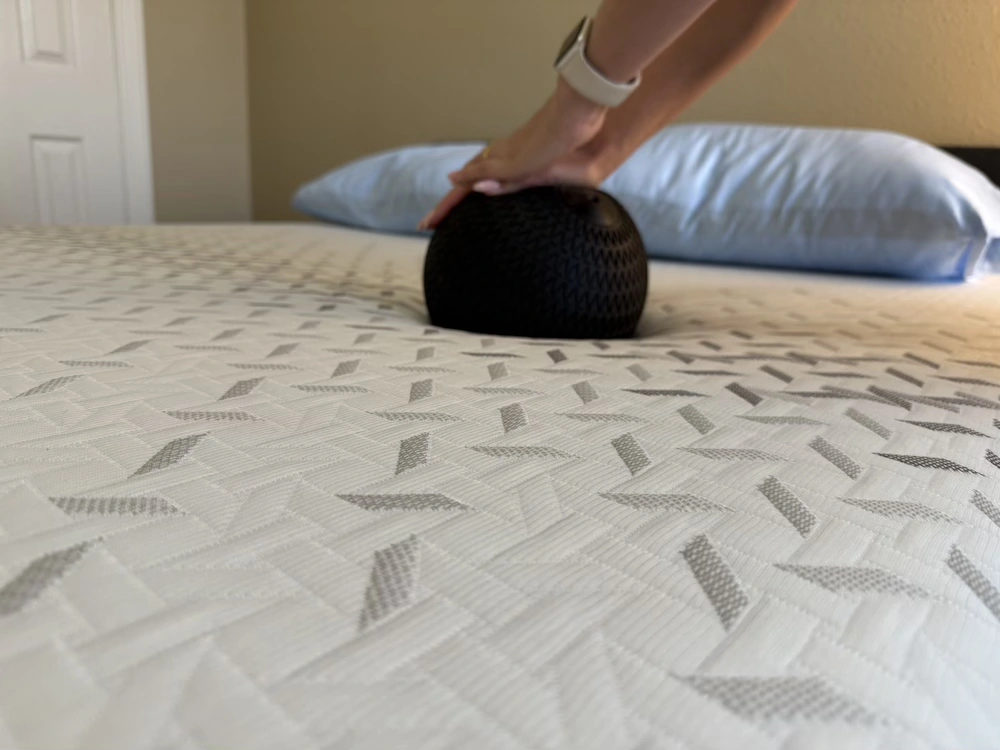
A mattress relieves pressure primarily through contouring.
When you lie on the bed, the upper materials compress beneath your body.
They do not compress equally everywhere.
Heavier or more prominent areas sink farther.
That allows the mattress to conform to your shape.
Instead of supporting your weight through only a few small contact points, more of the mattress comes into contact with your body.
Your weight is therefore distributed across a larger surface.
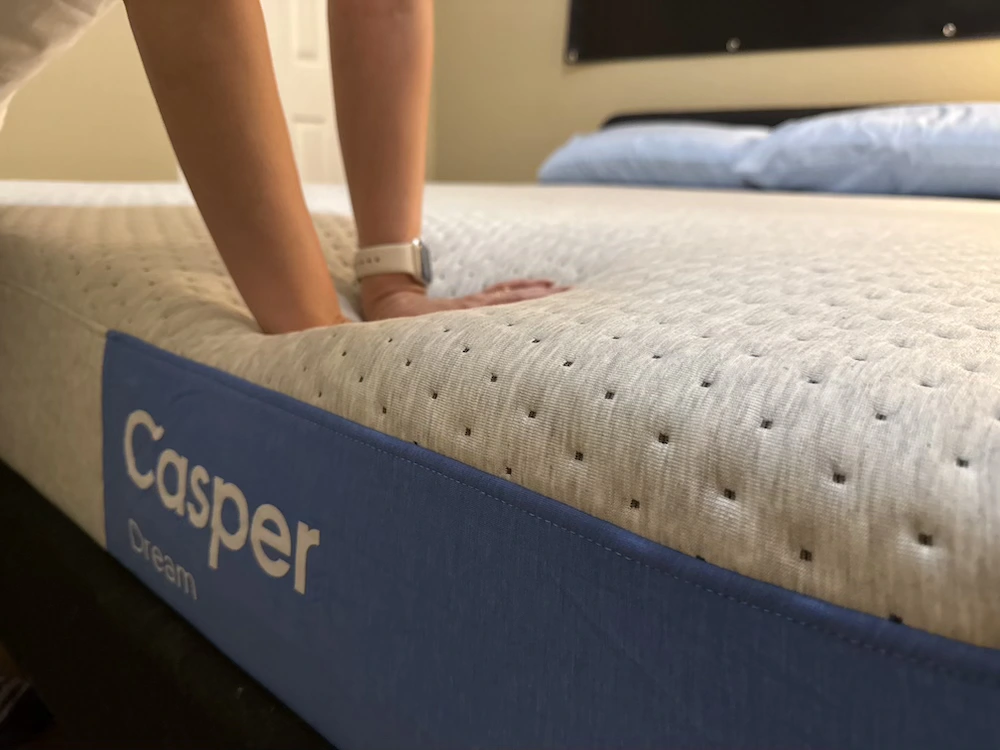
The amount and type of contouring depend on the mattress materials.
Memory foam, latex, polyfoam, quilting, microcoils, and other comfort materials all respond differently.
What Mattress Material Is Best for Pressure Relief?
There is no single material that is best for everyone.
However, some materials are known for stronger contouring than others.
Memory Foam
Memory foam is probably the material most closely associated with pressure relief.
It responds to body weight and heat by conforming around your shape.
Rather than immediately pushing your body upward, traditional memory foam compresses gradually and creates a close-fitting cradle.
This can be particularly comfortable around the shoulders and hips.
Memory foam can therefore work well for:
- Side sleepers
- People who enjoy deep contouring
- Sleepers bothered by sharp pressure points
However, memory foam has tradeoffs.
Very soft or thick memory foam may allow excessive sinking.
Traditional formulations can also retain heat, and some sleepers dislike the slow-response sensation.
If you want to understand the material more deeply, see our guide on what memory foam is and how it works.
Latex
Latex can also provide good pressure relief, but it feels different from memory foam.
Instead of slowly enveloping the body, latex responds quickly and pushes back more strongly.
The result is often described as buoyant.
You receive contouring without the same deep-hugging sensation.
Latex can be a good option for sleepers who want pressure relief while remaining more “on top” of the mattress.
It can also make changing positions easier.
However, latex firmness varies considerably.
A firm latex mattress may still create too much pressure for a lightweight side sleeper.
Polyfoam
Polyurethane foam, or polyfoam, is used in a huge variety of mattresses.
It can be manufactured with different densities, firmness levels, and response characteristics.
Some polyfoams contour closely.
Others feel more responsive and less enveloping.
High-quality polyfoam comfort layers can provide excellent pressure relief when properly matched to the sleeper.
Microcoils
Some modern mattresses use small coils within their comfort or transition layers.
These microcoils can conform independently to the body’s shape while retaining a responsive feel.
They are often combined with foam or latex rather than used alone.
Fiber and Pillow-Top Materials
Wool, cotton, synthetic fibers, and quilted pillow-top materials can add surface cushioning.
They may reduce the immediate hardness of a mattress but generally do not provide the same deep contouring as thick foam or latex layers.
Is Memory Foam the Best Material for Pressure Points?
Memory foam is one of the strongest options for close contouring, but “best” depends on what you want.
If your priority is deep cushioning around the shoulder and hip, memory foam may work very well.
If you dislike feeling stuck in your mattress, latex or responsive polyfoam may provide a better balance.
If you sleep hot, you may prefer a hybrid design with airflow through the coil system rather than a thick all-foam construction.
Pressure relief should therefore be considered alongside temperature, responsiveness, support, and personal preference.
Are Hybrid Mattresses Good for Pressure Relief?
They can be excellent for pressure relief.
A hybrid mattress typically combines foam, latex, or other comfort materials with a coil support system.
This creates the potential for a useful balance:
The comfort layers contour around pressure points.
The coils underneath provide stronger support and responsiveness.
This can be particularly useful for sleepers who want cushioning but do not want to sink deeply into an all-foam mattress.
However, the word “hybrid” tells you very little about how much pressure relief a mattress actually provides.
A hybrid with one thin layer of firm foam may feel much harder than a hybrid with several inches of plush memory foam.
Always evaluate the complete construction.
Are Innerspring Mattresses Good for Pressure Relief?
Traditional innerspring mattresses generally have thinner comfort systems than modern hybrids.
As a result, some innerspring mattresses provide less contouring around the shoulders and hips.
This can be perfectly comfortable for sleepers who prefer a firmer, more elevated feel.
But side sleepers or people with sensitive pressure points may prefer additional cushioning.
Modern pillow-top innersprings can provide considerably more pressure relief than older, thinly padded designs.
Which Mattress Type Has the Best Pressure Relief?
Rather than choosing by category alone, evaluate the comfort system.
Look at:
- Comfort-layer thickness
- Comfort-layer firmness
- Material type
- Transition layers
- Support-core strength
- Your body weight
- Your sleeping position
A well-designed hybrid can provide more pressure relief than a poorly designed memory foam mattress.
A soft latex mattress can provide more cushioning than a firm foam mattress.
Construction matters more than the label on the mattress.
For a broader comparison, see our guide to mattress materials.
How Does Mattress Firmness Affect Pressure Relief?
As a general principle, softer mattresses allow more compression and therefore tend to provide more contouring.
Firmer mattresses allow less compression.
But the relationship is not perfectly linear.
A mattress can have a soft top layer and firmer transition layers underneath.
This allows the shoulder and hip to settle initially while preventing excessive sinking.
That progressive construction can provide better pressure relief than simply making the entire mattress soft.
The firmness you need also changes with body weight.
How Body Weight Affects Pressure Relief
Your weight determines how deeply you compress a mattress.
This is one of the most important reasons mattress recommendations cannot be universal.
Lighter Sleepers
Lighter sleepers exert less force on the mattress.
They may remain mostly on the uppermost comfort layers and experience a mattress as firmer than a heavier person would.
This can make pressure relief particularly challenging for lightweight side sleepers.
If the mattress is too firm, their shoulder and hip may not sink enough to benefit from the intended contouring.
Average-Weight Sleepers
Many mattresses are designed with average-weight sleepers in mind.
People in this broad range may have access to the widest selection of workable firmness levels.
Sleeping position becomes especially important.
Heavier Sleepers
Heavier sleepers compress mattress layers more deeply.
This can provide strong contouring, but it can also create a risk of sinking through the comfort layers too quickly.
A mattress that provides excellent pressure relief for a lighter person may feel unsupportive under greater body weight.
Heavier sleepers often need thicker, durable comfort systems combined with robust underlying support.
Why Side Sleepers Need More Pressure Relief
Side sleeping places your body weight across a narrower contact area than back sleeping.
Your shoulder and hip become the major contact points.
This creates two requirements that can initially seem contradictory.
Your shoulder and hip need to sink.
But they cannot sink too much.
If they do not sink enough, you get concentrated pressure.
If they sink too deeply, your spine may move into an uncomfortable position.
The mattress also needs to support your waist.
This is why side sleepers often do well with thicker comfort systems over supportive cores.
The comfort layers accommodate the shoulder and hip while the deeper layers prevent excessive sinking.
Do Back Sleepers Need Pressure Relief?
Yes, although usually not as much as side sleepers.
Back sleepers distribute their weight across a larger portion of the mattress.
Pressure is therefore less concentrated.
Still, the mattress needs to contour around the pelvis and upper back while supporting the lumbar area.
A mattress that is extremely hard can feel uncomfortable even if it prevents hip sinking.
Back sleepers usually benefit from a balance of modest contouring and strong support.
Do Stomach Sleepers Need Pressure Relief?
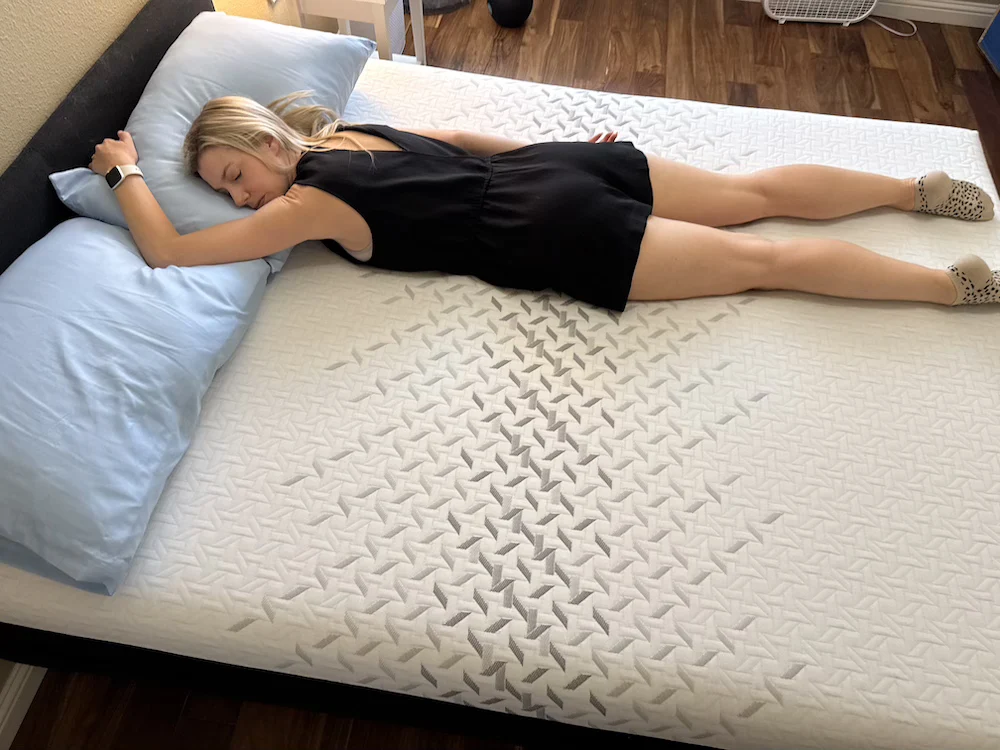
Yes, but stomach sleepers generally need to be more cautious about deep contouring.
Too much softness can allow the pelvis to sink excessively.
A stomach sleeper may therefore prioritize support somewhat more heavily than pressure relief.
That does not mean sleeping on an unpadded surface.
Some cushioning can reduce pressure around the ribs, hips, and knees while the deeper mattress remains firm enough to stabilize the torso.
Do Combination Sleepers Need Pressure Relief?
Combination sleepers have an additional challenge.
The mattress needs to work in several positions.
A bed may provide excellent pressure relief on your side but feel too soft when you roll onto your stomach.
Or it may support stomach sleeping perfectly but create shoulder pressure when you move onto your side.
Combination sleepers often benefit from a middle-ground firmness and responsive comfort materials that make changing positions easier.
They may also prefer hybrids or latex-based designs rather than extremely slow, deeply conforming foam.
How Do You Know If Your Mattress Has Good Pressure Relief?
You do not need specialized pressure-mapping equipment to get a useful answer.
Pay attention to how your body feels after remaining in your normal sleeping position for an extended period.
A mattress probably provides reasonable pressure relief if:
- Your shoulders remain comfortable while side sleeping
- Your hips do not feel painfully compressed
- You can remain in one position without pressure steadily building
- You do not regularly wake because a body part hurts from contact with the mattress
- You feel comfortably cradled without sinking excessively
- You can still move and change positions without difficulty
Comfort is the practical test.
A mattress can perform beautifully on a pressure-map graphic and still be wrong for your body if it is too soft, too warm, or difficult to move on.
Signs Your Mattress Does Not Provide Enough Pressure Relief
Your mattress may lack adequate pressure relief if you consistently experience:
- Sore shoulders after side sleeping
- Outer-hip discomfort
- Pressure around your knees or elbows
- Frequent tossing and turning
- Temporary pressure-related numbness
- A strong desire to move away from one hip or shoulder
- Better comfort after adding a softer topper
- Better sleep on more contouring mattresses
These signs become more meaningful when they occur together.
Can Poor Pressure Relief Cause Shoulder Pain?
It can contribute to shoulder discomfort, particularly among side sleepers.
When your shoulder presses against a surface that does not compress enough, pressure remains concentrated around a relatively small area.
You may begin rotating your torso to escape that pressure.
This can change the position of your upper back and neck as well.
Your pillow also matters.
A mattress that allows very little shoulder sinking generally requires a different pillow height than a mattress with deep contouring.
If shoulder pain persists regardless of where or how you sleep, do not assume the mattress is responsible.
Can Poor Pressure Relief Cause Hip Pain?
Insufficient pressure relief can contribute to hip discomfort when side sleeping.
Your outer hip presses directly into the mattress.
If the comfort layers do not compress enough, pressure can become uncomfortable over time.
However, hip pain can occur on mattresses that are too soft as well.
In that situation, excessive sinking and positioning may be the issue rather than direct surface pressure.
If hip pain is a recurring problem for you, read our guide on whether a mattress can cause hip pain while side sleeping.
Can Poor Pressure Relief Cause Numbness or Tingling?
Pressure from a sleeping position can sometimes contribute to temporary numbness or tingling.
For example, a side sleeper may wake with an arm that has “fallen asleep” after placing prolonged pressure around the shoulder or arm.
Changing position often resolves temporary pressure-related symptoms.
However, recurring numbness, persistent tingling, weakness, or neurological symptoms should not simply be blamed on mattress pressure.
Those symptoms can have causes unrelated to sleep and deserve appropriate medical evaluation.
Does Pressure Relief Help With Back Pain?
Pressure relief can contribute to overall sleep comfort, but it should not be treated as a cure for back pain.
For someone with back discomfort, the mattress generally needs to balance two goals:
- Provide enough contouring to prevent uncomfortable pressure
- Provide enough support to prevent excessive sinking
A mattress that maximizes one while ignoring the other may still be uncomfortable.
If your mattress is extremely firm, additional pressure relief may help you settle into a more comfortable position.
If your mattress is already very soft, adding even more cushioning could make support worse.
If you regularly wake with back discomfort, our guide on how to tell whether your mattress is causing back pain walks through the broader troubleshooting process.
Can Too Much Pressure Relief Be Bad?
Technically, the problem is not “too much pressure relief.”
The problem is achieving pressure relief by making the mattress so soft that support suffers.
You want the mattress to contour around your body without allowing uncontrolled sinking.
Think of it as a sequence.
When you first lie down, the upper layers should compress relatively easily.
As you sink farther, the mattress should become progressively more resistant.
This lets your shoulder and hip settle while preventing your pelvis from continuing downward.
A well-designed mattress often uses multiple layers of different firmness levels to accomplish this.
What Is Zoned Pressure Relief?
Some mattresses use zoning.
A zoned mattress changes firmness or support across different sections of the bed.
The idea is that different parts of your body have different needs.
For example, a mattress may provide:
- More support beneath the midsection
- More give around the shoulders
- Additional reinforcement around the hips
Zoning can be created with:
- Different foam cuts
- Different foam firmness levels
- Varying coil arrangements
- Different coil gauges
- Ergonomic surface patterns
Whether zoning helps depends on how well the zones line up with your body.
A zone designed around an average-height sleeper may not align identically for someone who is unusually short or tall.
What Is a Pressure-Relieving Comfort Layer?
The comfort layer is the upper portion of a mattress that your body encounters first.
Its primary jobs often include cushioning, contouring, and pressure relief.
Comfort layers can include:
- Memory foam
- Polyfoam
- Latex
- Microcoils
- Wool
- Cotton
- Other fibers
Below the comfort system, transition layers gradually increase support before reaching the main support core.
The thickness of the comfort system can significantly affect pressure relief.
A side sleeper often benefits from more cushioning depth than a stomach sleeper because the shoulder and hip need farther to sink.
Does a Pillow Top Provide Better Pressure Relief?
A pillow top can increase surface cushioning, but the term itself does not guarantee good pressure relief.
Pillow tops can contain foam, latex, fibers, or combinations of materials.
Their firmness and thickness vary substantially.
A plush pillow top may provide excellent cushioning.
A thin, densely quilted pillow top may feel considerably firmer.
Evaluate what is inside the pillow top rather than relying on the label.
Does Mattress Thickness Affect Pressure Relief?
Thickness by itself does not determine pressure relief.
A 14-inch mattress is not automatically more pressure-relieving than a 10-inch mattress.
What matters is how much of that thickness is devoted to the comfort system and how those materials behave.
A thick mattress may simply have an unusually tall support core.
Likewise, a thinner mattress may contain several inches of pressure-relieving foam.
Look at the layer construction rather than total height alone.
Does a Mattress Topper Improve Pressure Relief?
Yes, a mattress topper can substantially increase pressure relief when the mattress underneath is supportive but too firm.
This is one of the situations where toppers work best.
A softer foam or latex topper adds an additional contouring layer between your body and the mattress.
This may reduce shoulder and hip pressure without requiring you to replace the entire bed.
However, a topper is not appropriate for every problem.
If the mattress is already too soft or sagging, adding more cushioning may increase sinkage.
What Type of Topper Is Best for Pressure Relief?
The best material depends on the feel you want.
Memory Foam Topper
Memory foam provides close contouring and can significantly change the feel of a firm mattress.
It is a strong option if you want a more cradling sensation.
Latex Topper
Latex adds cushioning while remaining more responsive.
It may be preferable if you want pressure relief without deep sinkage.
Fiber Topper
Fiber-filled toppers can soften the immediate surface but generally provide less deep contouring than foam or latex.
How Thick Should a Topper Be for Pressure Relief?
The amount of thickness you need depends on how much change you want and how deeply you compress the material.
A thinner topper generally creates a modest adjustment.
A thicker topper changes the mattress more substantially.
But thickness cannot be considered separately from firmness.
A soft two-inch topper may provide more noticeable contouring than a firm three-inch topper.
Your body weight also matters.
Heavier sleepers compress toppers more deeply and may move through very soft materials quickly.
Can You Test Pressure Relief at Home?
Yes.
You do not need a computerized pressure map to determine whether your mattress is comfortable.
Try these simple tests.
Test 1: Stay in One Position
Lie in your normal sleeping position for 15 to 20 minutes.
Pay attention to whether pressure steadily develops around your shoulder, hip, or another area.
Do not judge the mattress only by the first 30 seconds.
Pressure problems often take time to become noticeable.
Test 2: Compare Another Mattress
If possible, sleep on a mattress with a different firmness or comfort material.
Compare how your shoulders and hips feel in the morning.
Test 3: Try a Topper
If your mattress feels too hard, adding a softer topper can serve as a practical experiment.
If your pressure-point discomfort improves significantly without creating back discomfort or excessive sinking, your original mattress may have lacked sufficient cushioning.
Test 4: Evaluate Your Sleep Position
If you feel comfortable on your back but uncomfortable on your side, the mattress may provide enough support but insufficient pressure relief for side sleeping.
This is common among combination sleepers using firmer mattresses.
What Is Pressure Mapping?
Pressure mapping is a method used by some mattress testers, researchers, and healthcare environments to visualize how pressure is distributed between a person and a surface.
A sensor mat is placed between the sleeper and mattress.
The system measures pressure across different areas and produces a visual map.
Areas of higher pressure are typically displayed differently from areas of lower pressure.
Pressure mapping can help illustrate differences between mattresses.
However, it should not be treated as the final word on mattress comfort.
A pressure map does not fully capture:
- Whether you like the mattress feel
- Whether your spine feels comfortably supported
- How easily you can move
- Whether you sleep hot
- How the mattress feels after eight hours
Your actual sleeping experience remains important.
Why Mattress Reviews Can Disagree About Pressure Relief
You may read one mattress review saying a bed has excellent pressure relief and another saying it feels too firm.
Both reviewers may be accurately describing their experiences.
Their bodies may simply interact with the mattress differently.
Differences can include:
- Body weight
- Shoulder width
- Hip width
- Sleeping position
- Firmness preference
- Previous mattress experience
This is why mattress reviews are most useful when the tester explains their body type and sleeping position rather than simply assigning a universal comfort score.
Does Pressure Relief Matter More Than Spinal Alignment?
Neither should be considered in isolation.
A mattress that keeps your hips perfectly elevated but makes your shoulder hurt is not a good solution.
A mattress that eliminates shoulder pressure but lets your pelvis sink deeply is not ideal either.
You need a balance.
For most sleepers, the practical goal is:
Enough contouring to remain comfortable at pressure points, combined with enough support to prevent excessive sinking.
That principle is more useful than chasing the softest or firmest mattress available.
How Pressure Relief Changes as a Mattress Ages
A mattress does not necessarily provide the same pressure relief throughout its entire life.
Comfort layers soften with repeated compression.
Initially, this can make a slightly firm mattress feel more comfortable.
Eventually, however, the material may become too soft or uneven.
You may experience less pressure around the shoulder while simultaneously losing support around the hips.
Body impressions can make the problem even more uneven.
If your mattress has changed substantially over time, inspect it for wear and read our guide on how long a mattress should last.
Can Sagging Affect Pressure Relief?
Yes.
A sagging mattress changes how your weight is distributed.
Instead of contouring intentionally around your body, worn areas may collapse excessively.
This can make certain areas feel soft while creating tension or pressure elsewhere.
A topper generally cannot solve this problem because it simply follows the shape of the sagging mattress underneath.
If you see obvious depressions, read our guide on what you can do about a sagging mattress.
Does the Mattress Foundation Affect Pressure Relief?
The foundation can affect the overall feel of the mattress.
If the base flexes excessively, the mattress may sink more deeply than intended.
If the mattress is placed on an incompatible foundation, its support characteristics may change.
However, the foundation generally affects overall support more than surface-level pressure relief.
Always use a foundation that meets the mattress manufacturer’s requirements.
Our guide on choosing a mattress foundation explains the major options.
Does Your Pillow Affect Mattress Pressure Relief?
Indirectly, yes.
Your pillow and mattress work together to position your upper body.
This is particularly important for side sleepers.
On a softer mattress, your shoulder sinks farther.
This reduces the distance between your head and the sleeping surface, potentially requiring a lower pillow.
On a firmer mattress, your shoulder remains higher, potentially requiring more pillow loft.
If the pillow height is wrong, you may rotate your shoulders or shift your position in ways that change where pressure develops.
Does Pressure Relief Affect Couples Differently?
Yes.
Two people sharing the same mattress can have completely different pressure-relief needs.
Consider a lightweight side sleeper sharing a bed with a heavier stomach sleeper.
The side sleeper may want a softer surface so their shoulder can sink.
The stomach sleeper may need considerably more resistance beneath the hips.
A mattress that works perfectly for one person may be uncomfortable for the other.
Possible solutions include:
- A balanced compromise firmness
- Zoned mattress construction
- Customizable comfort layers
- Split-firmness mattresses
If you and your partner have very different needs, read our guide on split-firmness mattresses.
Does Pressure Relief Matter for Combination Sleepers?
Combination sleepers need pressure relief that works across multiple positions.
This can make choosing a mattress more complicated.
If you spend half the night on your side and half on your stomach, for example, you need enough cushioning for your shoulder without so much softness that your hips sink excessively when you roll onto your stomach.
Responsive materials can also help because they allow easier movement between positions.
This is one reason some combination sleepers prefer latex, responsive polyfoam, or hybrid mattresses.
Does Pressure Relief Matter for Heavier Sleepers?
Absolutely.
Heavier sleepers need pressure relief just like everyone else.
The challenge is providing enough cushioning without allowing the sleeper to sink through the comfort layers too quickly.
A very thin comfort system may “bottom out,” allowing the sleeper to interact too directly with firmer layers underneath.
On the other hand, an extremely soft comfort system may allow excessive hip sinking.
Heavier sleepers often benefit from a combination of:
- Thicker comfort systems
- Durable materials
- Strong transition layers
- Robust support cores
- Appropriate firmness for their sleeping position
Does Pressure Relief Matter for Lightweight Sleepers?
Yes, and lightweight side sleepers may have particularly specific needs.
Because they compress the mattress less deeply, they may not engage firmer comfort materials enough to receive adequate contouring.
A mattress described as medium-firm may feel genuinely hard to them.
They may benefit from softer upper layers that respond under relatively low amounts of force.
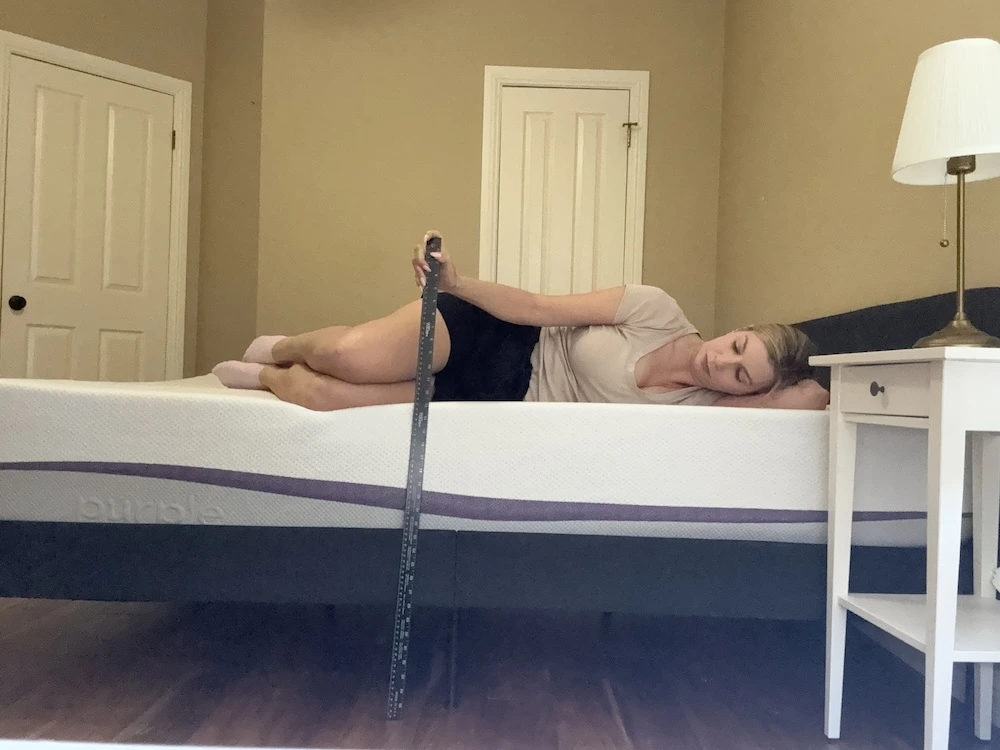
What Should Side Sleepers Look for in a Pressure-Relieving Mattress?
If you are primarily a side sleeper, focus on the relationship between comfort-layer depth and underlying support.
Look for:
- Enough cushioning for the shoulder
- Enough contouring around the hip
- Support beneath the waist
- A stable support core
- A firmness appropriate for your body weight
Do not simply choose the softest mattress available.
Your hip still needs support.
What Should Back Sleepers Look for?
Back sleepers generally need less deep cushioning but still benefit from contouring.
Look for a mattress that:
- Allows the pelvis to settle slightly
- Supports the lumbar region comfortably
- Does not let the hips sink excessively
- Cushions the upper back
Medium through medium-firm mattresses are common starting points, but body weight significantly affects the ideal firmness.
What Should Stomach Sleepers Look for?
Stomach sleepers should generally prioritize support beneath the midsection while retaining enough surface cushioning for comfort.
Look for:
- Limited hip sinkage
- A stable support core
- Moderate cushioning
- Good responsiveness
Very thick, soft comfort systems can be problematic if the pelvis sinks substantially deeper than the chest and legs.
How to Shop for Pressure Relief Without Falling for Marketing
Almost every mattress company claims its product provides pressure relief.
The phrase alone tells you very little.
Instead, look at the actual construction.
Check the Comfort-Layer Thickness
How much cushioning material sits above the support core?
Side sleepers generally need more usable comfort depth than stomach sleepers.
Check the Material
Memory foam, latex, polyfoam, microcoils, and fiber layers all feel different.
Consider Your Body Weight
A mattress recommendation means little without considering how deeply you will compress the bed.
Consider Your Sleep Position
A mattress marketed as universally comfortable may still be too firm for a side sleeper or too soft for a stomach sleeper.
Look for a Useful Sleep Trial
Pressure relief can take time to evaluate.
A mattress that feels comfortable for five minutes may create hip pressure after several hours.
At-home testing is therefore valuable.
Read trial terms carefully because return policies and required break-in periods vary.
Can You Have Good Pressure Relief Without Memory Foam?
Yes.
Memory foam is not required for pressure relief.
Latex, responsive polyfoam, microcoils, pillow tops, and combinations of materials can all provide effective cushioning.
The difference is primarily how the contouring feels.
Memory foam tends to create a slower, closer hug.
Latex tends to feel buoyant.
Responsive polyfoam often falls somewhere between those sensations.
The best material is the one that provides enough cushioning while matching your preferences for movement, temperature, and sinkage.
Can a Firm Mattress Have Good Pressure Relief?
Yes.
A firm mattress can use pressure-relieving upper layers over a stronger support system.
You may sink slightly into the comfort layers before reaching firmer resistance underneath.
This can work particularly well for heavier back or stomach sleepers who need strong support but do not want to sleep on an unpadded surface.
The problem occurs when the upper layers are too firm for the sleeper to compress.
Can a Soft Mattress Have Poor Pressure Relief?
Surprisingly, yes.
Softness alone does not guarantee even pressure distribution.
Low-quality foam may compress unevenly.
A mattress may allow the pelvis to sink deeply while failing to accommodate another area appropriately.
A very thin soft layer may also compress completely, allowing your shoulder or hip to “bottom out” against a firmer layer underneath.
This is why construction matters more than a simple soft-versus-firm label.
How Pressure Relief Fits Into Overall Mattress Comfort
Pressure relief is important, but it is one part of a larger system.
A mattress also needs to work for you in terms of:
- Spinal support
- Firmness
- Ease of movement
- Temperature regulation
- Edge support
- Motion isolation
- Durability

You can have excellent pressure relief and still dislike a mattress because it sleeps hot.
You can have perfect firmness but dislike how difficult it is to change positions.
You can have great comfort for six months but be disappointed if the materials soften rapidly.
This is why mattress shopping requires evaluating the entire design rather than maximizing a single feature.
When Poor Pressure Relief May Actually Be a Firmness Problem
If your mattress consistently creates pressure around your shoulders and hips, the simplest explanation may be that it is too firm for your body.
This is especially likely if:
- You are a side sleeper
- You are relatively lightweight
- Your body barely sinks into the mattress
- A softer topper improves comfort
- You feel better on slightly softer beds
In that situation, increasing cushioning may improve pressure relief.
When a Pressure-Relief Problem Is Actually a Support Problem
Sometimes people assume they need more cushioning because they are uncomfortable.
But their mattress is already too soft.
If your main symptoms are:
- Deep hip sinking
- Lower-back stiffness
- Difficulty changing positions
- A hammock-like sensation
- Feeling trapped in the mattress
then adding more pressure-relieving foam may make things worse.
You may need more support instead.
A Simple Checklist: Does Your Mattress Provide Enough Pressure Relief?
Ask yourself these questions:
- Can I lie on my side without my shoulder becoming sore?
- Does my outer hip remain comfortable?
- Can I stay in my preferred position without pressure steadily increasing?
- Do I avoid waking because one shoulder or hip hurts?
- Does the mattress contour around my body at least somewhat?
- Do I feel cushioned rather than pressed against a hard surface?
- Can I still change positions comfortably?
- Do my hips remain adequately supported?
- Do I wake without obvious pressure-point soreness?
- Do I sleep as comfortably on my mattress as I do on other beds?
If you answer no to several of the pressure-related questions, your mattress may not provide enough pressure relief.
If you answer yes to the cushioning questions but your hips sink deeply, you may have a support problem instead.
How to Improve Mattress Pressure Relief
If your mattress feels too hard at pressure points but remains structurally supportive, you have several options.
1. Add a Suitable Mattress Topper
A foam or latex topper can add contouring without replacing the entire mattress.
2. Reassess Your Pillow
Especially for side sleepers, pillow height can change shoulder and upper-body positioning.
3. Give a New Mattress Time to Break In
Some comfort materials soften slightly during the first several weeks of normal use.
If your mattress is new, see our guide on how long it takes to adjust to a new mattress.
4. Check Your Sleep Position
If you are a combination sleeper, determine whether pressure develops only in one position.
5. Consider a Different Firmness
If your mattress is fundamentally too firm, a softer model may be more appropriate.
6. Replace a Worn Mattress
If the mattress has significant sagging or deteriorated comfort layers, accessories may not restore consistent pressure relief.
When to Talk to a Healthcare Professional
Mattress pressure can contribute to temporary discomfort, but not every painful or neurological symptom comes from your bed.
Persistent shoulder pain, hip pain, back pain, numbness, tingling, or weakness can have many possible causes.
Consider speaking with a healthcare professional when symptoms are persistent, worsening, severe, unexplained, or continue regardless of your sleeping surface.
Seek prompt medical attention for concerning symptoms such as:
- Significant weakness
- Persistent or spreading numbness
- Loss of bladder or bowel control
- Numbness around the groin or saddle area
- Severe pain following an accident or fall
- Fever associated with significant back pain
- Unexplained weight loss
- Severe or rapidly worsening symptoms
A mattress can affect comfort, but it cannot diagnose or treat an underlying medical condition.
Frequently Asked Questions
What does pressure relief mean in a mattress?
Pressure relief describes how effectively a mattress cushions areas of concentrated body weight and distributes pressure across a larger surface. Good pressure relief can reduce uncomfortable pressure around areas such as the shoulders and hips.
Why is pressure relief important in a mattress?
Without enough pressure relief, areas such as the shoulders and hips may become uncomfortable during prolonged sleep. This can contribute to soreness, frequent repositioning, and difficulty remaining comfortable in your preferred sleeping position.
What are mattress pressure points?
Pressure points are areas where your body places relatively concentrated force against the mattress. Common pressure points include the shoulders, hips, pelvis, knees, elbows, and heels.
Which sleeping position needs the most pressure relief?
Side sleepers generally have the greatest pressure-relief needs because much of their body weight is concentrated around the shoulder and hip.
Do back sleepers need pressure relief?
Yes. Back sleepers generally need less deep contouring than side sleepers, but cushioning around the pelvis, upper back, and other contact areas can improve comfort.
Do stomach sleepers need pressure relief?
Yes, although stomach sleepers typically need to balance cushioning with stronger support beneath the midsection. Too much sinkage around the pelvis can become uncomfortable.
What mattress material is best for pressure relief?
Memory foam is known for close contouring, but latex, polyfoam, microcoils, and hybrid comfort systems can also provide excellent pressure relief. The best material depends on your body weight, sleeping position, and preferred feel.
Is memory foam good for pressure relief?
Yes. Memory foam contours closely around the body and can distribute pressure effectively, particularly around the shoulders and hips. However, very soft memory foam can allow excessive sinking for some sleepers.
Is latex good for pressure relief?
Yes. Latex can provide cushioning while feeling more responsive and buoyant than memory foam. It may be a good option for people who want pressure relief without a deep hugging sensation.
Are hybrid mattresses good for pressure relief?
They can be. Hybrids combine comfort layers with a coil support system, potentially providing both contouring and strong underlying support. Pressure relief depends on the thickness and firmness of the individual comfort layers.
Does a softer mattress provide more pressure relief?
Often, but not always. Softer materials generally compress more easily, but mattress construction and body weight matter. A mattress can also become so soft that support suffers.
Can a firm mattress provide pressure relief?
Yes. A firm mattress can use contouring comfort layers over a stronger support core. The upper layers provide cushioning while the deeper layers maintain the overall firm feel.
Can poor pressure relief cause shoulder pain?
Insufficient cushioning can contribute to shoulder discomfort in side sleepers because the shoulder bears concentrated pressure against the mattress. Persistent shoulder pain can have other causes and may require medical evaluation.
Can poor pressure relief cause hip pain?
It can contribute to hip discomfort during side sleeping if the mattress does not contour enough around the hip. However, excessive mattress softness can also contribute to hip discomfort through excessive sinking.
Can a mattress topper improve pressure relief?
Yes. A suitable foam or latex topper can add cushioning to a mattress that is supportive but too firm. A topper generally will not fix a mattress that is already too soft or significantly sagging.
How do I know if I need more pressure relief?
You may need more pressure relief if your shoulders or hips become sore while sleeping, you frequently change positions to escape pressure, your body barely sinks into the mattress, or you consistently feel better on slightly softer or more contouring surfaces.
How do I know if I need more support instead?
You may need more support if your hips sink excessively, you feel trapped in the mattress, you wake with lower-back stiffness, or the bed has a hammock-like sensation.
Is pressure relief the same as mattress firmness?
No. Firmness describes how hard or soft the mattress feels, while pressure relief describes how effectively it cushions and distributes pressure. The two characteristics influence each other but are not identical.
Is pressure relief the same as support?
No. Pressure relief primarily concerns cushioning and weight distribution. Support concerns keeping the body stable and preventing excessive sinking. A good mattress generally needs both.
Can you have too much pressure relief?
The problem is not pressure relief itself but achieving it through excessive softness. If the mattress allows your hips or torso to sink too deeply, you may have good cushioning but inadequate support.
The Bottom Line
So, what is pressure relief in a mattress?
Pressure relief is the mattress’s ability to cushion your body and distribute your weight so that excessive force does not remain concentrated around areas such as your shoulders and hips.
It matters because you may spend hours in the same general sleeping position.
If the mattress does not accommodate your body’s shape, pressure can build and make it difficult to stay comfortable.
Side sleepers generally need the most pressure relief because their shoulders and hips bear concentrated weight. Back and stomach sleepers need pressure relief too, but usually alongside stronger resistance against excessive midsection sinking.
Memory foam is well known for pressure relief because of its close contouring, but it is not the only option. Latex, polyfoam, microcoils, hybrids, and other mattress constructions can also cushion pressure points effectively.
Most importantly, do not evaluate pressure relief by itself.
A mattress can be wonderfully soft around your shoulders and still allow your hips to sink too deeply.
Likewise, a mattress can provide plenty of support but remain so firm that your shoulders and hips never settle comfortably into the surface.
The goal is balance:
Enough pressure relief to cushion your body, and enough support to prevent excessive sinking.
If your shoulders or hips feel painfully compressed against your mattress, read our guide on how to tell if your mattress is too firm.
If you are sinking deeply or waking with lower-back stiffness, see the signs your mattress may be too soft.
And if your main concern is morning back discomfort, start with our guide on how to tell whether your mattress is causing back pain.
Ready To Sleep Better?
Take our quiz to find the mattress that fits your sleep style and budget.
"I found my perfect mattress in 60 seconds." - Sarah H., side sleeper
✅ Super fun! 🥳
⭐ Trusted by 10,000+ sleepers 😴
🛏 Personalized mattress match 💤