

Weighted blankets have become one of the most popular sleep products in recent years. Many people use them to reduce anxiety, sleep more deeply, and feel calmer at night. But there’s one common complaint that keeps coming up – can a weighted blanket cause overheating?
Or, sometimes people may ask – do weighted blankets make you too hot?
The short answer is yes – some weighted blankets can absolutely cause overheating. However, the blanket’s materials, construction, and airflow matter much more than the weight itself.
For some sleepers, especially hot sleepers or people who experience night sweats, the wrong weighted blanket can turn a comfortable night into a sweaty, restless experience.
If you constantly wake up overheated, your mattress could also be contributing to the problem. Read our guide on why your mattress sleeps hot to learn what else may be trapping heat at night.
The good news is that not all weighted blankets trap heat, and there are several ways to stay cool while still enjoying the benefits of deep pressure stimulation.
In this guide, I will explain:
- Why weighted blankets can make you hot
- Which materials trap the most heat
- Signs your blanket is overheating you
- The best cooling options for hot sleepers
- How to sleep cooler under a weighted blanket
How Do Weighted Blankets Work?
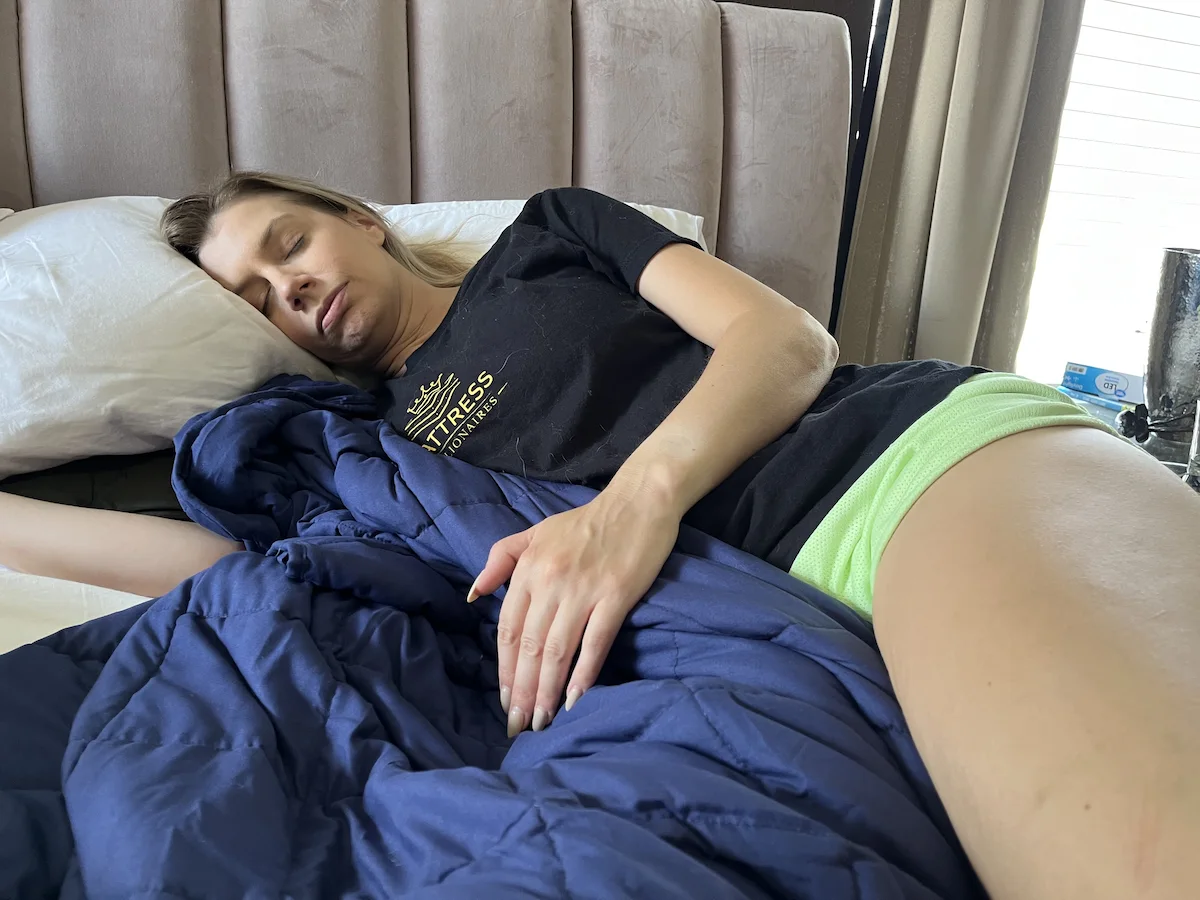
Weighted blankets work by applying gentle, evenly distributed pressure across the body. This pressure is commonly referred to as deep pressure stimulation or deep touch pressure.
The sensation is often compared to:
- A firm hug
- Swaddling
- Gentle compression
- The feeling of being held
Many people find this pressure calming and relaxing, especially before sleep.
Most weighted blankets are filled with materials such as:
- Glass beads
- Plastic pellets
- Steel beads
- Chunky knitted layers
The extra weight helps create steady pressure across the body without feeling overly restrictive when the blanket is properly sized.
Read More: Can You Sleep With a Weighted Blanket Every Night? | How Weighted Blankets Work Scientifically | How to Wash a Weighted Blanket | Sleep Guides
Why People Use Weighted Blankets
People commonly use weighted blankets to help with:
- Anxiety
- Stress
- Insomnia
- Restless sleep
- Sensory processing issues
- Relaxation before bed
Some users report that weighted blankets help them fall asleep faster and feel calmer at night.
If you want to better understand the science behind sleep itself, check out our guide on what happens when you sleep and how your body regulates temperature overnight.
How Heavy Should a Weighted Blanket Be?
A common recommendation is to choose a weighted blanket that is roughly 10% of your body weight.
For example:
- 150-pound person → 15-pound blanket
- 200-pound person → 20-pound blanket
However, comfort matters more than strict formulas. Some people prefer lighter blankets, especially hot sleepers or people sensitive to pressure.
Do Weighted Blankets Naturally Sleep Hot?
Weighted blankets are usually warmer than regular blankets because they contain additional filling materials and denser construction.
However, not all weighted blankets trap the same amount of heat. Factors like fabric type, fill material, airflow, and blanket design play a major role in temperature regulation.
This is why some weighted blankets feel breathable and cooling, while others can cause overheating during the night.
Can Weighted Blankets Actually Make You Too Hot?
Yes, weighted blankets can make you too hot – especially if they are made with thick fabrics or poorly breathable materials.
A weighted blanket works by applying gentle pressure across your body. This pressure is often calming and relaxing, similar to a hug. But unlike a regular blanket, weighted blankets are heavier, denser, and usually contain extra filling materials like glass beads or plastic pellets.
That extra density can also trap body heat.
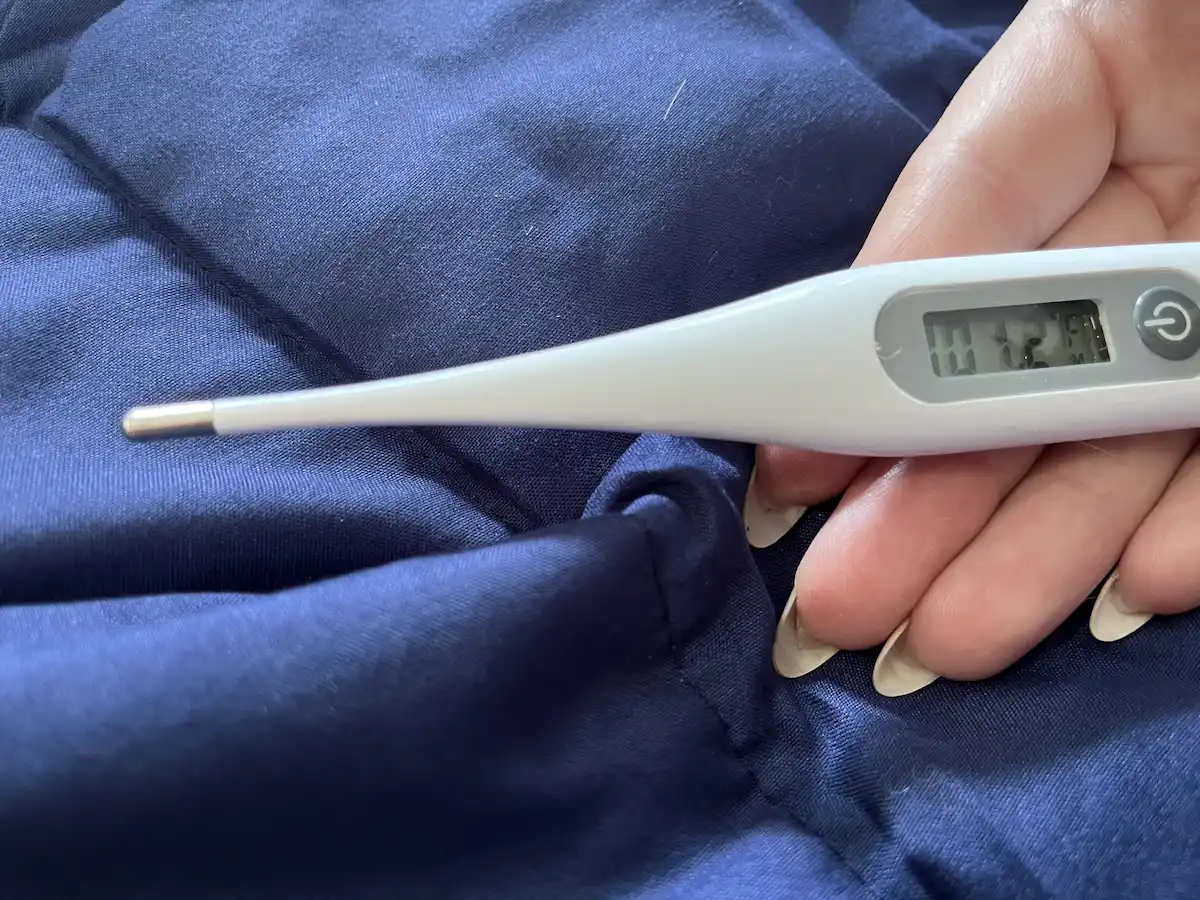
Many people describe symptoms like:
- Waking up sweaty
- Tossing the blanket off during the night
- Feeling overheated after several hours
- Damp sheets or pajamas
- Restless sleep despite feeling tired
Some warmth is normal and even beneficial for sleep. Your body naturally cools down as you fall asleep, and a cozy sleep environment can help with relaxation. But overheating is different.
When your body temperature rises too much during sleep, it can:
- Interrupt deep sleep cycles
- Increase wake-ups during the night
- Cause night sweats
- Reduce sleep quality
- Make it harder to stay asleep
For hot sleepers, the wrong weighted blanket can quickly become uncomfortable.
Why Some Weighted Blankets Trap Heat
Not all weighted blankets sleep the same. Some are surprisingly breathable, while others feel extremely warm and insulated.
Several factors affect how much heat a weighted blanket retains.
Thick Fabrics
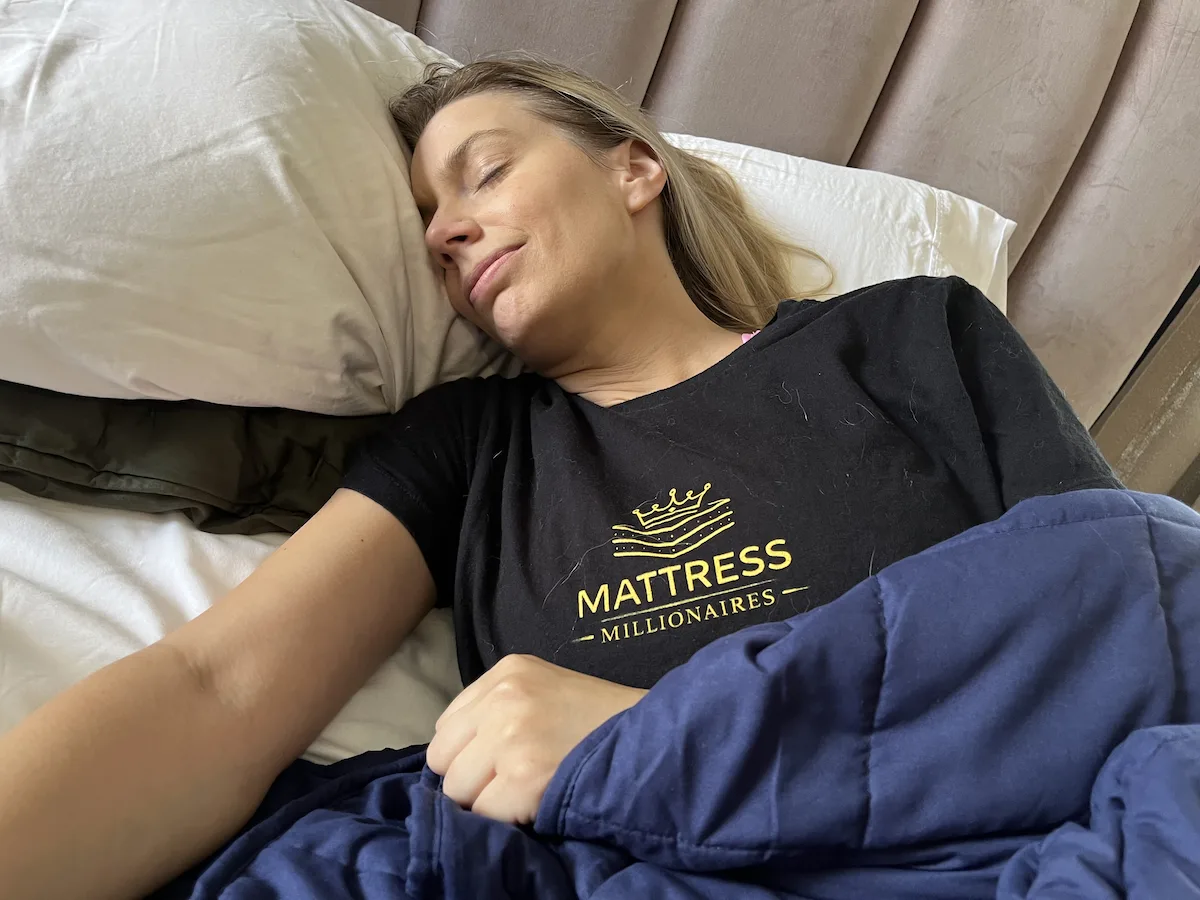
The outer fabric has one of the biggest impacts on temperature regulation.
Some weighted blankets are intentionally designed to feel plush and cozy. Unfortunately, those same materials are often terrible for airflow.
Fabrics That Tend To Sleep Hot
These materials commonly trap heat:
- Fleece
- Minky fabric
- Plush microfiber
- Polyester blends
- Sherpa
These fabrics are soft and warm but often create poor ventilation.
If you already sleep hot, these materials can easily cause overheating.
Cooler Fabric Options
Breathable fabrics allow more airflow and heat dissipation.
Better cooling choices include:
- Cotton
- Bamboo-derived fabrics
- Tencel
- Linen
- Moisture-wicking cooling fabrics
Bamboo and Tencel are especially popular among hot sleepers because they tend to wick moisture and stay cooler against the skin.
Fill Material
The weighted filling inside the blanket also matters.
Most weighted blankets use:
- Glass beads
- Plastic pellets
- Steel shot beads
- Layered fabric inserts
Glass Beads
Glass beads are usually cooler because:
- They are smaller
- More evenly distributed
- Less bulky
- Allow slightly better airflow
Plastic Pellets
Plastic pellets tend to:
- Retain more heat
- Create a bulkier blanket
- Reduce breathability
Knitted Weighted Blankets
Chunky knit weighted blankets often sleep coolest because they use woven construction instead of densely packed filling.
The open-knit design allows:
- Better airflow
- Less heat retention
- Improved ventilation
Many hot sleepers find knitted weighted blankets dramatically cooler than traditional quilted designs.
Blanket Construction
Even two blankets with identical materials can sleep differently depending on how they’re constructed.
Dense Quilting
Tightly stitched quilt boxes can:
- Compress airflow
- Trap body heat
- Increase insulation
Open Construction
Blankets with:
- Larger stitched channels
- Air pockets
- Open weaves
- Lighter internal density
usually sleep cooler.
Airflow is one of the most important factors for temperature regulation.
Signs Your Weighted Blanket Is Causing Overheating
Sometimes people assume they are naturally “bad sleepers” when the real issue is temperature.
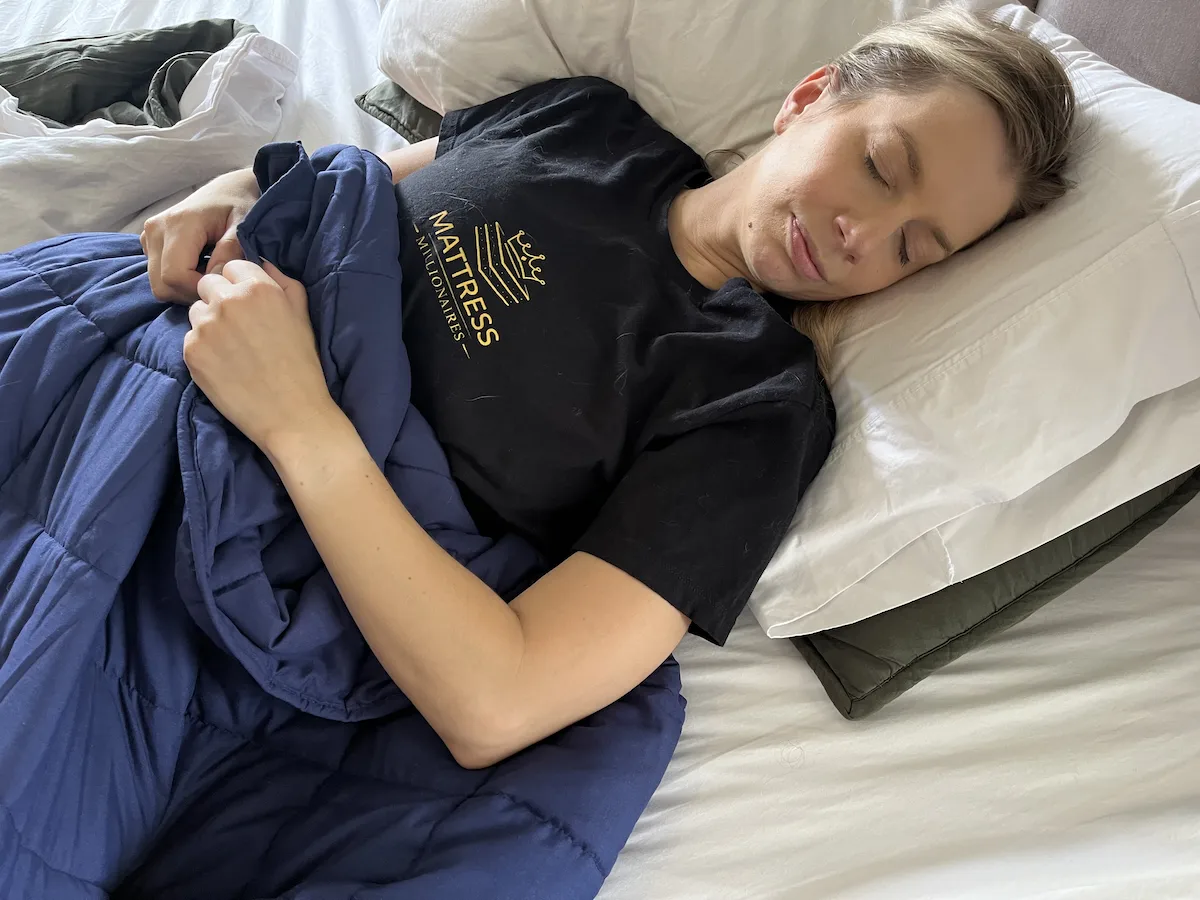
Here are common signs your weighted blanket may be overheating you.
Common Symptoms
Waking Up Sweaty
One of the clearest signs of overheating is waking up damp or sweaty.
Throwing the Blanket Off
If you repeatedly kick the blanket away during the night, your body may be trying to cool itself down.
Restless Sleep
Overheating often causes:
- Frequent movement
- Light sleep
- More awakenings
Feeling Hot Despite a Cool Room
If your bedroom temperature is comfortable but you still feel overheated, your blanket may be trapping heat.
Damp Sheets or Pajamas
Excess heat buildup can create noticeable moisture overnight.
Less Obvious Signs
Some symptoms are subtler.
Morning Dehydration
Overheating can increase sweating and fluid loss overnight.
Poor Sleep Quality
You may technically sleep for enough hours but still wake up exhausted because overheating disrupts deep sleep.
Skin Irritation
Heat and sweat trapped under heavy fabrics can sometimes worsen skin irritation or sensitivity.
Who Is Most Likely To Overheat Under a Weighted Blanket?
Certain sleepers are more sensitive to heat retention.
Hot Sleepers
Some people naturally sleep warmer than others due to:
- Higher metabolic rate
- Body composition
- Hormones
- Circulation patterns
Hot sleepers often struggle with dense weighted blankets.
Menopause and Hormonal Changes
People experiencing:
- Menopause
- Perimenopause
- Hormonal fluctuations
may experience hot flashes or night sweats that become worse under heat-trapping blankets.
People With Temperature Regulation Issues
Certain medical conditions can affect the body’s ability to regulate temperature.
Examples include:
- Multiple sclerosis
- Dysautonomia
- Hyperthyroidism
- Certain neurological conditions
Some medications may also increase heat sensitivity.
Warm Climate Sleepers
People living in hotter regions may struggle more with weighted blankets, especially during summer.
Warm climates with high humidity can make heat retention much worse.
Your sleeping position may also affect airflow and body temperature at night. Here’s how to sleep on your side more comfortably while reducing pressure buildup and overheating.
Does Blanket Weight Affect Temperature?
Yes – but not as much as most people think.
A heavier blanket creates:
- More body contact
- More insulation
- Reduced airflow around the body
This can slightly increase heat retention.
However, the materials and construction matter far more than the actual weight itself.
For example:
- A breathable 20-pound knitted blanket may sleep cooler than
- A dense 12-pound polyester blanket
Most experts recommend choosing a weighted blanket that is roughly 10% of your body weight.
Using a blanket that is too heavy may:
- Increase discomfort
- Restrict airflow
- Feel overly warm or claustrophobic
How To Stay Cool Under a Weighted Blanket
Fortunately, there are several ways to reduce overheating.
Choose Cooling Fabrics
This is the biggest factor.
Look for:
- Cotton
- Bamboo
- Tencel
- Moisture-wicking fabrics
Avoid:
- Thick fleece
- Sherpa
- Plush microfiber
Cooling fabrics can make a dramatic difference.
Lower Bedroom Temperature
Sleep experts generally recommend a cooler sleep environment.
Tips:
- Use air conditioning
- Run a fan
- Improve airflow
- Lower thermostat temperature
- Use blackout curtains during the day
Even a few degrees can improve comfort.
Use Cooling Bedding
Your sheets and mattress also affect temperature.
Consider:
- Cooling sheets
- Breathable mattress protectors
- Lightweight pajamas
- Moisture-wicking bedding
A cooling sleep setup works best when all layers support airflow. Your mattress also plays a major role in temperature regulation. Here’s what to know about whether the Purple mattress sleeps cool and how cooling mattress materials work.
Try a Knitted Weighted Blanket
Knitted weighted blankets are often ideal for hot sleepers.
Benefits include:
- Open weave construction
- Better ventilation
- Less trapped heat
- More airflow around the body
Many sleepers who dislike traditional weighted blankets prefer knitted versions.
Best Weighted Blanket Types for Hot Sleepers
Not all weighted blankets are equal when it comes to cooling.
Here’s how common materials compare.
| Weighted Blanket Type | Cooling Performance | Best For |
|---|---|---|
| Bamboo | Excellent | Very hot sleepers |
| Tencel | Excellent | Moisture control |
| Cotton | Very Good | Balanced cooling |
| Knitted | Excellent | Maximum airflow |
| Polyester/Minky | Poor | Cold sleepers |
| Sherpa/Fleece | Very Poor | Winter use only |
If overheating is your biggest concern, prioritize airflow over softness.
When You Should Stop Using a Weighted Blanket
Weighted blankets are generally safe for most adults, but there are situations where they may not be appropriate.
Severe Overheating
If you experience:
- Excessive sweating
- Difficulty cooling down
- Significant sleep disruption
it may be worth switching to a lighter or more breathable option.
Breathing or Circulation Issues
People with:
- Respiratory problems
- Severe asthma
- Certain circulation disorders
should consult a healthcare professional before using very heavy blankets.
Feeling Trapped or Claustrophobic
Some users simply dislike the sensation of pressure or heat.
If your weighted blanket consistently causes discomfort, poor sleep, or anxiety, it may not be the right fit.
If your weighted blanket starts trapping odors, sweat, or excess heat over time, proper cleaning can help. Follow our guide on how to wash a weighted blanket safely without damaging the fill materials.
Best Sleep Setup for Hot Sleepers Using a Weighted Blanket
If you tend to overheat at night, your weighted blanket is only one part of the equation. Your mattress, sheets, pajamas, bedroom temperature, and airflow all work together to affect how warm or cool you feel while sleeping.
Creating a cooler sleep environment can dramatically improve comfort under a weighted blanket.
Choose a Breathable Mattress
Some mattresses naturally retain more heat than others.
Mattresses that commonly sleep hotter include:
- Traditional memory foam
- Dense foam beds
- Mattresses with limited airflow
Cooler mattress options often include:
- Hybrid mattresses
- Latex mattresses
- Gel-infused foam
- Open-grid designs
If your mattress already traps heat, adding a weighted blanket can make overheating much worse.
Use Breathable Sheets
Your sheets directly affect airflow and moisture control during sleep.
Hot sleepers usually do best with:
- Cotton sheets
- Bamboo sheets
- Tencel sheets
- Linen sheets
These materials allow better ventilation and help wick moisture away from the body.
Heavy microfiber or polyester sheets may trap additional heat under a weighted blanket.
Wear Lightweight Sleep Clothing
Heavy pajamas can increase heat retention during the night.
Many hot sleepers prefer:
- Lightweight cotton clothing
- Moisture-wicking sleepwear
- Loose-fitting pajamas
- Minimal layers
Reducing thick fabric layers can help improve airflow and cooling.
Improve Bedroom Airflow
Air circulation plays a major role in sleep temperature regulation.
To create a cooler sleep environment:
- Use ceiling fans or standing fans
- Keep air vents open
- Lower the thermostat before bed
- Use breathable curtains or blackout shades
- Reduce humidity if possible
Even small airflow improvements can make weighted blankets feel significantly cooler.
Layer Your Bedding Carefully
Using too many layers with a weighted blanket can trap excess heat.
Hot sleepers often sleep more comfortably by:
- Using the weighted blanket alone
- Removing thick comforters
- Avoiding fleece blankets
- Using lightweight breathable bedding
Reducing insulation around the body allows heat to dissipate more effectively overnight.
Cooling Weighted Blanket Features To Look For
Not all weighted blankets are designed with temperature regulation in mind. Some models are specifically built to improve airflow, reduce heat retention, and help hot sleepers stay more comfortable overnight.
If overheating is your biggest concern, these are some of the most important cooling features to look for before buying a weighted blanket.
Breathable Outer Fabrics
The outer fabric directly affects how much airflow reaches your body.
Cooling weighted blankets often use:
- Cotton
- Bamboo-derived fabrics
- Tencel
- Linen blends
These materials generally sleep cooler than thick synthetic fabrics like fleece, microfiber, or sherpa.
Glass Bead Filling
Many cooling weighted blankets use glass beads instead of plastic pellets.
Glass beads are usually:
- Smaller
- Less bulky
- More evenly distributed
- Better for airflow
This allows manufacturers to create thinner blankets that still provide the desired weight.
Knitted Construction
Knitted weighted blankets are one of the best options for hot sleepers.
Unlike traditional quilted blankets, knitted designs naturally create open spaces that improve ventilation.
Benefits of knitted weighted blankets include:
- Better airflow
- Less trapped heat
- Improved breathability
- Lighter overall feel
Many people who overheat under traditional weighted blankets find knitted options significantly more comfortable.
Moisture-Wicking Materials
Some cooling weighted blankets use fabrics specifically designed to pull moisture away from the body.
This can help reduce:
- Sweating
- Humidity buildup
- Sticky or damp sleep conditions
Moisture-wicking fabrics are especially helpful for hot sleepers and people prone to night sweats.
Removable Breathable Covers
Some weighted blankets include removable duvet-style covers.
For hot sleepers, breathable covers made from cotton, bamboo, or Tencel are usually the best choice.
Avoid overly plush covers if overheating is already a problem.
Even Weight Distribution
Weighted blankets with uneven filling can create dense hot spots that trap more body heat.
Blankets with smaller quilted sections or evenly distributed glass beads often provide more consistent airflow and comfort.
Frequently Asked Questions
Are weighted blankets hotter than regular blankets?
Usually yes. Weighted blankets are denser and contain additional filling materials that can trap more heat.
Why do I sweat under my weighted blanket?
Your blanket may:
- Retain heat
- Reduce airflow
- Use insulating materials like fleece or polyester
Hot sleepers are especially prone to sweating under dense weighted blankets.
Can weighted blankets cause night sweats?
They can contribute to overheating, which may worsen night sweats in some people.
Is a cooling weighted blanket worth it?
For hot sleepers, yes. Cooling weighted blankets often use breathable fabrics and improved airflow designs that significantly improve comfort.
What is the best weighted blanket for hot sleepers?
Many hot sleepers prefer:
- Bamboo weighted blankets
- Cotton weighted blankets
- Knitted weighted blankets
Avoid thick plush fabrics if you tend to overheat.
Are bamboo weighted blankets cooler than cotton?
Usually yes. Bamboo-derived fabrics often wick moisture more effectively and feel cooler to the touch.
Can a weighted blanket raise body temperature?
It can increase heat retention around the body, especially if airflow is poor or the blanket uses insulating materials.
Can you use a weighted blanket in the summer?
Yes, you can use a weighted blanket in the summer, but hot sleepers should choose a breathable option made with cotton, bamboo, Tencel, or an open-knit design. Avoid fleece, sherpa, and thick plush covers during warmer months.
Do cooling weighted blankets actually work?
Cooling weighted blankets can help reduce heat buildup, especially when they use breathable fabrics, moisture-wicking materials, or open-knit construction. However, they will still feel warmer than sleeping without a blanket because they add weight and coverage.
What weighted blanket material is best for hot sleepers?
The best weighted blanket materials for hot sleepers are bamboo, Tencel, cotton, and linen. These fabrics tend to be more breathable and better at managing moisture than polyester, fleece, minky, or sherpa.
Are glass bead weighted blankets cooler than plastic pellet blankets?
In many cases, yes. Glass beads are smaller and denser than plastic pellets, which allows manufacturers to use less bulky filling. This can make the blanket feel thinner, smoother, and slightly cooler.
Should hot sleepers use a duvet cover on a weighted blanket?
Hot sleepers can use a duvet cover, but the material matters. A cotton, bamboo, or Tencel cover can help keep the blanket breathable, while a fleece, minky, or sherpa cover may trap heat and make overheating worse.
Can a weighted blanket make anxiety worse if it feels too hot?
Yes, it can. While weighted blankets feel calming for many people, overheating or feeling trapped can increase discomfort for some sleepers. If the blanket makes you feel hot, restricted, or anxious, try a lighter or more breathable option.
Is a heavier weighted blanket always hotter?
Not always. A heavier blanket can increase body contact and insulation, but fabric and construction usually matter more. A breathable 20-pound knitted blanket may sleep cooler than a 12-pound plush polyester blanket.
How do I know if my weighted blanket is too heavy?
Your weighted blanket may be too heavy if it feels difficult to move under, causes discomfort, restricts breathing, makes you feel trapped, or causes you to wake up repeatedly. Many sleepers do best with a blanket around 10% of their body weight.
Can kids overheat under a weighted blanket?
Yes, children can overheat under a weighted blanket, especially if the blanket is too heavy, too warm, or not sized correctly. Weighted blankets for children should be used carefully and only when the child can remove the blanket independently.
What should I do if my weighted blanket makes me sweat?
If your weighted blanket makes you sweat, switch to a more breathable material, remove any plush cover, lower your bedroom temperature, use cooling sheets, or try an open-knit weighted blanket. If sweating continues, stop using the blanket and consider a lighter option.
Can a weighted blanket cause dehydration?
Yes, excessive sweating caused by overheating under a weighted blanket may contribute to mild dehydration overnight. If you frequently wake up thirsty or sweaty, your sleep environment may be too warm.
Do weighted blankets trap body heat?
Most weighted blankets trap some body heat because they are denser and heavier than regular blankets. Heat retention depends heavily on the blanket’s fabric, fill material, and airflow.
Are knitted weighted blankets cooler than regular weighted blankets?
Yes, knitted weighted blankets are often cooler because their open-weave design allows significantly more airflow than traditional quilted weighted blankets filled with beads or pellets.
Can a weighted blanket make insomnia worse?
For some people, overheating or discomfort under a weighted blanket can disrupt sleep and worsen insomnia symptoms. Choosing a breathable blanket and cooler sleep environment may help.
What room temperature is best when using a weighted blanket?
Many sleep experts recommend keeping your bedroom between 60°F and 67°F when using a weighted blanket. Cooler room temperatures can help offset additional heat retention.
Can you sleep with only a weighted blanket?
Yes, many people use a weighted blanket as their primary blanket. Hot sleepers may prefer using only a lightweight weighted blanket without additional comforters or duvets.
Why does my weighted blanket feel hotter in the middle of the night?
Your body naturally changes temperature throughout the night. Heat can gradually build up under dense blankets over several hours, especially if airflow is limited.
Do cooling sheets help with weighted blanket overheating?
Yes, cooling sheets made from breathable materials like bamboo, cotton, or Tencel can help reduce heat buildup and improve airflow under a weighted blanket.
Can a weighted blanket cause heat rash?
In some cases, excessive sweating and trapped heat under heavy blankets may contribute to skin irritation or heat rash, particularly in warm or humid environments.
Are weighted blankets good for people with night sweats?
It depends on the blanket. Traditional plush weighted blankets may worsen night sweats, while breathable cooling weighted blankets may still be comfortable for some sleepers.
Can weighted blankets make you feel claustrophobic?
Yes, some people feel confined or claustrophobic under weighted blankets, especially if the blanket is too heavy or traps excess heat. Choosing a lighter, more breathable blanket may improve comfort.
Do weighted blankets lose their cooling ability over time?
Some weighted blankets may sleep warmer over time if the fabric becomes less breathable due to wear, sweat buildup, or improper washing. Regular cleaning and proper maintenance can help preserve airflow.
Can your mattress make a weighted blanket feel hotter?
Absolutely. Mattresses that retain heat, especially dense memory foam models, can combine with a weighted blanket to create a much warmer sleep environment.
Are weighted blankets warmer than comforters?
In many cases, yes. Weighted blankets are denser and sit closer to the body, which can trap more heat than lightweight comforters or standard blankets.
Should hot sleepers avoid memory foam weighted blankets?
Hot sleepers may want to avoid weighted blankets that use thick memory foam layers or dense synthetic materials, since these designs often retain more body heat overnight.
Can weighted blankets make hot flashes worse?
For some people, yes. Weighted blankets that trap heat may intensify hot flashes or night sweats, especially during menopause or in warm sleeping environments.
Do breathable weighted blankets feel less heavy?
Not necessarily. Breathable weighted blankets can provide the same calming pressure while allowing more airflow and reducing heat buildup during sleep.
Can humidity make a weighted blanket feel hotter?
Yes, high humidity can make weighted blankets feel significantly warmer because moisture in the air reduces the body’s ability to cool itself through evaporation.
Are cooling weighted blankets thinner than regular weighted blankets?
Some cooling weighted blankets are thinner because they use glass beads, lightweight fabrics, or knitted designs instead of bulky insulating materials.
Can sleeping naked help reduce weighted blanket overheating?
For some hot sleepers, sleeping with minimal clothing can help improve airflow and reduce trapped heat under a weighted blanket.
Do weighted blankets work well with cooling mattresses?
Yes, pairing a breathable weighted blanket with a cooling mattress can create a more balanced sleep environment for people who overheat at night.
Can thick pajamas make a weighted blanket feel hotter?
Absolutely. Heavy sleepwear can trap additional heat under a weighted blanket and reduce airflow around the body during sleep.
Should you use a fan with a weighted blanket?
Many hot sleepers benefit from using a fan while sleeping under a weighted blanket because moving air helps improve cooling and reduce heat buildup.
Can weighted blankets feel hotter after washing?
Some blankets may temporarily feel less breathable if they are not fully dried after washing or if the fabric becomes compressed over time.
Are weighted blankets better for winter than summer?
Many people find weighted blankets more comfortable during colder months because the added warmth feels cozy instead of overheating.
Can a weighted blanket make it harder to fall asleep?
For some people, yes. If the blanket feels too warm, too heavy, or restrictive, it may create discomfort that makes it harder to relax and fall asleep comfortably.
Do weighted blankets retain heat more than cotton blankets?
Generally yes. Weighted blankets are denser and contain additional filling materials that often trap more heat than lightweight cotton blankets.
Can overheating from a weighted blanket cause headaches?
In some cases, poor sleep quality, dehydration, and excess heat buildup during the night may contribute to morning headaches or grogginess.
Are weighted blankets bad for naturally sweaty sleepers?
Not always. Sweaty sleepers may still benefit from weighted blankets if they choose breathable materials like bamboo, cotton, or knitted designs that allow better airflow.
Can layering blankets over a weighted blanket increase overheating?
Yes, adding comforters or extra blankets on top of a weighted blanket can trap significantly more heat and reduce airflow during sleep.
Do weighted blankets feel hotter on memory foam mattresses?
They can. Memory foam mattresses often retain body heat, which may combine with a weighted blanket to create a warmer overall sleep environment.
Can pets make a weighted blanket feel warmer?
Yes, sleeping with pets under or near a weighted blanket can increase body heat retention and make overheating more likely during the night.
Should hot sleepers choose lighter weighted blankets?
Many hot sleepers prefer lighter weighted blankets because they typically allow slightly better airflow and create less heat retention against the body.
Can body size affect how hot a weighted blanket feels?
Yes, body size, metabolism, and natural temperature regulation can all influence how warm or cool a weighted blanket feels during sleep.
Do weighted blankets need breathable covers?
Yes, breathable covers made from cotton, bamboo, or Tencel can help improve airflow and reduce overheating compared to thick plush or fleece covers.
Final Thoughts
So, can a weighted blanket cause overheating?
Yes – especially if it uses thick fabrics, dense construction, or poorly breathable materials.
But that doesn’t mean hot sleepers need to avoid weighted blankets entirely.
The key is choosing the right combination of:
- Breathable fabrics
- Cooling materials
- Proper blanket weight
- Good airflow
- Cooler sleep environment
For many people, switching from a plush polyester weighted blanket to a breathable cotton or knitted design completely changes the experience.
If you love the calming feeling of a weighted blanket but hate waking up sweaty, a cooling-focused model may be the perfect solution.
Ready To Sleep Better?
Take our quiz to find the mattress that fits your sleep style and budget.
"I found my perfect mattress in 60 seconds." - Sarah H., side sleeper
✅ Super fun! 🥳
⭐ Trusted by 10,000+ sleepers 😴
🛏 Personalized mattress match 💤